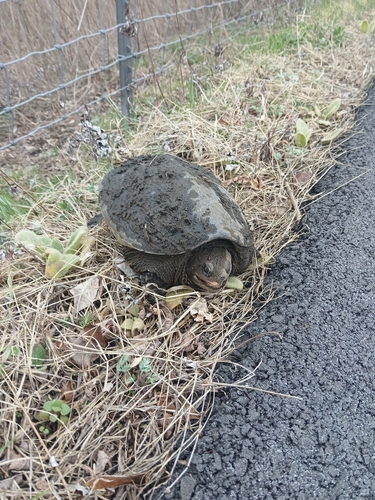
Eastern Newt

The Coleman Station Historic District offers a journey through rural American history.
The Coleman Station Historic District offers a journey through rural American history.
This expansive historic district in North East, Dutchess County, New York, is a captivating blend of preserved farmlands and historic architecture, covering nearly three square miles. Recognized for its significant past, the district offers visitors a unique opportunity to step back in time and experience a landscape shaped by centuries of agricultural heritage and the rise of the railroad. It stands as the largest historic district in Dutchess County, showcasing a picturesque rural setting that has largely retained its character.
Central to the district's charm is the Harlem Valley Rail Trail, a paved path that gracefully carves through the heart of the area, inviting walkers, cyclists, and nature enthusiasts to explore its scenic beauty. Along this trail, you can glimpse historic farmsteads, some dating back to the 1700s and 1800s, including the distinctive Ezra Clark House, the elegant Hiddenhurst, and the functional Dakin-Coleman Farm. The district also boasts the Wheeler-Collins Farm, home to the oldest building in the area—a 1771 English barn—and the tranquil Coleman Station Burying Ground, where gravestones tell tales from as early as 1749. Beyond its historical structures, the landscape itself is a highlight, offering breathtaking views of the Taconic Mountains and the meandering Webutuck Creek.
A visit to the Coleman Station Historic District is an immersion in both history and nature, providing a memorable escape from modern life. It's a place where the stories of early New England settlers and the evolution of dairy farming come alive through well-preserved buildings and a serene rural environment. Whether you're a history buff, a keen photographer, or simply seeking a peaceful outdoor adventure, the district's blend of cultural heritage and natural beauty makes it a truly special destination worth exploring. Eager to name that creature? Identify any animal you find during your visit using the Snappit app.
The Coleman Station Historic District traces its origins to the late 1700s when New England emigrants established nine farms in the area. These early farms initially focused on raising diverse livestock, a common practice of the era. With the arrival of the railroad in the mid-19th century, the economy of the region transformed significantly. The New York Central Railroad station, named Coleman's after local entrepreneur Amasa Coleman, became a vital link, enabling local farms to transition to dairy production and efficiently transport fresh milk to New York City. By the mid-20th century, one farm within the district had become a major milk supplier for the burgeoning city. As urban residents began seeking country retreats, many purchased homes in the area. Recognizing the unique historical and architectural integrity of the region, local residents and weekend homeowners campaigned for its preservation. This effort culminated in 1993 with the designation of the Coleman Station Historic District on the National Register of Historic Places, ensuring the protection of its 18th and 19th-century buildings and the rural landscape for future generations.
Walk or cycle along the Harlem Valley Rail Trail, photograph historic buildings and landscapes, visit the Coleman Station Burying Ground, observe local agriculture (such as sheep at Dashing Star Farm), and appreciate the adaptive reuse of historic structures like the Irving Farm Coffee Company.
Spring: Awakening landscapes, fresh greenery.
Summer: Lush scenery, ideal for long walks and bike rides; shaded sections of the rail trail provide relief.
Fall: Spectacular fall foliage, offering excellent photography opportunities.
Winter: Opportunities for cross-country skiing on the Harlem Valley Rail Trail.
The Harlem Valley Rail Trail, which runs through the district, is paved, generally flat, and accessible for wheelchair users, making it a good option for visitors with mobility considerations.
A paved path perfect for walking, biking, and observing the rural landscape and historic farms.
Drive or bike past properties like the Oliver Barrett House, Ezra Clark House, Dakin-Coleman Farm, Hiddenhurst, and Thomas N. Wheeler Farm to admire their distinctive architecture.
Visit to see the 1771 English barn, the district's oldest surviving structure.
Explore this historic cemetery with gravestones dating back to 1749.
Each card links to a full Explore page with photos, traits, and fun facts.
Start with the big picture, then zoom in to explore individual wildlife observations around this place.
Bring your bike or walking shoes
The Harlem Valley Rail Trail is the best way to experience the district's landscapes and see many of its historic sites.
Allow time for exploration
With nearly three square miles to cover, give yourself ample time to appreciate the rural vistas and historic farmsteads.
Pack a picnic
Enjoy the scenic views, perhaps at a quiet spot along the rail trail.
Visit in different seasons
Each season offers a unique perspective, from spring blossoms to vibrant fall foliage or a snowy winter landscape.
Look for signs of adaptive reuse
Notice how some historic farm buildings have found new life, such as the old carriage house housing Irving Farm Coffee Company.
Respect private property
Many historic buildings are private residences; admire them from public roads and the rail trail.
Apr 23, 2026
Photo attribution
no rights reserved
License: CC0 1.0 ↗
Image may be shown cropped inside the card frame.
Apr 19, 2026
Photo attribution
no rights reserved
License: CC0 1.0 ↗
Image may be shown cropped inside the card frame.
Apr 15, 2026
Photo attribution
no rights reserved
License: CC0 1.0 ↗
Image may be shown cropped inside the card frame.
Apr 15, 2026
Photo attribution
no rights reserved
License: CC0 1.0 ↗
Image may be shown cropped inside the card frame.
Apr 4, 2026
Photo attribution
no rights reserved
License: CC0 1.0 ↗
Image may be shown cropped inside the card frame.

Maryland, US
You might spot White-Tailed Deer and Eastern Gray Squirrel.
View guide →
.jpg)
District of Columbia, US
You might spot Eastern Gray Squirrel, Duck, and House Sparrow.
View guide →

Illinois, US
You might spot American Robin, Canada Goose, and House Sparrow.
View guide →

Virginia, US
You might spot Spotted Lanternfly and Northern Cardinal.
View guide →
Take the discovery with you
Identify the wildlife you spot, learn as you go, and keep a collection of the adventure.