.jpg&width=800)





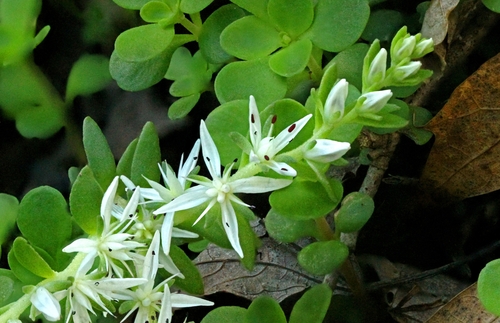
woodland stonecrop
Sedum ternatum
Woodland stonecrop is a small, green plant that loves to grow in shady spots. It has pretty, star-shaped flowers that bloom in spring and summer, making it a lovely addition to gardens and woodlands.
Habitat: Forests
The woodland stonecrop is a low-growing succulent plant with bright green, fleshy leaves arranged in whorls of three. It produces delicate clusters of star-shaped white flowers, often tinged with pink, on upright stems, creating a charming carpet.
Category
PlantsRarity
Common
Danger
1/5 · Very low
Snaps
15
In very sunny or cold conditions, its green leaves can turn a beautiful reddish-bronze color!
Its scientific name, 'ternatum', means 'in threes' because its leaves grow in groups of three!
Tiny ants sometimes carry its seeds to new spots, helping the plant spread its offspring around.
You might find it growing on mossy rocks or fallen logs, adding green life to shaded forests.
Woodland stonecrop has thick, fleshy leaves that store water, helping it survive dry spells and rocky habitats.
This plant can thrive in poor, shallow soils where other plants struggle, using minimal nutrients to grow.
Woodland stonecrop can root from its spreading stems, allowing it to quickly form a dense groundcover.
Apis mellifera
Visits flowers for nectar

Bombus impatiens
Collects pollen and nectar
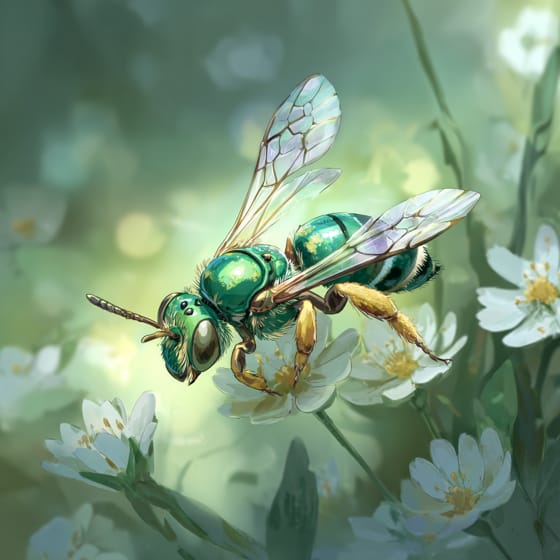
Lasioglossum vierecki
Tiny bees visit small flowers
Flowering plants are any plants that produce flowers as part of their reproductive cycle.
Shade tolerant plants are adapted to grow and thrive in areas with low light levels, requiring less direct sunlight.
Spring blooming plants produce their flowers during the spring season, often signifying the end of winter and the start of new growth.
Summer blooming plants produce their flowers during the summer season, often providing vibrant color when many other plants have finished.

Succulent plants have thickened, fleshy parts, usually leaves or stems, adapted to store water in arid climates.

Describes plants that are particularly attractive and beneficial to a wide range of pollinating organisms.

Forest habitats are terrestrial environments dominated by dense tree cover, supporting a high diversity of plant and animal life.
No aliases listed yet.
Danger
1/5 · Very low
Always ask an adult before touching or picking plants.
The easiest way to identify woodland stonecrop is to use the Snappit nature identifier app.
5-15 cm
30-60 cm
0.5-1 cm
Late spring to early summer
Yes
Mild
Perennial
Zoom in to split clusters and explore where this object has been snapped.
Apr 28, 2026
Morristown Historic DistrictPhoto attribution
(c) William J. Deml, some rights reserved (CC BY)
License: CC BY 4.0 ↗
Image may be shown cropped inside the card frame.

Virginia, US
You might spot Kiwi Bubbles and Eastern Skunk Cabbage.
View guide →

Virginia, US
You might spot Duck, Eastern Gray Squirrel, and Painted Turtle.
View guide →

West Virginia, US
You might spot Great Rhododendron and Mountain Laurel.
View guide →

Kentucky, US
You might spot Multiflora Rose, Eastern Newt, and American Beech.
View guide →

West Virginia, US
You might spot Virginia Bluebells, Bloodroot, and Maidenhair Spleenwort.
View guide →

Kentucky, US
You might spot Large White Trillium and Sharp-Lobed Hepatica.
View guide →
Take the discovery with you
Snap it with Snappit to identify it, learn what makes it special, and add the discovery to your collection.







.jpg&width=800)



_001.jpg&width=800)



