





woolly mule's ears
Wyethia mollis
Woolly mule's ears are soft, fuzzy plants with big, round leaves. They grow in sunny places and can be found in meadows and along trails. These plants are fun to touch and look at!
Habitat: Meadows
The woolly mule's ears has large, fuzzy silver-green leaves shaped like a mule's ear, giving it its name. Its bright yellow, daisy-like flowers grow singly or in small clusters atop sturdy stalks, making it stand out in mountain meadows.
Category
PlantsRarity
Common
Danger
1/5 · Very low
Snaps
Be the first to snap!
It grows high in the mountains, sometimes above the tree line!
Its scientific name, Wyethia, honors a famous American explorer!
The seeds are a tasty treat for many small birds and rodents!
These plants often grow in "colonies," covering large patches of ground!
Woolly mule's ears has dense, soft hairs on its leaves that help it survive cold mountain air and reflect harsh sunlight.
Woolly mule's ears can grow a long taproot that helps it find deep water and nutrients in dry, rocky mountain soil.
Woolly mule's ears flowers often track the sun's movement, helping them warm up and attract more busy pollinators.
Apis mellifera
gathers nectar and pollen from its flowers
Bombus vosnesenskii
helps transfer pollen between its sunny blooms
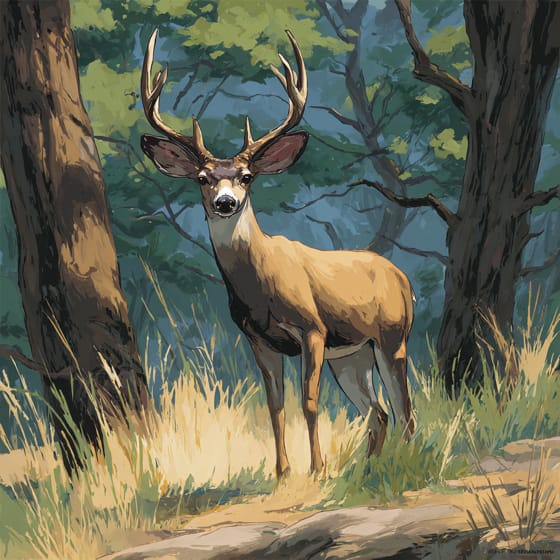
Odocoileus hemionus
browses on its leaves and tender shoots

Marmota flaviventris
grazes its fuzzy leaves in high mountain meadows
Furry describes animals possessing a dense covering of soft hair or fur.
Deciduous plants periodically shed all their leaves, typically during autumn or dry seasons.
Ornamental plants are cultivated primarily for their aesthetic appeal, enhancing landscapes and gardens with their attractive foliage, flowers, or form.
Summer blooming plants produce their flowers during the summer season, often providing vibrant color when many other plants have finished.

Grassland habitats are terrestrial biomes dominated by grasses and herbaceous plants, supporting a variety of grazing animals.

Describes plants that are particularly attractive and beneficial to a wide range of pollinating organisms.
No aliases listed yet.
Danger
1/5 · Very low
Always look but don't pick the plants, so they can keep growing!
The easiest way to identify woolly mule's ears is to use the Snappit nature identifier app.
30-80 cm
30-60 cm
4-8 cm
Summer
No
Mild
Perennial
Zoom in to split clusters and explore where this object has been snapped.
Recent snaps will appear here as new observations are added.
Take the discovery with you
Snap it with Snappit to identify it, learn what makes it special, and add the discovery to your collection.








.jpg&width=800)



_001.jpg&width=800)




