_(7119963547).jpg&width=800)





Yellow Bachelor's Button
Senega rugelii
The Yellow Bachelor's Button is a bright flower that adds color to gardens and fields. Its cheerful yellow petals attract butterflies and bees, making it a happy sight in nature!
Habitat: Grasslands
The Yellow Bachelor's Button has bright yellow, tightly clustered, globe-shaped flower heads atop slender green stems. Its narrow, often reddish leaves are mostly found at the base, creating a distinct, compact yellow "button" appearance unlike many open-faced wildflowers.
Category
PlantsRarity
Common
Danger
1/5 · Very low
Snaps
3
Each "button" flower head is actually made up of many tiny individual yellow flowers!
Indigenous peoples once used its roots to make medicines, even for snakebites!
Its name, "Polygala," means "much milk" as some believed it could boost milk production!
Its tiny seeds can be spread far and wide by even a gentle breeze!
Yellow Bachelor's Button has intensely bright yellow flower clusters that attract bees and other insects from a distance to aid pollination.
Yellow Bachelor's Button can thrive in poor, sandy soils because its root system is adapted to extract nutrients efficiently from harsh environments.
Yellow Bachelor's Button has lightweight seeds that can be easily carried by wind, helping the plant spread to new areas.
Apis mellifera
collects nectar and pollen

Bombus impatiens
buzz pollinates flowers
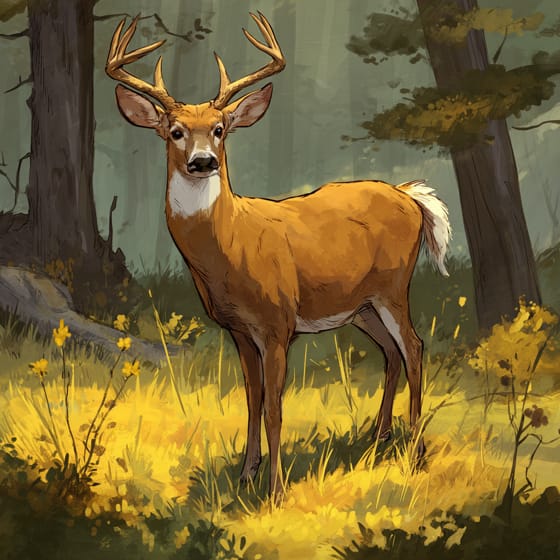
Odocoileus virginianus
browses on foliage
Flowering plants are any plants that produce flowers as part of their reproductive cycle.
Biennial plants complete their life cycle over two growing seasons, typically forming foliage in the first year and flowering/seeding in the second.
Summer blooming plants produce their flowers during the summer season, often providing vibrant color when many other plants have finished.
Fragrant flowers emit a pleasant aroma, often to attract pollinators or for defense.

Colorful describes organisms or objects displaying a wide range of bright and distinct colors.

Grassland habitats are terrestrial biomes dominated by grasses and herbaceous plants, supporting a variety of grazing animals.

Describes plants that are particularly attractive and beneficial to a wide range of pollinating organisms.
No aliases listed yet.
Danger
1/5 · Very low
Always look but don't touch flowers without asking an adult first.
The easiest way to identify Yellow Bachelor's Button is to use the Snappit nature identifier app.
15-45 cm
10-20 cm
1-2 cm
Late Spring to Fall
No
None
Annual
Zoom in to split clusters and explore where this object has been snapped.
Take the discovery with you
Snap it with Snappit to identify it, learn what makes it special, and add the discovery to your collection.









.jpg&width=800)


_001.jpg&width=800)




