





Yellow Iris
Iris pseudacorus
The Yellow Iris is a beautiful flower with bright yellow petals. It grows near water and adds color to ponds and wetlands, making nature even more lovely!
Habitat: Wetlands
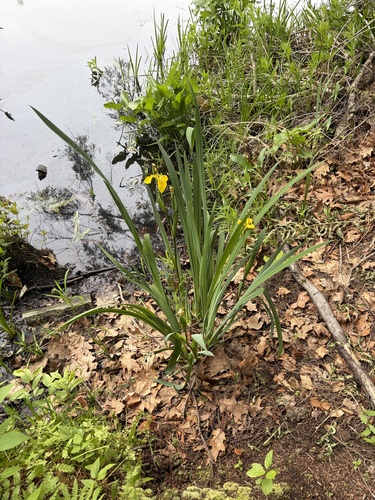
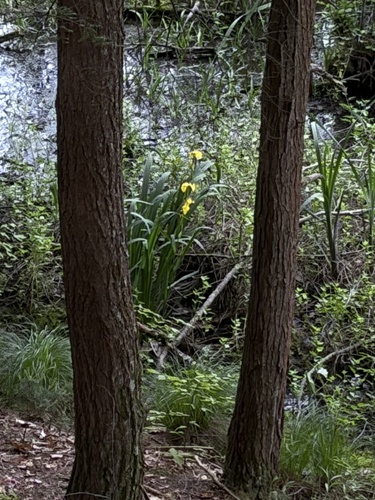
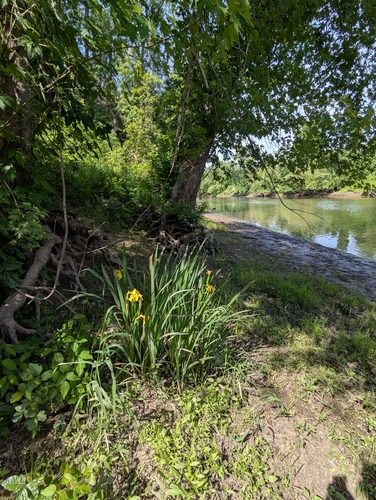
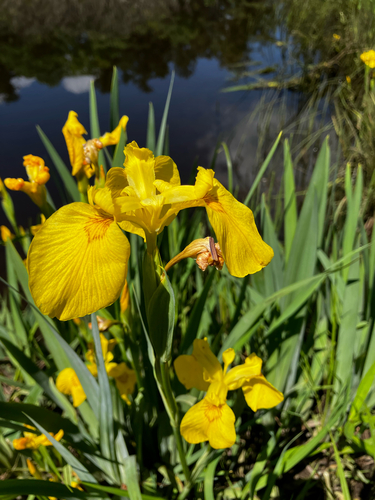
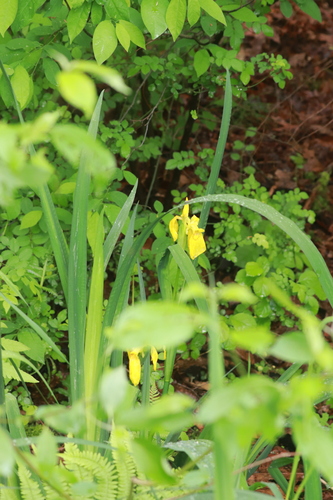
The Yellow Iris has striking bright yellow flowers with three large, downward-arching sepals often marked with brownish-purple veins. Its long, sword-like green leaves grow stiffly upright. These distinct features make it easily recognizable in watery environments.
Category
PlantsRarity
Common
Danger
1/5 · Very low
Snaps
93
A single plant can produce hundreds of floating seeds, spreading far and wide!
Each flower has a special 'landing strip' for visiting insects to guide them to nectar.
It was once planted to purify water in old European sewage systems!
The plant's roots were historically used to make a black dye for textiles.
Yellow Iris can grow thick, creeping rhizomes that anchor it firmly in saturated soils, helping it survive strong currents.
Yellow Iris has irritating compounds in its sap and leaves that deter most herbivores from eating it.
Yellow Iris can quickly spread through seeds and rhizomes, allowing it to rapidly colonize new wetland areas.
Apis mellifera
Visits flowers for nectar and pollen.
Bombus terrestris
One of many bumblebee species pollinating.

Eristalis tenax
One of many hoverfly species that pollinate iris.
Flowering plants are any plants that produce flowers as part of their reproductive cycle.
Cluster flowers are inflorescences where individual flowers are arranged closely together on a common stem.
Summer blooming plants produce their flowers during the summer season, often providing vibrant color when many other plants have finished.
Fragrant flowers emit a pleasant aroma, often to attract pollinators or for defense.

Describes plants that are particularly attractive and beneficial to a wide range of pollinating organisms.

Rapid growing plants exhibit accelerated growth rates, quickly increasing in size and biomass within a short period.

This habitat trait identifies species found in wetlands, which are areas of land saturated with water, either permanently or seasonally, including marshes, swamps, and bogs.

Aquatic habitats encompass environments where organisms live predominantly in water, including oceans, rivers, lakes, and wetlands.
Danger
1/5 · Very low
Do not touch the leaves or flowers too much, as they can be slippery near water.
The easiest way to identify Yellow Iris is to use the Snappit nature identifier app.
60-150 cm
30-60 cm
8-10 cm
Late spring to early summer
No
Moderate
Perennial
Zoom in to split clusters and explore where this object has been snapped.
Jun 6, 2026
Harvard Shaker Village Historic DistrictPhoto attribution
(c) Lythronax246, some rights reserved (CC BY)
License: CC BY 4.0 ↗
Image may be shown cropped inside the card frame.
Jun 6, 2026
Harvard Shaker Village Historic DistrictPhoto attribution
(c) Lythronax246, some rights reserved (CC BY)
License: CC BY 4.0 ↗
Image may be shown cropped inside the card frame.
Jun 5, 2026
East Windsor Hill Historic DistrictPhoto attribution
no rights reserved
License: CC0 1.0 ↗
Image may be shown cropped inside the card frame.
May 29, 2026
Litchfield Historic DistrictPhoto attribution
(c) Bryan Connolly, some rights reserved (CC BY)
License: CC BY 4.0 ↗
Image may be shown cropped inside the card frame.
May 25, 2026
East Granby Historic DistrictPhoto attribution
(c) Mark Apgar, some rights reserved (CC BY)
License: CC BY 4.0 ↗
Image may be shown cropped inside the card frame.

Massachusetts, US
You might spot Common Eastern Bumble Bee and Eastern Skunk Cabbage.
View guide →

Rhode Island, US
You might spot Spotted Lanternfly, Duck, and American Robin.
View guide →

Michigan, US
You might spot Monarch, Canada Goose, and Eastern Gray Squirrel.
View guide →

New York, US
You might spot American White Waterlily, Buttonbush, and Common Milkweed.
View guide →
New Jersey, US
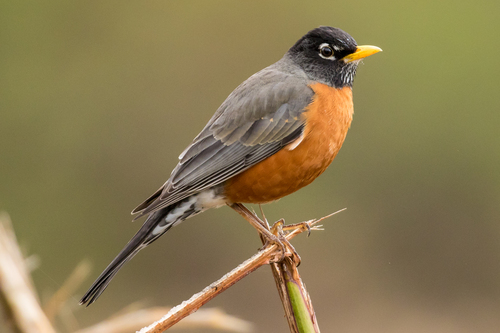
You might spot American Robin, Spotted Lanternfly, and Monarch.
View guide →

Connecticut, US
You might spot Downy Woodpecker and Eastern Gray Squirrel.
View guide →
Take the discovery with you
Snap it with Snappit to identify it, learn what makes it special, and add the discovery to your collection.







.jpg&width=800)


_001.jpg&width=800)




