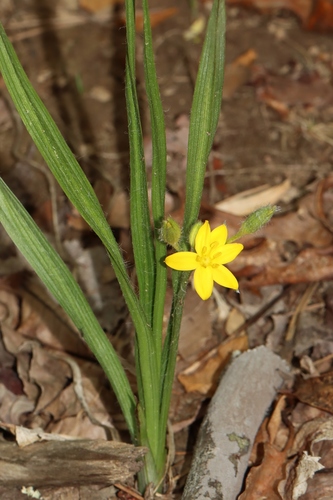


Yellow Star Grass
hypoxis hirsuta
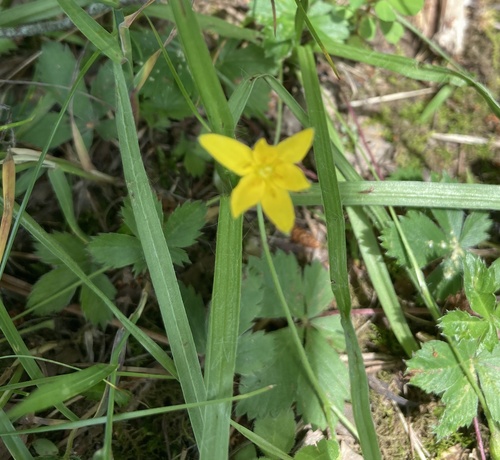
Yellow Star Grass (Hypoxis hirsuta) is a charming, low-growing perennial wildflower native to the grasslands and open woodlands of North America. Often mistaken for a true grass due to its slender, blade-like leaves, this plant reveals its true botanical identity when it bursts into bloom. Its brilliant, star-shaped yellow flowers act as bright beacons close to the forest floor or tucked within prairie grasses, welcoming the warmth of the spring sun. This resilient little plant plays an essential role in its local ecosystem, supporting early-season native pollinators when few other flowers are active. It is highly valued in native plant gardening and prairie restoration projects for its hardy nature and cheerful appearance.
Habitat: Found in open woodlands, savannas, prairies, glades, and meadows, typically thriving in dry to moist, sandy or rocky soils.
This small plant grows up to 30 centimeters tall, featuring narrow, bright green, grass-like leaves that are covered in fine, soft white hairs. Each plant produces several slender, hairy stalks terminating in clusters of star-shaped flowers. The flowers, about 1.5 to 2.5 centimeters across, consist of six bright yellow tepals surrounding a central cluster of yellow stamens. The undersides of the yellow tepals are often a contrasting greenish-yellow and are also covered in fine hairs.
Category
PlantsRarity
Common
Danger
1/5 · Very low
Snaps
9
Despite its name and grass-like foliage, Yellow Star Grass is a member of the Hypoxidaceae family, making it more closely related to lilies than true grasses.
The flowers do not produce any nectar; they lure in pollinators purely with the promise of pollen, effectively pulling off a floral trick.
The species name 'hirsuta' is derived from Latin, meaning 'hairy', which perfectly describes the fuzzy coating on its leaves and flower stems.
The flowers open only on sunny mornings and close during cloudy weather or by afternoon to protect their reproductive organs.
A dense covering of fine hairs on the leaves and stems reduces moisture loss from wind and deters crawling insect herbivores.
An underground bulb-like stem called a corm stores nutrients, allowing the plant to rapidly resprout after wildfires or severe droughts.
As a photosynthetic plant, it converts sunlight, water, and carbon dioxide into energy and organic compounds.
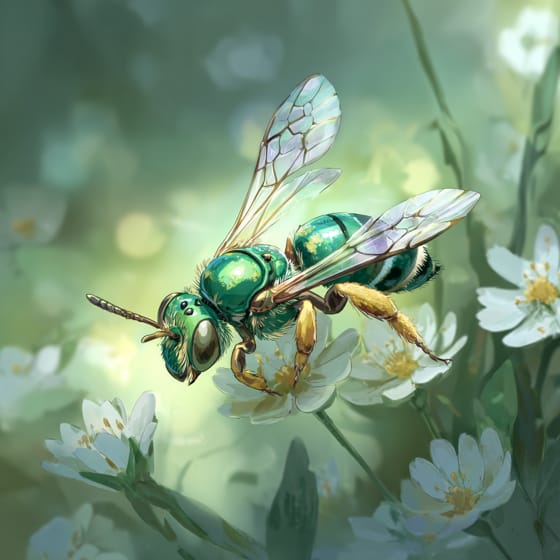
Lasioglossum pectorale
Pollinates the flowers while collecting pollen
.JPG&width=800)
Sylvilagus floridanus
Feeds on the grass-like foliage during spring
Osmia pumila
Pollinates the bright yellow blossoms
No trait badges are assigned for this object yet.
No aliases listed yet.
Collections for this object will appear here as more themes are added.
Danger
1/5 · Very low
No special safety notes yet.
The easiest way to identify Yellow Star Grass is to use the Snappit nature identifier app.
10-30 cm
3-10 years
As a photosynthetic plant, it converts sunlight, water, and carbon dioxide into energy and organic compounds.
Found in open woodlands, savannas, prairies, glades, and meadows, typically thriving in dry to moist, sandy or rocky soils.
Zoom in to split clusters and explore where this object has been snapped.
Jun 14, 2026
Chandon ParkPhoto attribution
no rights reserved
License: CC0 1.0 ↗
Image may be shown cropped inside the card frame.

Rhode Island, US
You might spot Common Mugwort, Duck, and Azure Bluet.
View guide →
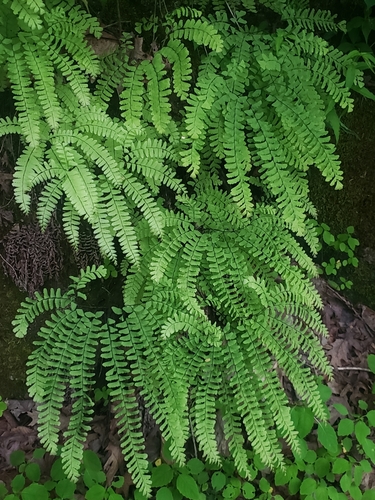
Iowa, US
You might spot Northern Maidenhair Fern and Wood Nettle.
View guide →
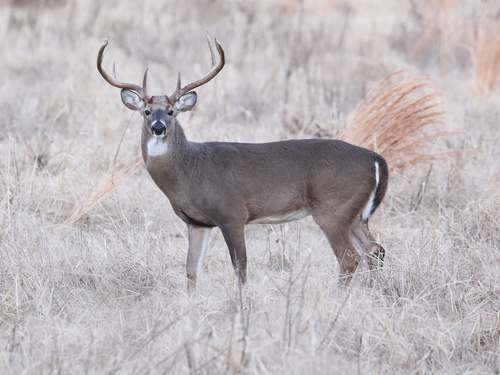
Virginia, US
You might spot White-Tailed Deer and House Sparrow.
View guide →

Illinois, US
You might spot Viceroy, Common Wood-Nymph, and Acadian Hairstreak.
View guide →

Rhode Island, US
You might spot Great Blue Heron, Painted Turtle, and Sensitive Fern.
View guide →

New York, US
You might spot Bald Eagle, Common Eastern Bumble Bee, and Tree-Of-Heaven.
View guide →
Take the discovery with you
Snap it with Snappit to identify it, learn what makes it special, and add the discovery to your collection.










.jpg&width=800)



_001.jpg&width=800)




