





yellow trout lily
Erythronium americanum
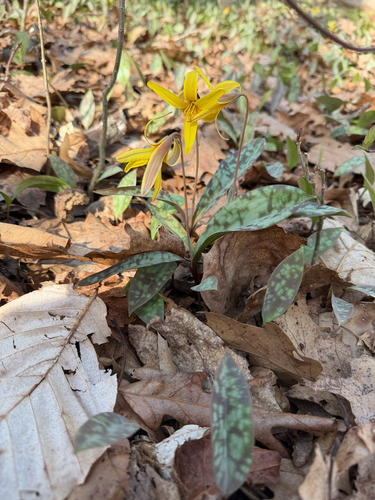
The yellow trout lily is a bright yellow flower that blooms in spring. It has lovely, speckled leaves that look like fish scales, making it special and fun to find in the woods!
Habitat: Forests
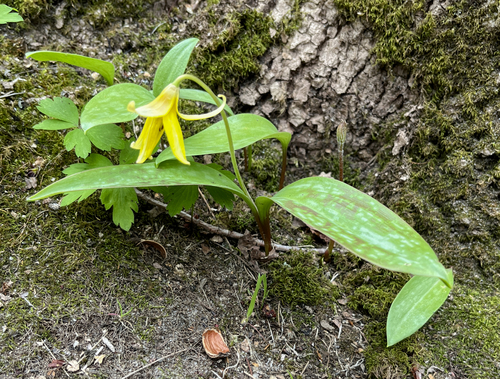
The yellow trout lily has striking, mottled green leaves that resemble a brook trout's skin, making it unique on the forest floor. Its nodding, bell-shaped flowers are bright yellow, with six petals that curve sharply backwards. These emerge on slender stalks above a pair of basal leaves.
Category
PlantsRarity
Common
Danger
1/5 · Very low
Snaps
55
It takes up to seven years for a yellow trout lily seedling to produce its very first flower!
Its common name comes from the mottled leaves resembling a brook trout, while its corm looks like a dog's tooth!
The yellow trout lily's leaves and corms contain compounds that can cause a mild stomachache if eaten raw!
These 'spring ephemerals' emerge, bloom, and disappear within just a few weeks each year!
Yellow trout lily is a 'spring ephemeral,' growing, flowering, and setting seed rapidly before tree leaves block the sunlight.
Its seeds have a fatty attachment that attracts ants, which then carry and disperse the seeds, helping it spread.
Yellow trout lily spreads by underground rhizomes, allowing a single plant to form large, dense colonies over time.
Bombus impatiens
Drinks nectar and collects pollen from its flowers.
Aphaenogaster picea
Carries its seeds away to help them spread and germinate.
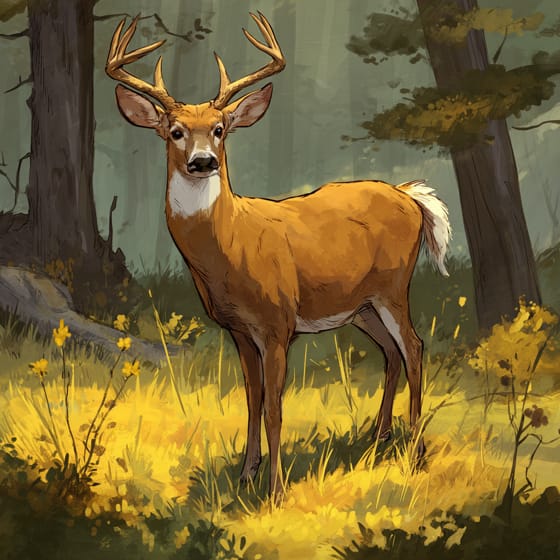
Odocoileus virginianus
Browses on its tender leaves and flowers in early spring.
Limax maximus
Chews holes in its leaves when they emerge from the ground.
Flowering plants are any plants that produce flowers as part of their reproductive cycle.
Cluster flowers are inflorescences where individual flowers are arranged closely together on a common stem.
Shade tolerant plants are adapted to grow and thrive in areas with low light levels, requiring less direct sunlight.
Spring blooming plants produce their flowers during the spring season, often signifying the end of winter and the start of new growth.

Fragrant flowers emit a pleasant aroma, often to attract pollinators or for defense.

Colorful describes organisms or objects displaying a wide range of bright and distinct colors.

Describes plants that are particularly attractive and beneficial to a wide range of pollinating organisms.

Forest habitats are terrestrial environments dominated by dense tree cover, supporting a high diversity of plant and animal life.
Danger
1/5 · Very low
Always look but don't pick flowers, so everyone can enjoy them!
The easiest way to identify yellow trout lily is to use the Snappit nature identifier app.
10-30 cm
5-15 cm
2-4 cm
Early spring
Yes
Mild
Perennial
Zoom in to split clusters and explore where this object has been snapped.
Jun 3, 2026
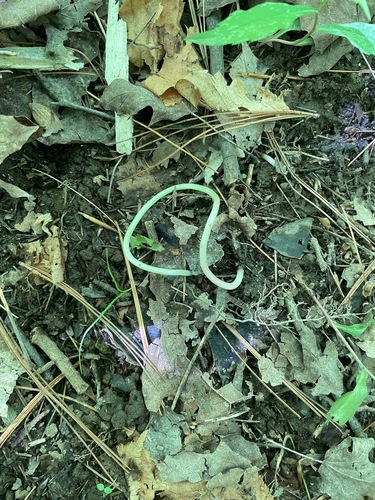
Sand Bar State ParkPhoto attribution
(c) Tom Scavo, some rights reserved (CC BY)
License: CC BY 4.0 ↗
Image may be shown cropped inside the card frame.
May 27, 2026
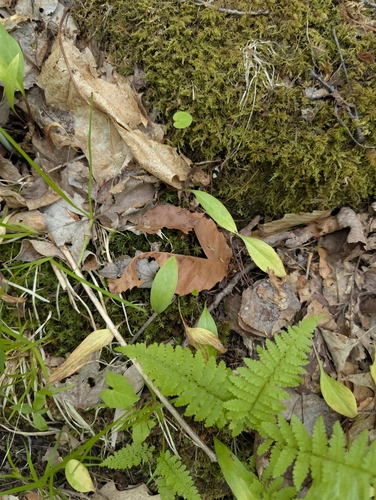
Lyme Common Historic DistrictPhoto attribution
(c) Nick Kleinschmidt, some rights reserved (CC BY)
License: CC BY 4.0 ↗
Image may be shown cropped inside the card frame.
May 9, 2026
Norway Historic DistrictPhoto attribution
(c) Dawn Nelson, some rights reserved (CC BY)
License: CC BY 4.0 ↗
Image may be shown cropped inside the card frame.
Apr 13, 2026
South Mountain ReservationPhoto attribution
(c) Tom Pollard, some rights reserved (CC BY)
License: CC BY 4.0 ↗
Image may be shown cropped inside the card frame.

Ohio, US
You might spot Large White Trillium, Fire Pink, and Christmas Fern.
View guide →

Vermont, US
You might spot Japanese Knotweed and Red-Bellied Woodpecker.
View guide →

New York, US
You might spot Allegheny Mountain Dusky Salamander.
View guide →

Ohio, US
You might spot Blue-Fronted Dancer, American Rubyspot, and Fowler's Toad.
View guide →

Michigan, US
You might spot Yellow Lady's Slipper and Ring-Billed Gull.
View guide →

New Hampshire, US
You might spot Eastern White Pine and White-Tailed Deer.
View guide →
Take the discovery with you
Snap it with Snappit to identify it, learn what makes it special, and add the discovery to your collection.






.jpg&width=800)


_001.jpg&width=800)



