





Zabulon Skipper
Lon zabulon
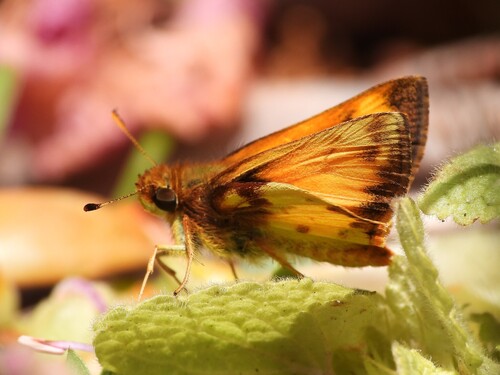
The Zabulon Skipper is a small, colorful butterfly with bright orange and brown wings. They flutter around flowers and are fun to watch as they sip nectar from blossoms.
Habitat: Meadows and gardens
The Zabulon Skipper is a small butterfly with a distinct rapid, darting flight. Males display bright orange-brown upperwings with dark borders, while females are darker brown with yellow-orange spots and a purplish sheen. Their hindwing undersides often feature a contrasting pale patch, aiding in identification.
Category
InsectsRarity
Common
Danger
1/5 · Very low
Snaps
47
Adult Zabulon Skippers never eat solid food, only liquid nectar.
Males often perch on leaves, ready to zoom out and defend their territory.
Their caterpillars live hidden inside rolled-up blades of grass!
They have a long, straw-like proboscis to sip nectar from deep flowers.
Zabulon Skippers can zip through the air quickly because of their powerful wing muscles that help them evade predators and find new flowers.
The Zabulon Skipper has mottled hindwings that, when folded, blend into shadows and dried leaves, helping them hide from hungry birds.
Zabulon Skippers can locate sweet flower nectar with sensitive antennae, helping them find food for energy to fuel their active flights.
Adults drink flower nectar, while caterpillars munch on various grass leaves.
Age differences: As larvae, they eat grass leaves; as adults, they drink nectar.

Asclepias syriaca
Adults visit for nectar

Trifolium repens
Adults visit for nectar
Panicum dichotomiflorum
Larvae feed on its leaves
Solitary animals live alone for most of their lives, only interacting with others for mating or parental care.
Camouflaged describes organisms that possess coloring or patterns that allow them to blend into their environment.
Colorful describes organisms or objects displaying a wide range of bright and distinct colors.
This trait characterizes organisms whose diet consists entirely or primarily of plant material.

Describes plants that are particularly attractive and beneficial to a wide range of pollinating organisms.

Diurnal animals are primarily active during daylight hours, typically resting or sleeping at night.

Describes organisms that transfer pollen, enabling the fertilization and reproduction of plants.
No aliases listed yet.
Danger
1/5 · Very low
Be gentle and quiet around butterflies so you don't scare them away.
The easiest way to identify Zabulon Skipper is to use the Snappit nature identifier app.
25-38 mm
15-20 mm
5-14 days
Adults drink flower nectar, while caterpillars munch on various grass leaves.
Meadows and gardens
Foraging
6
Zoom in to split clusters and explore where this object has been snapped.
May 14, 2026
Monmouth Battlefield State ParkPhoto attribution
(c) geosesarma, some rights reserved (CC BY)
License: CC BY 4.0 ↗
Image may be shown cropped inside the card frame.

Michigan, US
You might spot Eastern Gray Squirrel, Tree-Of-Heaven, and House Sparrow.
View guide →

Pennsylvania, US
You might spot American Robin, Red-Winged Blackbird, and Lesser Celandine.
View guide →

Pennsylvania, US
You might spot Large Yellow Underwing and Eastern Black Carpenter Ant.
View guide →

New York, US
You might spot Common Eastern Bumble Bee and American Robin.
View guide →

North Carolina, US
You might spot Northern Cardinal, Carolina Wren, and Tufted Titmouse.
View guide →

Virginia, US
You might spot Spotted Lanternfly and Northern Cardinal.
View guide →
Take the discovery with you
Snap it with Snappit to identify it, learn what makes it special, and add the discovery to your collection.







.jpg&width=800)



