


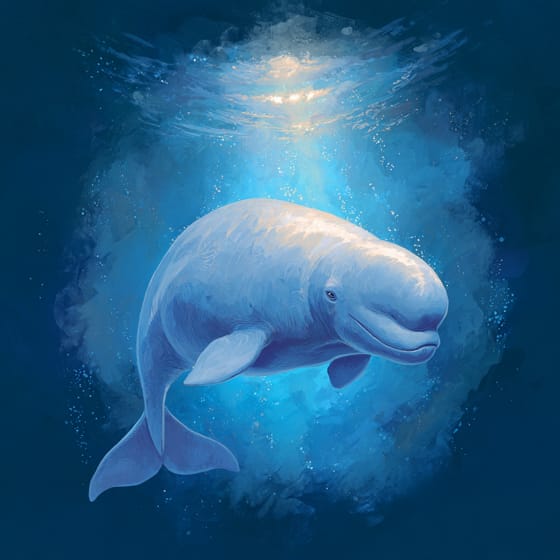
Beluga Whale
The Boston Aquarial Gardens was a groundbreaking 19th-century attraction that pioneered public aquariums and zoos in the United States.
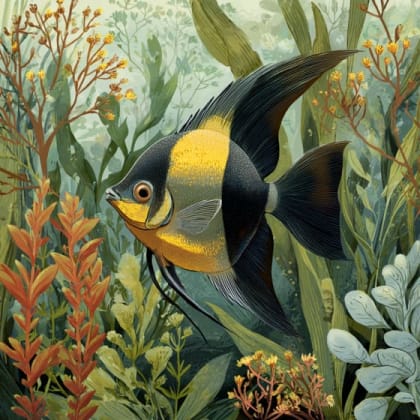
The Boston Aquarial Gardens was a groundbreaking 19th-century attraction that pioneered public aquariums and zoos in the United States. First opening its doors in 1859, this innovative venue offered a unique opportunity to explore the wonders of aquatic life and a diverse collection of terrestrial animals in the heart of Boston's Financial District. It quickly became a popular destination, captivating audiences with its blend of scientific exhibition and lively entertainment. Initially focusing on marine life, the Aquarial Gardens featured "hundreds of specimens of the finny tribe" displayed in numerous tanks, including a large central octagonal tank and 56 smaller tanks designed to mimic natural marine environments with rocks, sand, and seaweed. Guests could observe a variety of local species like minnows, crabs, starfish, lobsters, and flounder, alongside more exotic imports such as angel fish and porcupine fish. A significant draw was the exhibition of the first live beluga whale ever held in captivity, a 12-foot marvel that even performed tricks like pulling a nautilus-shaped boat across its tank. As it expanded and evolved into the Boston Aquarial and Zoological Gardens, and later Barnum's Aquarial Gardens, the venue introduced a substantial zoological department. This section housed a menagerie of animals from around the world, including lions, leopards, grizzly bears, black bears, moose, kangaroos, and a "den of serpents" featuring anacondas and pythons. Performing animals, such as trained seals named Ned and Fanny who played a hand organ, and a "sphinx" animal known for its comedic acts, further enhanced the visitor experience, cementing its reputation as a place of both wonder and amusement. Be ready to snap and learn! Get the Snappit app to identify any nature species you find here.
The Boston Aquarial Gardens originated from the vision of inventor James Ambrose Cutting and aquarist Henry D. Butler, opening on Bromfield Street in April 1859. It was notable as the first freestanding aquarium dedicated solely to marine life in the U.S. By October 1860, the establishment relocated to a larger, purpose-built facility on Central Court off Washington Street, expanding its offerings to include terrestrial animals and renaming itself the Boston Aquarial and Zoological Gardens. This expanded venue featured a prominent 30-foot-diameter central tank and a sophisticated water circulation system that pumped up to 860,000 gallons of seawater daily from Boston Harbor. A pivotal moment occurred in 1861 with the acquisition of a live beluga whale from the Gulf of St. Lawrence, marking the first time such a cetacean was exhibited in modern captivity. In May 1862, the famous showman P.T. Barnum acquired the gardens, undertaking extensive renovations and reopening it as Barnum's Aquarial Gardens. Under Barnum's ownership, the emphasis shifted more towards spectacle and vaudeville-style entertainment, though key aquatic attractions like the beluga whale and trained seals remained. The venue's run, however, was brief, closing in February 1863 due to financial strains, high operational costs, and Barnum's divided attention. Its contents were transferred to Barnum's American Museum in New York, where many were tragically lost in an 1865 fire, and the original Boston building was later destroyed in the Great Boston Fire of 1872.
Visitors would wander through rows of illuminated tanks observing marine life, then proceed to the lower level to view caged land animals. They would also attend scheduled performances featuring trained animals and, especially under Barnum's ownership, theatrical acts and various curiosities.
(Not applicable in a modern sense, as the venue no longer exists. Historically, visitors would have enjoyed it as an indoor attraction)
(Not applicable in a modern sense. Facilities in the 1860s would have been rudimentary by today's standards, likely involving stairs and uneven surfaces, typical for the era).
The most sensational attraction, a 12-foot beluga whale, was the first of its kind in modern captivity and performed unique tricks.
These intelligent seals delighted audiences with their ability to play a hand organ and salute.
Numerous tanks showcased "hundreds of specimens of the finny tribe," including local species like eels, trout, haddock, shrimp, and dogfish, as well as exotic ones like angel fish. A newly discovered sea anemone, *Trochartea pendula*, was also presented.
A diverse collection of land animals such as lions, leopards, grizzly bears, black bears, moose, kangaroos, and an African python.
Each card links to a full Explore page with photos, traits, and fun facts.
Start with the big picture, then zoom in to explore individual wildlife observations around this place.
Arrive Early for Performances
Animal performances and theatrical shows were popular, so arriving early would secure a good viewing spot.
Bring a Notebook
For those interested in the scientific aspect, recording observations of the diverse species, especially the rare ones like the *Trochartea pendula* sea anemone, would have been valuable.
Explore Both Departments
Allocate time for both the extensive aquarial displays and the varied zoological collection to appreciate the full scope of the gardens.
Observe the Beluga Whale Closely
This pioneering exhibit was a major draw; observing its behavior and unique training would have been a once-in-a-lifetime experience.
Look for Trained Animal Acts
Beyond the famous seals, other trained animals like kangaroos and bears performed feats in the ring.
Consider the Context
Remember that this was a 19th-century establishment, and the methods of animal care and exhibition would differ significantly from modern practices.
Recent snaps will appear here as new observations are added.

Ohio, US
You might spot Sand Tiger Shark, Nurse Shark, and Cow.
View guide →

California, US
You might spot Orca, Bottlenose Dolphin, and Beluga Whale.
View guide →

Illinois, US
You might spot Beluga Whale, Pacific White-Sided Dolphin, and Sea Otter.
View guide →

Texas, US
You might spot Brown-Throated Three-Toed Sloth, Ant, and Penguin.
View guide →