





Beluga Whale
Delphinapterus leucas
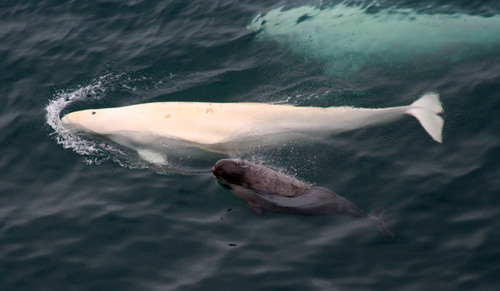
Beluga whales are white whales with rounded heads. They are known for their chirping and whistling sounds.
Habitat: Cold Arctic and sub-Arctic seas.
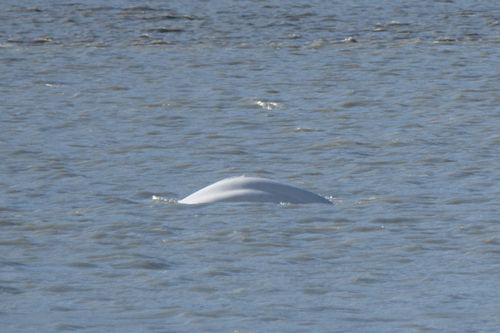
The Beluga Whale is a medium-sized cetacean with a distinct creamy white body and a rounded, bulbous forehead called a 'melon'. Unlike most whales, it lacks a dorsal fin and has a very flexible neck. Young belugas are born dark grey.
Category
MammalsRarity
Rare
Danger
3/5 · Moderate
Snaps
4
Belugas shed their entire outer skin layer each summer, rubbing on rocks to help it peel off!
Belugas use their flexible lips to suck up prey like a vacuum cleaner!
Their scientific name, Delphinapterus leucas, means 'white dolphin without a fin.'
They are born dark grey and gradually turn pure white as they get older!
Beluga Whales can use echolocation by emitting clicks and whistles to find food and navigate in murky Arctic waters.
Beluga Whales have a uniquely flexible neck that helps them turn their head to look around for prey and predators.
Beluga Whales can change the shape of their rounded forehead (melon) to focus sounds for super-accurate echolocation.
These marine mammals enjoy eating fish, squid, and crustaceans from the cold ocean floor.

Orcinus orca
Major predator in open waters.
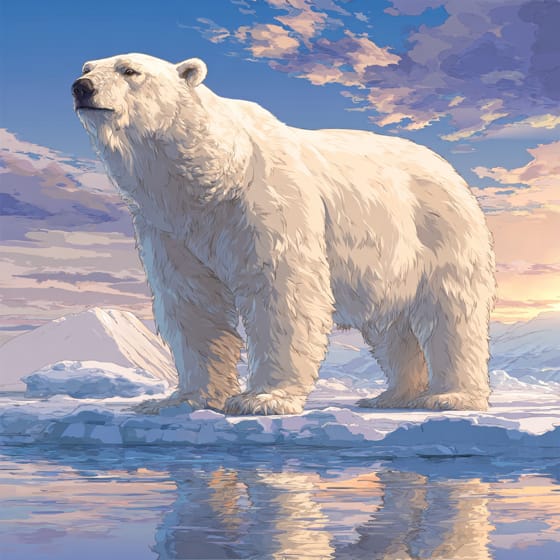
Ursus maritimus
Preys on belugas trapped in ice openings.
Boreogadus saida
A primary food source in their Arctic habitat.
Furry describes animals possessing a dense covering of soft hair or fur.
Characterized by having toes connected by a membrane, typically aiding in swimming.
Social animals live in organized groups, cooperating for survival benefits such as foraging, defense, and raising offspring.
Filter feeders obtain nutrients by straining suspended food particles and small organisms from water.

Piscivorous organisms are animals that primarily subsist on a diet of fish.

Echolocation is a biological sonar used by animals to navigate, hunt, and communicate by emitting sound waves and interpreting the echoes.

Describes a species whose presence and role have a disproportionately large effect on its environment.

Aquatic habitats encompass environments where organisms live predominantly in water, including oceans, rivers, lakes, and wetlands.

Marine habitats encompass all saltwater environments of the Earth's oceans, supporting an immense diversity of aquatic life.

Migratory animals undertake seasonal movements from one region to another, typically in response to changes in climate or food availability.

Nocturnal animals are primarily active during the nighttime hours, typically resting or sleeping during the day.
Danger
3/5 · Moderate
Avoid close contact — they are large wild animals.
The easiest way to identify Beluga Whale is to use the Snappit nature identifier app.
350-550 cm
1000-1500 kg
35-60 years
22 km/h
These marine mammals enjoy eating fish, squid, and crustaceans from the cold ocean floor.
Cold Arctic and sub-Arctic seas.
Foraging
Zoom in to split clusters and explore where this object has been snapped.
Sep 13, 2025
SunrisePhoto attribution
(c) Casey H. Richart, some rights reserved (CC BY)
License: CC BY 4.0 ↗
Image may be shown cropped inside the card frame.
Sep 13, 2025
SunrisePhoto attribution
(c) Casey H. Richart, some rights reserved (CC BY)
License: CC BY 4.0 ↗
Image may be shown cropped inside the card frame.
Sep 13, 2025
SunrisePhoto attribution
(c) Casey H. Richart, some rights reserved (CC BY)
License: CC BY 4.0 ↗
Image may be shown cropped inside the card frame.
Alaska, US
You might spot Beluga, North American Porcupine, and Meadow Buttercup.
View guide →

California, US
You might spot Orca, Bottlenose Dolphin, and Beluga Whale.
View guide →

Illinois, US
You might spot Beluga Whale, Pacific White-Sided Dolphin, and Sea Otter.
View guide →
Illinois, US
You might spot Beluga Whale, Pacific White-Sided Dolphin, and Sea Otter.
View guide →

Connecticut, US
You might spot Beluga Whale, African Penguin, and Sea Lion.
View guide →
California, US
You might spot Orca, Bottlenose Dolphin, and Sea Lion.
View guide →
Take the discovery with you
Snap it with Snappit to identify it, learn what makes it special, and add the discovery to your collection.






.jpg&width=800)



.JPG&width=800)



.jpg&width=800)
