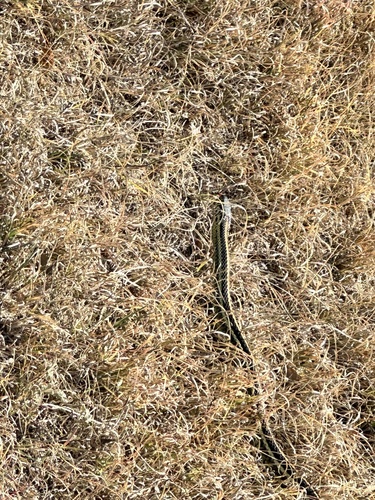




Plains Garter Snake
Thamnophis radix
The Plains Garter Snake is a friendly snake that loves to slither through grass and wetlands. They have beautiful stripes and are great at catching small bugs and frogs.
Habitat: Grasslands
The Plains Garter Snake has a brown, olive, or black body with three prominent yellow or orange stripes running lengthwise. A checkerboard pattern of dark spots often appears between the stripes. This combination makes it distinct from other garter snakes.
Category
ReptilesRarity
Common
Danger
1/5 · Very low
Snaps
18
Plains Garter Snakes are not venomous to humans, making them safe to observe!
Their forked tongue 'tastes' the air, helping them find yummy food!
They give birth to live babies, not eggs, like a tiny snake factory!
They sometimes form huge groups called 'hibernacula' to sleep through winter together!
Plains Garter Snakes can release a foul-smelling musk because it helps them deter predators when feeling threatened.
Plains Garter Snakes have a natural resistance to the mild venom of some prey, allowing them to hunt more easily.
Plains Garter Snakes can unhinge their jaws, allowing them to swallow prey much larger than their head!
Plains Garter Snakes can brumate by slowing their body functions, helping them survive cold winter months.
This snake is a hunter that eats small creatures like frogs, earthworms, and mice.
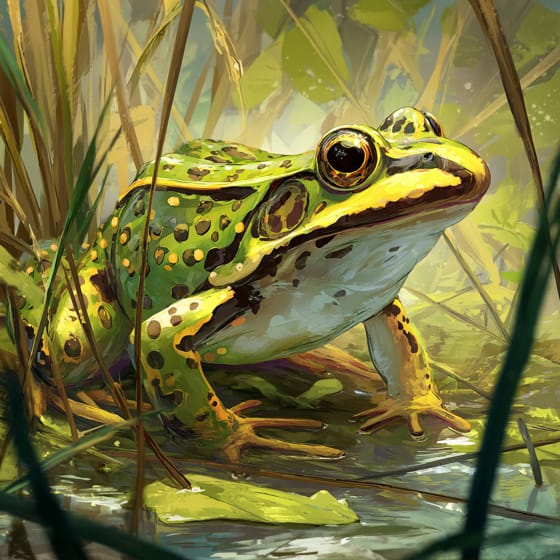
Rana pipiens
A common prey item in their wetland habitats.
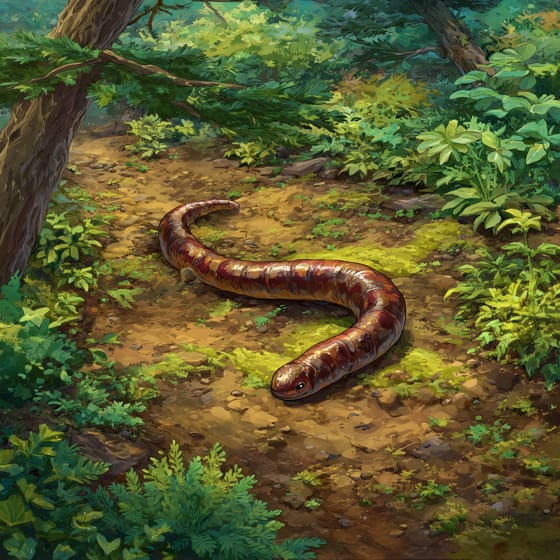
Lumbricus terrestris
A primary food source, especially for younger snakes.
Microtus pennsylvanicus
Often preyed upon in grassy habitats.
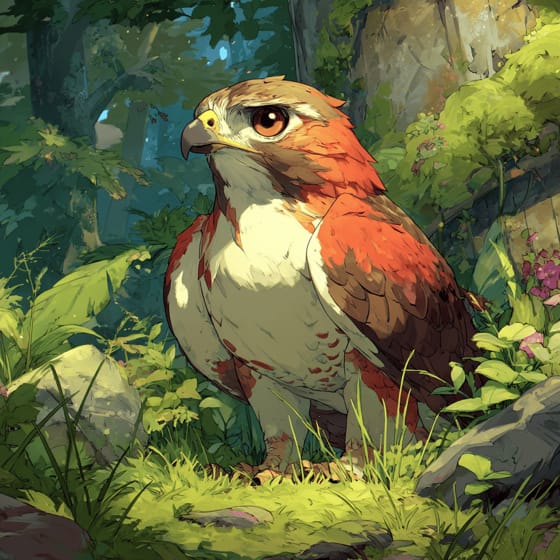
Buteo jamaicensis
A common aerial predator of garter snakes.
Marked with parallel bands or lines of color.
Solitary animals live alone for most of their lives, only interacting with others for mating or parental care.
Colorful describes organisms or objects displaying a wide range of bright and distinct colors.
Grassland habitats are terrestrial biomes dominated by grasses and herbaceous plants, supporting a variety of grazing animals.

This trait identifies organisms whose diet primarily consists of insects and other small invertebrates.

This habitat trait identifies species found in wetlands, which are areas of land saturated with water, either permanently or seasonally, including marshes, swamps, and bogs.

Diurnal animals are primarily active during daylight hours, typically resting or sleeping at night.

This trait identifies organisms that exhibit exceptional swiftness in movement for hunting, escape, or travel.
No aliases listed yet.
Danger
1/5 · Very low
If you see a snake, it's best to watch from a distance and not touch it.
The easiest way to identify Plains Garter Snake is to use the Snappit nature identifier app.
38-71 cm
0.05-0.2 kg
5-10 years
5 km/h
This snake is a hunter that eats small creatures like frogs, earthworms, and mice.
1.5 km/h
Grasslands
Zoom in to split clusters and explore where this object has been snapped.
Oct 13, 2024
Fort BufordPhoto attribution
no rights reserved
License: CC0 1.0 ↗
Image may be shown cropped inside the card frame.

Illinois, US
You might spot Common Eastern Bumble Bee and Brown-Belted Bumble Bee.
View guide →

Illinois, US
You might spot Carolina Mantis and Goldenrod Soldier Beetle.
View guide →

Colorado, US
You might spot Eastern Fox Squirrel, Bee, and Duck.
View guide →

South Dakota, US
You might spot Duck, Canada Goose, and Thirteen-Lined Ground Squirrel.
View guide →

Illinois, US
You might spot Viceroy, Common Wood-Nymph, and Acadian Hairstreak.
View guide →

Illinois, US
You might spot American Robin, Monarch, and Duck.
View guide →
Take the discovery with you
Snap it with Snappit to identify it, learn what makes it special, and add the discovery to your collection.