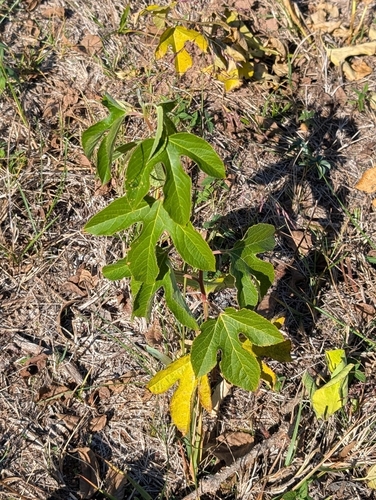




Passion Flower

Discover frontier history at the Nathan and Olive Boone Homestead State Historic Site.
Discover frontier history at the Nathan and Olive Boone Homestead State Historic Site.
This state historic site in Ash Grove, Missouri, preserves the last home of Nathan Boone, youngest son of the legendary Daniel Boone, and his resourceful wife, Olive. It offers a unique opportunity to step back in time and experience the challenges and triumphs of a prominent pioneer family who shaped Missouri's early development. The 370-acre site is a meticulously restored landscape, inviting visitors to connect with history and nature.
Visitors can explore the iconic 1837 log home, built in a classic saddlebag or dogtrot style, and discover the stories of the Boone family and the enslaved individuals whose labor was essential to the homestead's operation. Beyond the home, the site features two historically significant cemeteries—the Boone family cemetery and the African American cemetery—along with several hiking trails that wind through native prairie flora, limestone glades, and woodlands. An heirloom garden provides insight into the self-sufficiency of frontier settlers.
A visit to the Nathan and Olive Boone Homestead is more than just a historical tour; it's an immersive educational experience. It’s a chance to walk in the footsteps of pioneers, ponder their resilience, and appreciate the natural beauty that surrounds this important piece of Missouri heritage. With interpretive programs and tranquil outdoor spaces, it offers a memorable journey into a pivotal era of American expansion. Explore the grounds like a pro—download the Snappit app to instantly identify animals and plants.
Nathan Boone, born in 1781, was the youngest son of the famous frontiersman Daniel Boone. He forged his own legacy as a hunter, soldier, surveyor, and businessman, playing a significant role in Missouri's early development. After years of military service and various ventures, including co-founding the "Boone's Lick" salt-making business, Nathan and Olive Boone moved to this homestead in Ash Grove in 1837. The house, originally a double-pen log cabin, served as their home until their deaths in the 1850s, while Olive tirelessly managed the farm and family during Nathan's frequent absences for military and surveying duties. The homestead's operation was also heavily reliant on the labor of enslaved individuals, whose lives and contributions are also recognized on the property. After standing unmarked for over eight decades following the Boones' deaths, efforts by local historians in Ash Grove brought Nathan's story back into prominence. Memorial markers were placed on Nathan's grave in 1942 by the Daughters of the American Revolution, and on Olive's in 1985. The Missouri Department of Natural Resources acquired the 370-acre property in 1991, meticulously restoring the landscape and preserving the home to create the State Historic Site. In 2020, the site was officially renamed to include Olive Boone, acknowledging her critical role in the homestead's survival and success.
Take a guided tour of the Boone home, which provides a fascinating look into 19th-century frontier living. Hike the Spring Box, Homestead Interpretive, or Prairie View trails to experience the restored natural landscape. Explore both historical cemeteries. Enjoy a picnic in the designated area. The site also offers special events and living history demonstrations throughout the year. For a self-guided experience, QR codes are available for virtual interpretive videos along the trails.
In spring and summer, the prairie areas burst with wildflowers like Black-eyed Susan and wild bergamot. Tick awareness is advisable during warmer months. Winter visits can offer a peaceful, snow-dusted landscape, though specific programs may be limited.
The contact station, restrooms, and picnic shelter are accessible. A hard-packed gravel path, approximately 0.25 miles long, leads to both the Boone family and African American cemeteries and ends near the Boone home. The home itself is accessible via a ramp on the west side of the building. While arrangements for closer parking to the home can be made, full wheelchair accessibility from this parking is not guaranteed. Photos of the home are available at the contact station for those unable to take the tour.
The Nathan and Olive Boone Home, the Boone Family Cemetery, the African American Cemetery, and the various hiking trails (Spring Box, Homestead Interpretive, Prairie View).
Each card links to a full Explore page with photos, traits, and fun facts.
Start with the big picture, then zoom in to explore individual wildlife observations around this place.
Wear comfortable walking shoes suitable for gravel paths and hiking trails.
Bring water, especially when visiting during warmer months, as you'll be spending time outdoors.
Check the official Missouri State Parks website for the Nathan and Olive Boone Homestead for current operating hours, tour availability, and a schedule of special events before your visit.
Utilize the QR codes available at the site to access virtual interpretive videos for an enhanced self-guided tour experience.
Allow ample time (2-3 hours) to fully explore the house, cemeteries, and enjoy a hike on at least one of the trails.
Pets are welcome on the hiking trails but must be kept on a leash at all times.
Oct 26, 2024
Photo attribution
(c) Conway Hawn, some rights reserved (CC BY)
License: CC BY 4.0 ↗
Image may be shown cropped inside the card frame.
Oct 26, 2024
Photo attribution
(c) Conway Hawn, some rights reserved (CC BY)
License: CC BY 4.0 ↗
Image may be shown cropped inside the card frame.
Oct 26, 2024
Photo attribution
(c) Conway Hawn, some rights reserved (CC BY)
License: CC BY 4.0 ↗
Image may be shown cropped inside the card frame.
Oct 26, 2024
Photo attribution
(c) Conway Hawn, some rights reserved (CC BY)
License: CC BY 4.0 ↗
Image may be shown cropped inside the card frame.
Oct 26, 2024
Photo attribution
(c) Conway Hawn, some rights reserved (CC BY)
License: CC BY 4.0 ↗
Image may be shown cropped inside the card frame.

Maryland, US
You might spot White-Tailed Deer and Eastern Gray Squirrel.
View guide →
.jpg)
District of Columbia, US
You might spot Eastern Gray Squirrel, Duck, and House Sparrow.
View guide →

Illinois, US
You might spot American Robin, Canada Goose, and House Sparrow.
View guide →

Virginia, US
You might spot Spotted Lanternfly and Northern Cardinal.
View guide →
Take the discovery with you
Identify the wildlife you spot, learn as you go, and keep a collection of the adventure.