





Savannah Sparrow
Passerculus sandwichensis
The Savannah Sparrow is a small bird with a cheerful song. It has a brown and white body that helps it blend into grasslands where it lives. These birds love to hop around and search for seeds and insects to eat.
Habitat: Grasslands
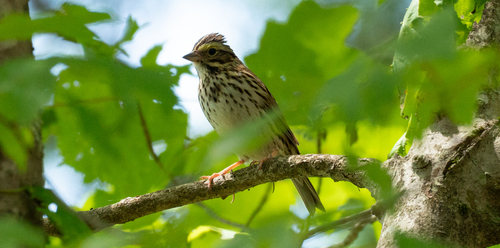
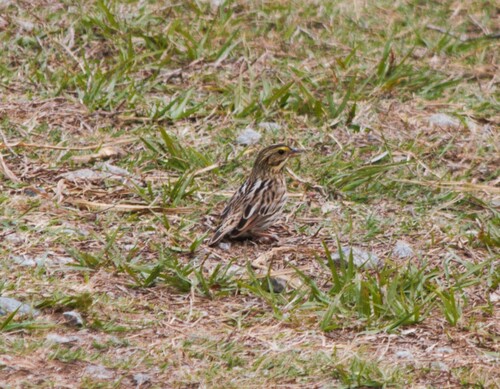
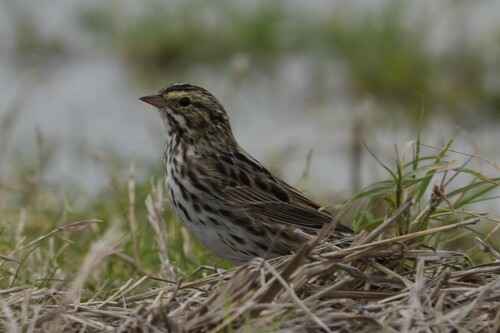
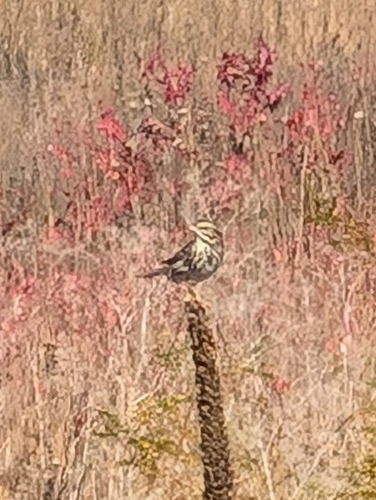
The Savannah Sparrow has a streaky brown body with a pale belly and distinct yellow patches above its eyes. Its short tail and pinkish legs help it blend into grassy habitats, making it appear somewhat stocky.
Category
BirdsRarity
Common
Danger
1/5 · Very low
Snaps
33
Some Savannah Sparrows migrate thousands of kilometers, from Alaska to Mexico!
Their "tsip, tsip, tsip, tseeee-tsay" song is one of the easiest to identify!
These ground nesters sometimes lay their eggs right in a cow footprint!
Young sparrows can leave their hidden nest only 7-14 days after hatching!
Savannah Sparrow has streaky brown feathers that help them disappear into tall grasses.
Savannah Sparrow can weave its nest on the ground, making it almost invisible to predators.
Savannah Sparrow can swiftly catch small insects and spiders hiding among plants.
Savannah Sparrows enjoy eating tiny seeds and juicy insects found in grassy fields.
Age differences: Young birds eat mostly insects; adults eat more seeds.
Thamnophis sirtalis
preys on eggs and nestlings.

Accipiter striatus
hunts adult sparrows.
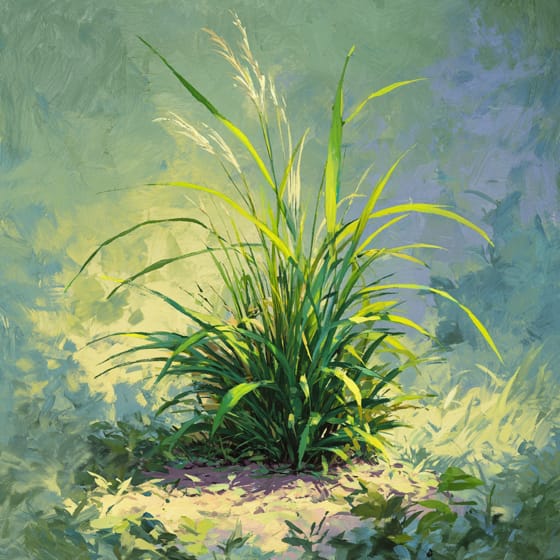
Poa pratensis
consumes seeds from this common grass.
Coccinella septempunctata
forages for beetles and other insects.
Feathered describes animals, primarily birds, possessing a covering of feathers.
Social animals live in organized groups, cooperating for survival benefits such as foraging, defense, and raising offspring.
Singing animals produce complex vocalizations, often for purposes of attracting mates, defending territory, or communicating within their species.
Grassland habitats are terrestrial biomes dominated by grasses and herbaceous plants, supporting a variety of grazing animals.

This trait identifies organisms whose diet primarily consists of insects and other small invertebrates.

Diurnal animals are primarily active during daylight hours, typically resting or sleeping at night.

Migratory animals undertake seasonal movements from one region to another, typically in response to changes in climate or food availability.
No aliases listed yet.
Danger
1/5 · Very low
Enjoy watching birds from a distance and be quiet so you don't scare them away.
The easiest way to identify Savannah Sparrow is to use the Snappit nature identifier app.
11-14 cm
18-23 cm
0.015-0.028 kg
2-7 years
45 km/h
Savannah Sparrows enjoy eating tiny seeds and juicy insects found in grassy fields.
Grasslands
Zoom in to split clusters and explore where this object has been snapped.
Jun 8, 2026
Pennellville Historic DistrictPhoto attribution
no rights reserved
License: CC0 1.0 ↗
Image may be shown cropped inside the card frame.
May 1, 2026
Columbia CanalPhoto attribution
(c) Raven Dandridge, some rights reserved (CC BY)
License: CC BY 4.0 ↗
Image may be shown cropped inside the card frame.
Apr 19, 2025
Crowley Historic DistrictPhoto attribution
(c) Brandon Johnson, some rights reserved (CC BY)
License: CC BY 4.0 ↗
Image may be shown cropped inside the card frame.
Oct 26, 2024
Nathan and Olive Boone Homestead State Historic SitePhoto attribution
(c) Conway Hawn, some rights reserved (CC BY)
License: CC BY 4.0 ↗
Image may be shown cropped inside the card frame.

South Carolina, US
You might spot Great Blue Heron, Spanish Moss, and Cahaba Lily.
View guide →

US
You might spot Monarch, Ipsilon Dart Moth, and Canada Goose.
View guide →

New York, US
You might spot Bald Eagle, Common Eastern Bumble Bee, and Red-Tailed Hawk.
View guide →
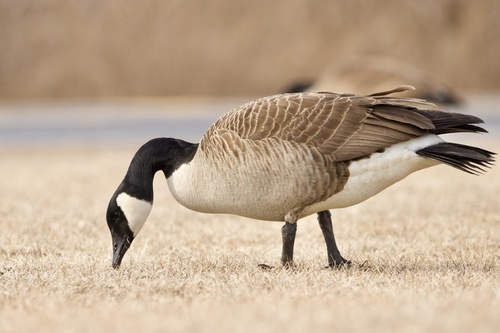
Illinois, US
You might spot Canada Goose, House Sparrow, and Rock Pigeon.
View guide →

California, US
You might spot American Avocet, Great Egret, and Snowy Egret.
View guide →

Illinois, US
You might spot Canada Goose, House Sparrow, and Rock Pigeon.
View guide →
Take the discovery with you
Snap it with Snappit to identify it, learn what makes it special, and add the discovery to your collection.




.jpg&width=800)








