_-_Meleagris_gallopavo%2C_Occoquan_Bay_National_Wildlife_Refuge%2C_Woodbridge%2C_Virginia.jpg&width=800)





Narragansett Turkey
Meleagris gallopavo
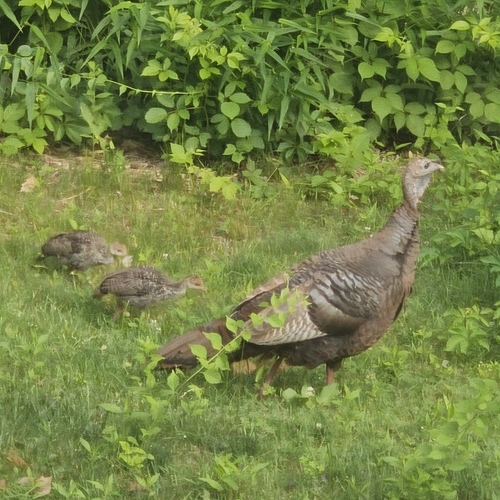
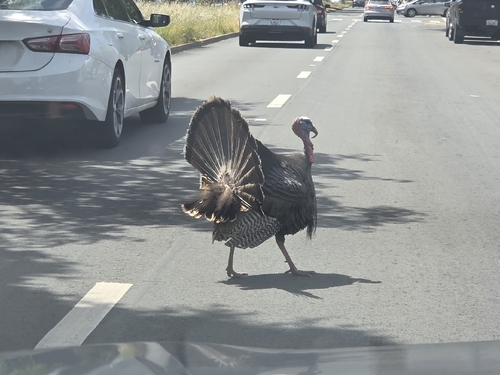
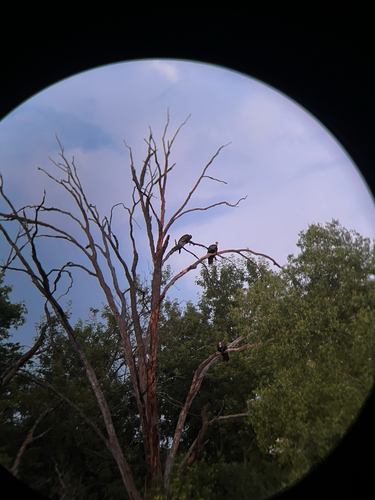
The Narragansett Turkey is a beautiful bird with stunning feathers! They love to strut around and show off their colorful plumage.
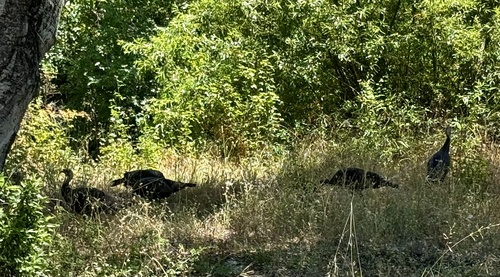
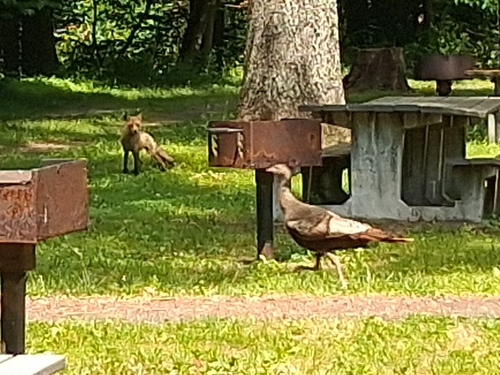
Habitat: They are commonly found in forests, fields, and grasslands across North America.
The Narragansett Turkey has striking black, gray, and tan feathers with a beautiful metallic sheen. Its body is primarily black, contrasted by lighter gray and buff bands on the wings and tail. The bare skin on its head and neck can change color from red to blue, adding to its unique appearance.
Category
BirdsRarity
Common
Danger
1/5 · Very low
Snaps
223
Their snood, a fleshy flap, grows longer when males get excited!
They change the color of their heads from red to blue!
Turkeys can make over 20 different sounds, not just gobbling!
Wild turkeys, from which they descend, sleep high in trees!
Narragansett Turkey has exceptional eyesight that helps them spot tiny seeds and insects hidden in the grass.
Narragansett Turkey can run surprisingly fast because of its strong legs that help it escape danger on the ground.
Narragansett Turkey can fly short distances quickly that helps them reach high roosts or flee from predators.
Narragansett Turkeys are omnivores, munching on seeds, nuts, insects, and leafy greens.
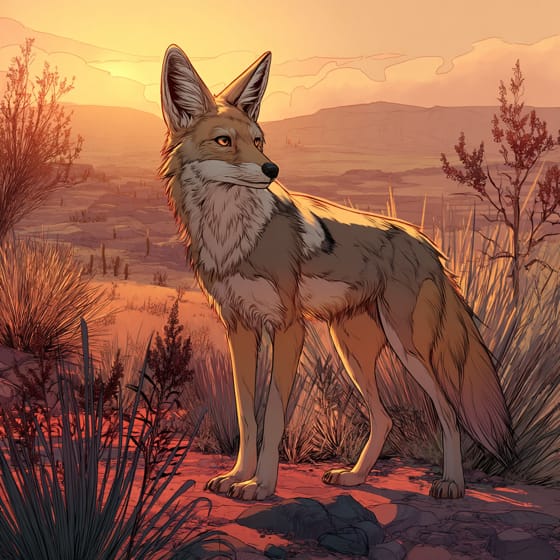
Canis latrans
Coyotes are common predators of turkeys.
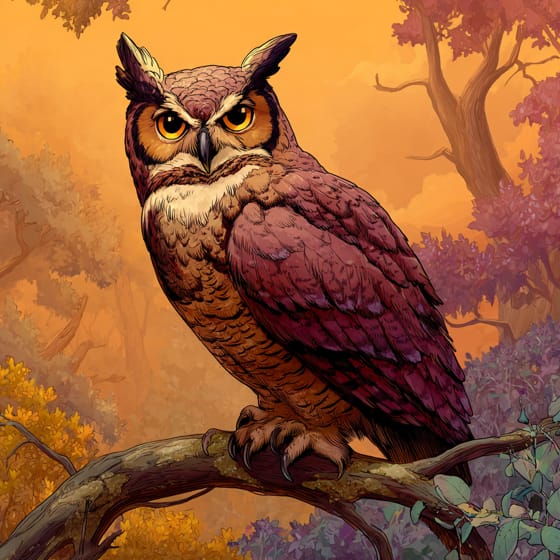
Bubo virginianus
Large owls can prey on young or adult turkeys.
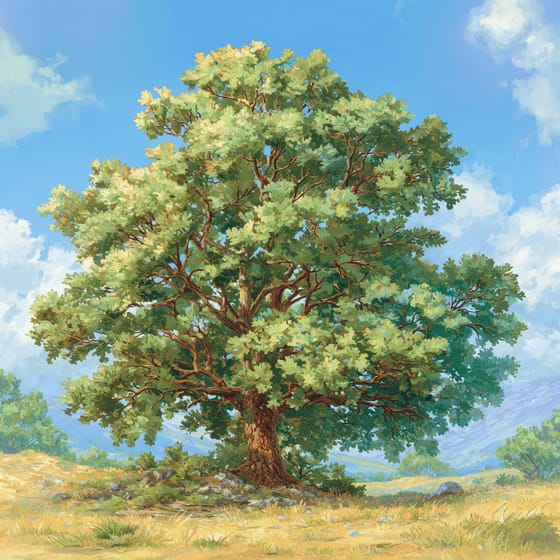
Quercus alba
Turkeys rely on acorns from oak trees.
Formica rufa
Narragansett turkeys forage for many types of ants.
Social animals live in organized groups, cooperating for survival benefits such as foraging, defense, and raising offspring.
This trait identifies organisms whose diet includes both plant and animal matter.
Colorful describes organisms or objects displaying a wide range of bright and distinct colors.
Grassland habitats are terrestrial biomes dominated by grasses and herbaceous plants, supporting a variety of grazing animals.

Forest habitats are terrestrial environments dominated by dense tree cover, supporting a high diversity of plant and animal life.
Danger
1/5 · Very low
No special safety notes yet.
The easiest way to identify Narragansett Turkey is to use the Snappit nature identifier app.
70-115 cm
120-150 cm
5.5-12.5 kg
5-10 years
25 km/h
Narragansett Turkeys are omnivores, munching on seeds, nuts, insects, and leafy greens.
They are commonly found in forests, fields, and grasslands across North America.
Zoom in to split clusters and explore where this object has been snapped.
Jun 17, 2026
Rockdale Common Housing DistrictPhoto attribution
(c) Betsy Lambert, some rights reserved (CC BY)
License: CC BY 4.0 ↗
Image may be shown cropped inside the card frame.
Jun 16, 2026
Arastradero PreservePhoto attribution
no rights reserved
License: CC0 1.0 ↗
Image may be shown cropped inside the card frame.
Jun 6, 2026
Berkeley Rose GardenPhoto attribution
(c) Jonathan Curley, some rights reserved (CC BY)
License: CC BY 4.0 ↗
Image may be shown cropped inside the card frame.
Jun 6, 2026
PrallsvillePhoto attribution
(c) Susan Mott, some rights reserved (CC BY-SA)
License: CC BY-SA 4.0 ↗
Image may be shown cropped inside the card frame.
Jun 6, 2026
Bascom HillPhoto attribution
(c) Mason Holum, some rights reserved (CC BY)
License: CC BY 4.0 ↗
Image may be shown cropped inside the card frame.

Ohio, US
You might spot Eastern Fox Squirrel and Spotted Lanternfly.
View guide →
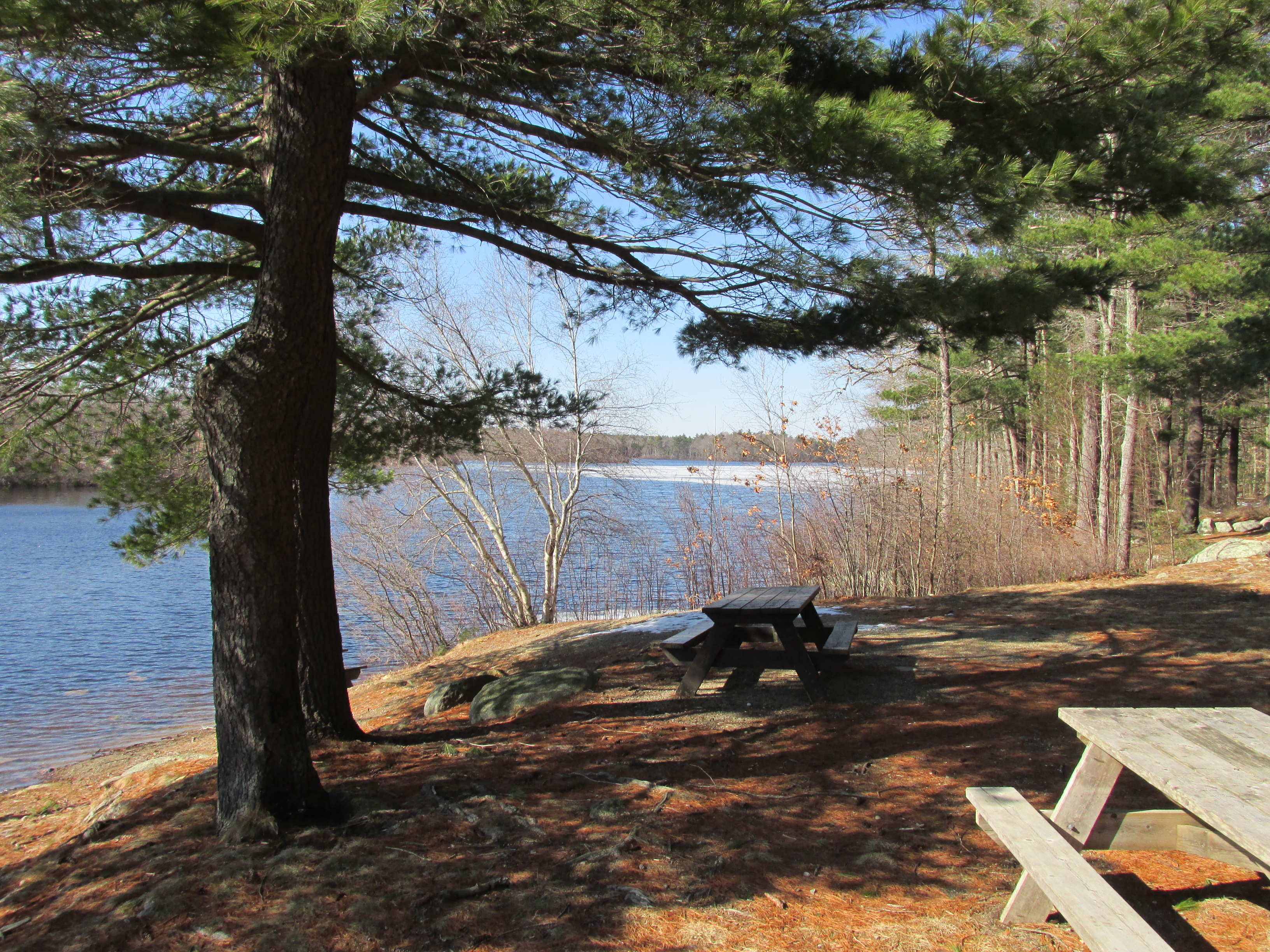
Massachusetts, US
You might spot Eastern White Pine and Common Eastern Bumble Bee.
View guide →

California, US
You might spot Acorn Woodpecker and Western Fence Lizard.
View guide →

California, US
You might spot Redwood Sorrel, Redwood, and Button's Banana Slug.
View guide →

California, US
You might spot Monarch, Canada Goose, and Western Gull.
View guide →

Rhode Island, US
You might spot Common Eastern Bumble Bee and Osprey.
View guide →
Take the discovery with you
Snap it with Snappit to identify it, learn what makes it special, and add the discovery to your collection.




.jpg&width=800)









