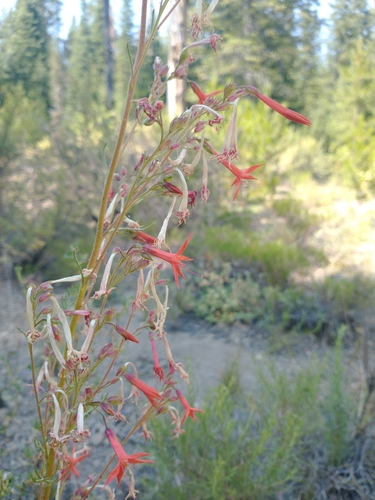





Aug 2, 2023
i
Photo attribution
no rights reserved
License: CC0 1.0 ↗
Image may be shown cropped inside the card frame.

Sun Pass State Forest offers a serene escape into Oregon's diverse natural beauty.
Sun Pass State Forest offers a serene escape into Oregon's diverse natural beauty. This pristine state forest, nestled in southern Oregon, is a haven of towering pines, tranquil creeks, and rolling mountain meadows, providing an authentic wilderness experience for those seeking solace in nature. It's renowned for its varied forest conditions, ranging from dense woodlands to open clearings, making every turn a new discovery.
Visitors can immerse themselves in a landscape characterized by extensive stands of pine and fir trees, including majestic Ponderosa and Sugar Pines, alongside White Fir, creating an unusually diverse ecosystem compared to other eastern Oregon forests. The forest is also home to two year-round creeks, Sun Creek and Annie Creek, which not only enhance the scenic beauty but also support native fish populations, such as bull trout in Sun Creek. This rich environment provides habitat for a wide array of wildlife, including a stable population of pileated woodpeckers, deer, and elk.
Sun Pass State Forest is an ideal destination for nature lovers, offering a primitive and uncrowded experience. Whether you're drawn to the quiet beauty of its mountain vistas, the soothing sounds of its flowing creeks, or the chance to spot local wildlife amidst its diverse conifer stands, this forest promises memorable moments and a deep connection with Oregon's wild heart. It’s a perfect spot to unplug and enjoy simple outdoor pleasures. Don't forget to bring the Snappit nature identification app along to scan local species.
Sun Pass State Forest, managed by the Oregon Department of Forestry, was formally dedicated in 1979. Its origins trace back to 1943 when the State of Oregon acquired the initial 14,450 acres from timber companies. This purchase marked a significant shift towards public management and conservation of the forest lands. Over the years, the forest expanded through additional land acquisitions, including 480 acres deeded by Klamath County in 1944, and further private land purchases in 1947 and 1948. Strategic land exchanges with the Winema National Forest (now Fremont-Winema National Forests) in the 1970s and 80s further consolidated its boundaries, leading to the diverse and extensive forest seen today. Today, 85 percent of the forest is Board of Forestry land, managed for sustainable ecosystems that provide economic, social, and environmental benefits, with revenue largely distributed to Oregon counties.
Hiking, primitive camping (fire permits required), fishing in the creeks, birdwatching, and wildlife viewing. The forest offers a cozy ambiance with beautiful views.
Spring/Summer: Ideal for hiking, fishing, and camping with pleasant temperatures. Wildflowers may be present in meadows.
Fall: Enjoy fall foliage among the deciduous trees mixed within the conifers. Cooler temperatures are good for hiking.
Winter: Access may be limited due to snow, and primitive camping conditions will be more challenging.
Sun Pass State Forest does not have developed recreation sites or a formal recreational program, implying limited accessibility features like paved trails or accessible restrooms. It is primarily a primitive forest experience.
Explore these year-round creeks that provide tranquil settings and are home to native bull trout.
Wander through areas dominated by Ponderosa Pine, Sugar Pine, and White Fir, observing the forest's unique tree diversity.
Discover open clearings that contrast with the dense woodlands and offer scenic views.
Observe the underlying geological features that shape the forest's topography.
Each card links to a full Explore page with photos, traits, and fun facts.
We are still adding species preview cards for this place.
Start with the big picture, then zoom in to explore individual wildlife observations around this place.
Be self-sufficient
Since there are no developed facilities, bring all necessary supplies, including water, food, and waste disposal bags.
Obtain fire permits
If you plan to camp and have a fire, ensure you obtain the required fire permits from the Klamath-Lake District.
Prepare for primitive camping
If camping, expect cleared areas with basic fire pits rather than established campgrounds. Sun Creek is a popular spot.
Wear appropriate footwear
Trails may be undeveloped and uneven, so sturdy hiking boots are recommended.
Practice Leave No Trace principles
Help preserve the forest's pristine condition by packing out everything you pack in.
Bring binoculars
Enhance your wildlife viewing experience, especially for birdwatching, given the forest's diverse avian population.
Aug 2, 2023
Photo attribution
no rights reserved
License: CC0 1.0 ↗
Image may be shown cropped inside the card frame.
Aug 2, 2023
Photo attribution
no rights reserved
License: CC0 1.0 ↗
Image may be shown cropped inside the card frame.
Aug 1, 2023
Photo attribution
no rights reserved
License: CC0 1.0 ↗
Image may be shown cropped inside the card frame.
Aug 1, 2023
Photo attribution
no rights reserved
License: CC0 1.0 ↗
Image may be shown cropped inside the card frame.
Jul 21, 2023
Photo attribution
no rights reserved
License: CC0 1.0 ↗
Image may be shown cropped inside the card frame.

Maryland, US
You might spot White-Tailed Deer and Eastern Gray Squirrel.
View guide →
.jpg)
District of Columbia, US
You might spot Eastern Gray Squirrel, Duck, and House Sparrow.
View guide →

Illinois, US
You might spot American Robin, Canada Goose, and House Sparrow.
View guide →

Virginia, US
You might spot Spotted Lanternfly and Northern Cardinal.
View guide →
Take the discovery with you
Identify the wildlife you spot, learn as you go, and keep a collection of the adventure.