





Scarlet Gilia
Ipomopsis aggregata
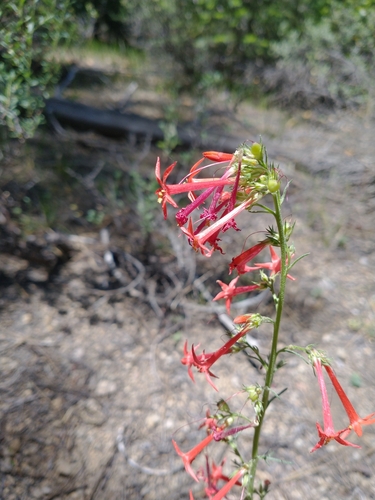
The Scarlet Gilia is a beautiful red flower that blooms in the summer. It attracts hummingbirds with its bright color and sweet nectar, making it a favorite in nature!
Habitat: Mountain regions
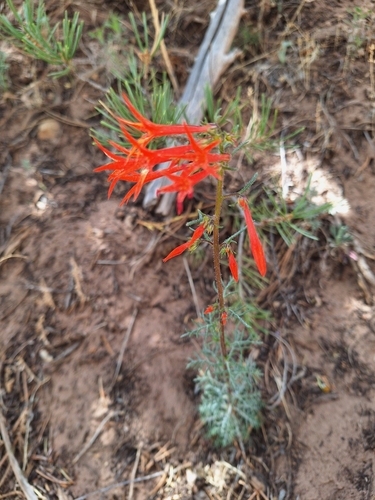
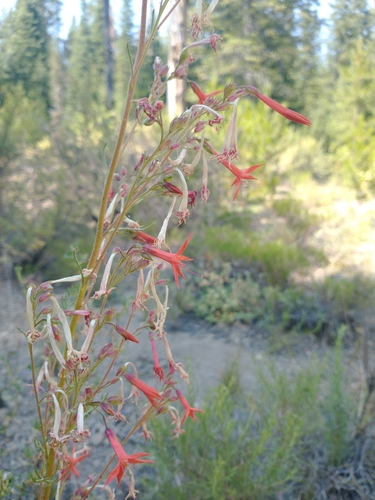
The Scarlet Gilia has vibrant, trumpet-shaped flowers, typically brilliant scarlet or orange-red, clustered atop a tall, slender stem. Its finely divided, fern-like leaves distinguish it from other red wildflowers in rocky areas.
Category
PlantsRarity
Common
Danger
1/5 · Very low
Snaps
17
Its long, tube-shaped flowers perfectly fit a hummingbird's beak like a straw!
Some Scarlet Gilia flowers open at dusk to attract night-flying hawk moths!
The tiny seeds of this plant can lie dormant in the soil for a very long time!
This plant often acts like a biennial, living two years before dying after seeding.
Scarlet Gilia's bright red, tubular flowers act as a perfect target, drawing hummingbirds to nectar.
Scarlet Gilia can survive and flourish in dry, rocky, high-altitude environments where many plants struggle.
Some varieties open flowers at dusk, attracting hawk moths with their unique evening scent for pollination.

Archilochus alexandri
visits flowers for nectar
.jpg&width=800)
Selasphorus rufus
a key pollinator species
Hyles lineata
visits flowers at night
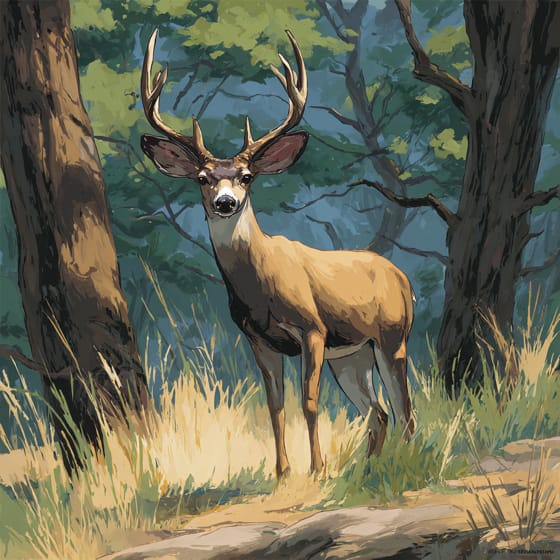
Odocoileus hemionus
browses leaves and flowers
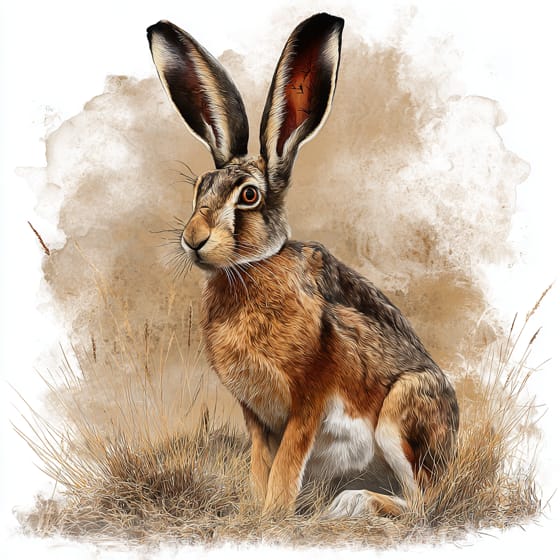
Lepus californicus
may graze on foliage
Flowering plants are any plants that produce flowers as part of their reproductive cycle.
Summer blooming plants produce their flowers during the summer season, often providing vibrant color when many other plants have finished.
A tube flower has petals fused together at the base, forming a distinct tubular structure that typically holds nectar deep within.
Fragrant flowers emit a pleasant aroma, often to attract pollinators or for defense.

Colorful describes organisms or objects displaying a wide range of bright and distinct colors.

Describes plants that are particularly attractive and beneficial to a wide range of pollinating organisms.

This habitat trait identifies species found in mountainous regions, characterized by high elevation, steep slopes, and varying climate zones.
Danger
1/5 · Very low
Always look at flowers from a distance and don't pick them, so they can keep growing!
The easiest way to identify Scarlet Gilia is to use the Snappit nature identifier app.
30-90 cm
15-30 cm
2-4 cm
Late spring to early fall
No
None
Biennial
Zoom in to split clusters and explore where this object has been snapped.
May 18, 2025
Navajo Nation Zoological and Botanical ParkPhoto attribution
(c) Elizabeth Paley, some rights reserved (CC BY-SA)
License: CC BY-SA 4.0 ↗
Image may be shown cropped inside the card frame.
Aug 2, 2023
Sun Pass State ForestPhoto attribution
no rights reserved
License: CC0 1.0 ↗
Image may be shown cropped inside the card frame.
Jul 21, 2023
Sun Pass State ForestPhoto attribution
no rights reserved
License: CC0 1.0 ↗
Image may be shown cropped inside the card frame.

Utah, US
You might spot Common Golden-Mantled Ground Squirrel and Steller's Jay.
View guide →

Utah, US
You might spot Common Golden-Mantled Ground Squirrel and Steller's Jay.
View guide →

Wyoming, US
You might spot Elk, American White Pelican, and Arrowleaf Balsamroot.
View guide →

Wyoming, US
You might spot Moose, Uinta Ground Squirrel, and American Bison.
View guide →

Wyoming, US
You might spot Moose, Arrowleaf Balsamroot, and Black Bear.
View guide →

Oregon, US
You might spot White Pasqueflower and Clark's Nutcracker.
View guide →
Take the discovery with you
Snap it with Snappit to identify it, learn what makes it special, and add the discovery to your collection.








.jpg&width=800)


_001.jpg&width=800)




