_(6974266104).jpg&width=800)





Anise Swallowtail
Papilio zelicaon
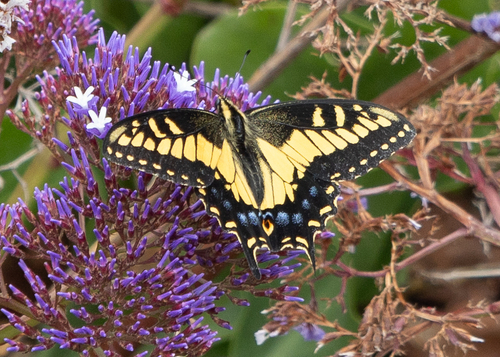
The Anise Swallowtail is a beautiful butterfly with bright yellow and black wings. It loves to flutter around gardens and fields, bringing joy wherever it goes!
Habitat: Gardens and fields
The Anise Swallowtail has bright yellow wings boldly patterned with thick black stripes and markings. Its hindwings feature a distinctive row of blue spots, a prominent orange eye-spot, and two small, black "tails" that help distinguish it from similar species.
Category
InsectsRarity
Common
Danger
1/5 · Very low
Snaps
21
Anise Swallowtail caterpillars change from mottled brown to bright green as they grow up!
The little "tails" on their wings might trick birds into attacking the wrong spot!
These butterflies can sometimes travel hundreds of miles, following the sun to warmer places!
They often fly high in mountain areas, sometimes soaring above the very tops of trees.
Anise Swallowtail caterpillars can pop out a bright orange, Y-shaped organ to release a smelly liquid and scare predators away.
This butterfly can taste plants with its feet, helping it decide if a leaf is yummy enough for its babies to eat!
Young caterpillars cleverly camouflage themselves, looking exactly like bird droppings to hide from hungry birds.
It uses a long, straw-like tongue, called a proboscis, to sip sweet nectar from deep inside flowers.
Adult Anise Swallowtails sip flower nectar; their caterpillars munch on tasty plants.
Age differences: Larvae (caterpillars) feed on host plant leaves, while adults drink nectar from various flowers.
_-_Parc_Natural_de_s%27Albufera%2C_Spain_2022-04-18_(02).jpg&width=800)
Foeniculum vulgare
Its leaves are a favorite food for hungry caterpillars.

Anethum graveolens
Caterpillars rely on this plant as a vital food source.
Solidago canadensis
Adults drink nectar, helping to spread its pollen.

Cyanocitta stelleri
This bird preys on adult butterflies and caterpillars.
Marked with spots or patches of a different color.
Social animals live in organized groups, cooperating for survival benefits such as foraging, defense, and raising offspring.
Solitary animals live alone for most of their lives, only interacting with others for mating or parental care.
Colorful describes organisms or objects displaying a wide range of bright and distinct colors.

Grassland habitats are terrestrial biomes dominated by grasses and herbaceous plants, supporting a variety of grazing animals.

This trait characterizes organisms whose diet consists entirely or primarily of plant material.

Describes plants that are particularly attractive and beneficial to a wide range of pollinating organisms.

Diurnal animals are primarily active during daylight hours, typically resting or sleeping at night.

Describes organisms that transfer pollen, enabling the fertilization and reproduction of plants.
Danger
1/5 · Very low
Always watch butterflies from a distance and don't try to catch them.
The easiest way to identify Anise Swallowtail is to use the Snappit nature identifier app.
50-80 mm
20-30 mm
10-14 days
15 km/h
Adult Anise Swallowtails sip flower nectar; their caterpillars munch on tasty plants.
Gardens and fields
Foraging
Zoom in to split clusters and explore where this object has been snapped.
Jun 6, 2026
Venice Canal Historic DistrictPhoto attribution
(c) Roberto Daniel Avila, some rights reserved (CC BY)
License: CC BY 4.0 ↗
Image may be shown cropped inside the card frame.

California, US
You might spot Monarch, Canada Goose, and Western Gull.
View guide →

California, US
You might spot Monarch, Bee, and Anise Swallowtail.
View guide →

Colorado, US
You might spot Rocky Mountain Marsh-Marigold and American Bistort.
View guide →

Wyoming, US
You might spot Moose, Uinta Ground Squirrel, and American Bison.
View guide →

Wyoming, US
You might spot Moose, Arrowleaf Balsamroot, and Black Bear.
View guide →

California, US
You might spot Northern Harrier and Black-Tailed Jackrabbit.
View guide →
Take the discovery with you
Snap it with Snappit to identify it, learn what makes it special, and add the discovery to your collection.






.jpg&width=800)



