





Arizona Mantis
Stagmomantis limbata
The Arizona Mantis is a cool insect that can be green or brown! It loves to hide among plants and is known for its big eyes and long legs, which help it catch food.
Habitat: Desert
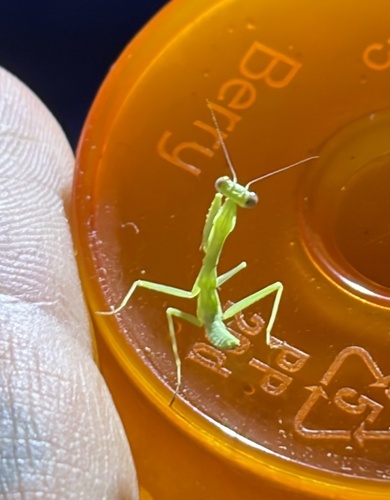
The Arizona Mantis is slender and typically comes in shades of green or brown, helping it blend perfectly with desert foliage. It has a distinctive brown "collar" on its long neck-like segment, and large, widely spaced compound eyes on its triangular head.
Category
InsectsRarity
Common
Danger
2/5 · Low
Snaps
10
A mantis lays eggs in a hardened, protective case called an ootheca!
Male mantises can fly well, but females often just glide short distances!
Mantises have just one ear, located on their belly between their front legs!
Their super-fast reflexes let them snatch flying insects right out of the air!
Arizona Mantis can rapidly extend its spiky forelegs to snatch prey because of powerful muscles that help them ambush insects.
Arizona Mantis has a green or brown body that helps them blend perfectly with desert plants, making them nearly invisible.
Arizona Mantis can turn its triangular head almost 180 degrees to spot prey or danger without moving its body.
Arizona Mantis sways gently back and forth, mimicking a leaf in the wind, which helps them hide and surprise prey.
This skilled hunter loves to munch on many different kinds of small insects.
Gryllus assimilis
Common desert prey for hungry mantises.
Musca domestica
A frequent meal for mantises in many habitats.
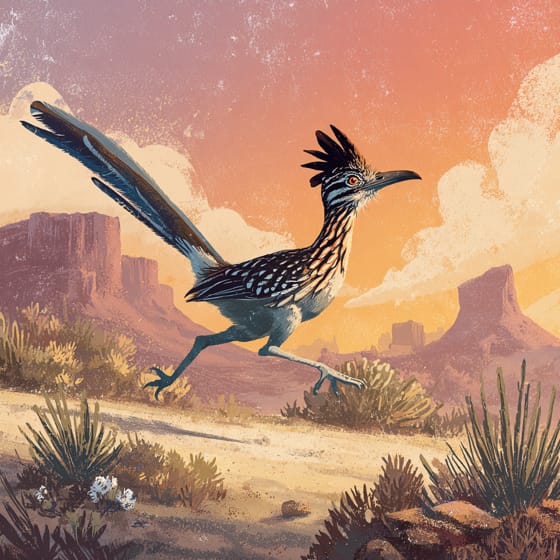
Geococcyx californianus
A swift desert bird that preys on insects.

Amblycorypha oblongifolia
A good source of protein for mantises.
Solitary animals live alone for most of their lives, only interacting with others for mating or parental care.
Camouflaged describes organisms that possess coloring or patterns that allow them to blend into their environment.
Colorful describes organisms or objects displaying a wide range of bright and distinct colors.
This trait identifies organisms whose diet primarily consists of insects and other small invertebrates.

Desert habitats are arid regions characterized by extremely low precipitation and often extreme temperatures, supporting specialized flora and fauna.

An ambush predator hunts by patiently waiting and concealing itself, then launching a sudden attack when unsuspecting prey comes within range.

This trait identifies organisms whose diet consists entirely or primarily of animal tissue.

Diurnal animals are primarily active during daylight hours, typically resting or sleeping at night.
No aliases listed yet.
Danger
2/5 · Low
Look but don't touch! Some insects can bite or sting.
The easiest way to identify Arizona Mantis is to use the Snappit nature identifier app.
60-120 mm
40-60 mm
120-270 days
5 km/h
This skilled hunter loves to munch on many different kinds of small insects.
Desert
Ambush
Zoom in to split clusters and explore where this object has been snapped.
May 16, 2026
Putah Creek State Wildlife AreaPhoto attribution
(c) Seth Marshall, some rights reserved (CC BY)
License: CC BY 4.0 ↗
Image may be shown cropped inside the card frame.

California, US
You might spot California Poppy and Common Side-Blotched Lizard.
View guide →

New Mexico, US
You might spot Wood Duck, Duck, and Canada Goose.
View guide →

California, US
You might spot Eastern Fox Squirrel, Bee, and House Sparrow.
View guide →

California, US
You might spot Western Fence Lizard, Duck, and Black Phoebe.
View guide →

California, US
You might spot Western Fence Lizard, Bee, and House Finch.
View guide →

California, US
You might spot Western Fence Lizard, Eastern Fox Squirrel, and Bee.
View guide →
Take the discovery with you
Snap it with Snappit to identify it, learn what makes it special, and add the discovery to your collection.








.jpg&width=800)



