.jpg&width=800)





arrowleaf balsamroot
Balsamorhiza sagittata
The arrowleaf balsamroot is a bright yellow flower that grows in sunny places. Its big, arrow-shaped leaves help it soak up the sun and stay strong in the wild.
Habitat: Grasslands
The arrowleaf balsamroot has large, distinct arrowhead-shaped, silvery-green leaves. Its bright yellow, sunflower-like flowers stand tall on sturdy stalks, often forming vast golden carpets on dry hillsides.
Category
PlantsRarity
Common
Danger
1/5 · Very low
Snaps
29
Its large seeds are a favorite snack for many hungry critters, especially birds!
Native Americans used every part of this plant, from its roots to its seeds!
The plant's leaves are covered in tiny hairs, making them feel soft and fuzzy!
You might find thousands of these sunny flowers blooming together on a single hillside!
Arrowleaf balsamroot has a long taproot that helps it find deep water, surviving dry conditions.
Arrowleaf balsamroot stores food in its root, allowing it to regrow even after fires or droughts.
Its fuzzy, silvery leaves reflect sunlight, protecting it from intense sun and reducing water loss.
Bombus occidentalis
Collects nectar and pollen.

Marmota flaviventris
Feeds on leaves and flowers.
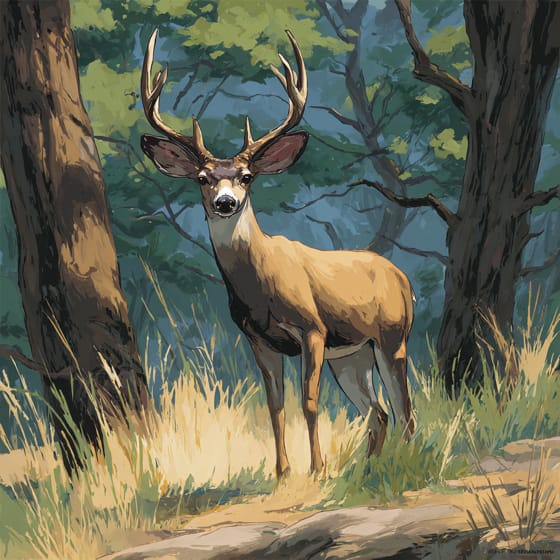
Odocoileus hemionus
Browses on the plant's foliage.

Junco hyemalis
Feeds on ripe seeds.
Flowering plants are any plants that produce flowers as part of their reproductive cycle.
Spring blooming plants produce their flowers during the spring season, often signifying the end of winter and the start of new growth.
Broadleaf trees are angiosperms characterized by flat, wide leaves that are typically shed annually in temperate climates.
Medicinal plants possess chemical compounds that can be used for therapeutic purposes to treat illnesses or maintain health.

Edible plants are those parts of a plant that are considered safe for human consumption.

Grassland habitats are terrestrial biomes dominated by grasses and herbaceous plants, supporting a variety of grazing animals.

Describes plants that are particularly attractive and beneficial to a wide range of pollinating organisms.

Describes a species whose presence and role have a disproportionately large effect on its environment.
Danger
1/5 · Very low
Always look but don't touch wild plants, as some can be harmful.
The easiest way to identify arrowleaf balsamroot is to use the Snappit nature identifier app.
30-80 cm
30-60 cm
5-10 cm
Spring-early summer
Yes
None
Perennial
Zoom in to split clusters and explore where this object has been snapped.

Wyoming, US
You might spot Elk, American White Pelican, and Arrowleaf Balsamroot.
View guide →

Wyoming, US
You might spot Moose, Uinta Ground Squirrel, and American Bison.
View guide →

Wyoming, US
You might spot Moose, Arrowleaf Balsamroot, and Black Bear.
View guide →

Wyoming, US
You might spot Elk, Killdeer, and Black-Billed Magpie.
View guide →

Wyoming, US
You might spot Creeping Mahonia, Utah Honeysuckle, and Woodland Pinedrops.
View guide →

Wyoming, US
You might spot Moose, Uinta Ground Squirrel, and American Bison.
View guide →
Take the discovery with you
Snap it with Snappit to identify it, learn what makes it special, and add the discovery to your collection.








.jpg&width=800)


_001.jpg&width=800)



