Banded Watersnake
Nerodia fasciata
The Banded Watersnake is a friendly snake that loves to swim in water! It has beautiful stripes that help it blend in with its surroundings, making it a great swimmer and a fun creature to spot.
Habitat: Wetlands
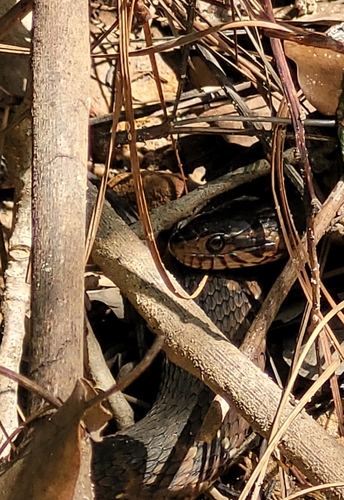
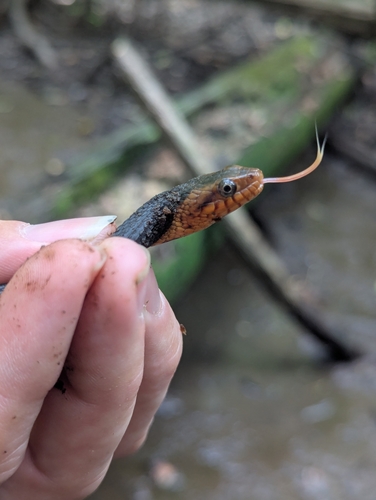
The Banded Watersnake has a thick body with distinct dark crossbands (brown, reddish-brown, or black) on a lighter background (tan, gray, or yellow). Its bands are usually wider in the middle of its back. It also has a dark stripe running from its eye to the corner of its jaw.
Category
ReptilesRarity
Common
Danger
2/5 · Low
Snaps
27
Female watersnakes can have up to 50 live babies at once! Wow!
Many people mistake them for venomous cottonmouths, but they are harmless!
They're like submarine hunters, catching fish underwater!
When scared, they might release a smelly musk to warn you off.
Banded Watersnake can hunt for fish and frogs underwater because it is an excellent swimmer and can hold its breath for extended periods.
Banded Watersnake has patterned crossbands that help them blend into the muddy, reedy banks and mucky water of their habitat, hiding from predators and prey.
Banded Watersnake can give birth to live baby snakes, called neonates, which are ready to swim and hunt on their own right away.
Banded Watersnake can flatten its body and head when threatened, making itself look larger and more intimidating to scare away potential attackers.
These aquatic snakes are expert hunters, mainly eating fish, frogs, and salamanders from freshwater habitats.
Age differences: Young snakes eat smaller versions of adult prey, such as small fish and tadpoles.

Gambusia holbrooki
A common food source in southern waterways.
%2C_Vorderansich.jpg&width=800)
Lithobates sphenocephalus
Often ambushed near the water's edge or caught swimming.
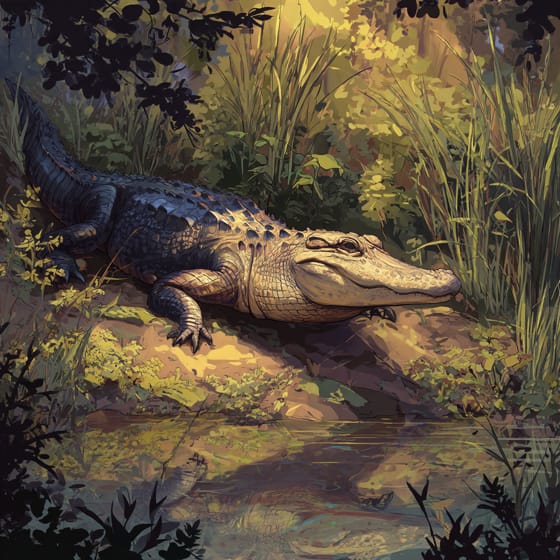
Alligator mississippiensis
Large alligators are predators of juvenile and adult watersnakes.

Procyon lotor
Predates on watersnakes encountered near water bodies.
Marked with parallel bands or lines of color.
Solitary animals live alone for most of their lives, only interacting with others for mating or parental care.
Camouflaged describes organisms that possess coloring or patterns that allow them to blend into their environment.
Piscivorous organisms are animals that primarily subsist on a diet of fish.

This habitat trait identifies species found in wetlands, which are areas of land saturated with water, either permanently or seasonally, including marshes, swamps, and bogs.

This trait identifies organisms whose diet consists entirely or primarily of animal tissue.

Diurnal animals are primarily active during daylight hours, typically resting or sleeping at night.

Aquatic habitats encompass environments where organisms live predominantly in water, including oceans, rivers, lakes, and wetlands.
No aliases listed yet.
Danger
2/5 · Low
If you see a snake, it's best to watch it from a distance and not touch it.
The easiest way to identify Banded Watersnake is to use the Snappit nature identifier app.
60-150 cm
0.2-2 kg
5-10 years
3 km/h
These aquatic snakes are expert hunters, mainly eating fish, frogs, and salamanders from freshwater habitats.
5 km/h
Wetlands
Zoom in to split clusters and explore where this object has been snapped.
May 31, 2026
Battles Wharf Historic DistrictPhoto attribution
no rights reserved
License: CC0 1.0 ↗
Image may be shown cropped inside the card frame.
Aug 14, 2025
The Gardens of the American Rose CenterPhoto attribution
no rights reserved
License: CC0 1.0 ↗
Image may be shown cropped inside the card frame.

Alabama, US
You might spot Painted Bunting, House Finch, and Red-Shouldered Hawk.
View guide →

Texas, US
You might spot Brown Anole, Gulf Fritillary, and Pond Slider.
View guide →

Louisiana, US
You might spot Trumpeter Swan, Lesser Scaup, and Canada Goose.
View guide →

Arkansas, US
You might spot Water Tupelo, Banded Watersnake, and Prothonotary Warbler.
View guide →

South Carolina, US
You might spot American Alligator, Great Blue Heron, and Anhinga.
View guide →

South Carolina, US
You might spot Gulf Fritillary, Poey's Furrow Bee, and Anole.
View guide →
Take the discovery with you
Snap it with Snappit to identify it, learn what makes it special, and add the discovery to your collection.