





Big Rough Fescue
festuca campestris
Big Rough Fescue is a tough grass that grows tall and provides shelter for many small animals. It loves to dance in the wind on sunny days, making the fields look beautiful!
Habitat: It lives in grasslands and open areas across North America.
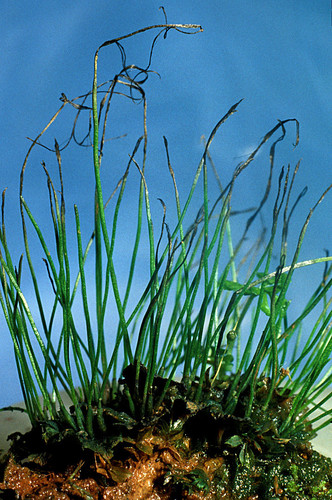
The Big Rough Fescue is a tall, clumping grass with narrow, bluish-green leaves that often feel rough to the touch. It forms dense tufts, standing out with its upright growth and slender seed stalks that can sometimes carry a purplish tint.
Category
PlantsRarity
Common
Danger
0/5 · No known danger
Snaps
Be the first to snap!
Even when dormant and brown, it can still bounce back green when conditions improve!
Its extra-tough leaves have a special waxy coating to stop them from drying out!
Some scientists study its tough nature to help create hardier crop plants for the future!
This grass has evolved to thrive in wildfire-prone areas, quickly regrowing after fires!
Big Rough Fescue has very deep roots that help it find water in dry soils and hold the ground firm, stopping erosion.
Big Rough Fescue can thrive in harsh conditions, tolerating both cold winters and hot, dry summers where other plants struggle.
Big Rough Fescue is a super tough grass that can be grazed by animals and still bounce back to grow again, providing continuous food.

Bison bison
A vital food source for these large grazers.
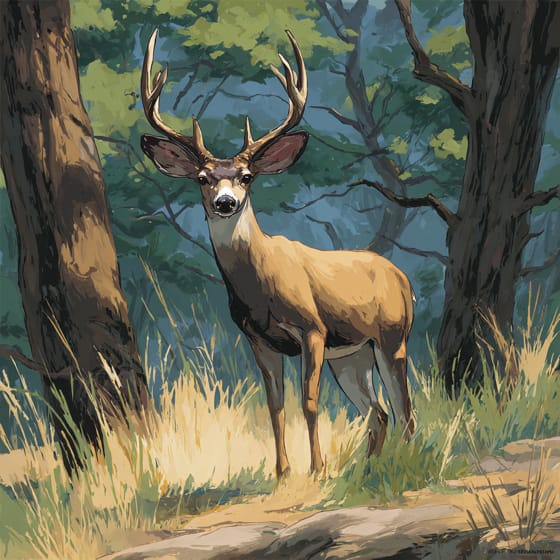
Odocoileus hemionus
Provides sustenance for deer in its native habitats.
Microtus pennsylvanicus
Small mammals use its dense clumps for cover and nests.
Social animals live in organized groups, cooperating for survival benefits such as foraging, defense, and raising offspring.
Colorful describes organisms or objects displaying a wide range of bright and distinct colors.
Grassland habitats are terrestrial biomes dominated by grasses and herbaceous plants, supporting a variety of grazing animals.
This trait characterizes organisms whose diet consists entirely or primarily of plant material.

Diurnal animals are primarily active during daylight hours, typically resting or sleeping at night.
Danger
0/5 · No known danger
No special safety notes yet.
The easiest way to identify Big Rough Fescue is to use the Snappit nature identifier app.
30-100 cm
20-50 cm
Summer (June-August)
No
None
Perennial
Wind
Zoom in to split clusters and explore where this object has been snapped.
Recent snaps will appear here as new observations are added.
Take the discovery with you
Snap it with Snappit to identify it, learn what makes it special, and add the discovery to your collection.









.jpg&width=800)



_001.jpg&width=800)




