





Big Sagebrush
Artemisia tridentata
Big Sagebrush is a tall, bushy plant that grows in dry places. It has soft, silvery-green leaves and smells like a fresh herb when you touch it. This plant is important for many animals in the desert!
Habitat: Desert
The Big Sagebrush has distinctive silvery-green or grey-green leaves, often with three small lobes at the tip, making it stand out in arid landscapes. It forms a sturdy, woody shrub with dense branches. Its muted colors are a unique identifier amongst other desert plants.
Category
PlantsRarity
Common
Danger
1/5 · Very low
Snaps
7
It gives off a wonderful, distinct smell, especially after it rains in the desert!
Many tiny birds and insects rely on its seeds for their winter food supply!
The silvery-green leaves often have three little 'teeth', giving it a unique look!
This tough plant can live for more than 100 years, growing strong in harsh lands!
Big Sagebrush has long taproots that reach deep into the soil to find water, helping it survive in dry places.
Big Sagebrush keeps its leaves all winter, providing food and shelter for animals when other plants are bare.
Big Sagebrush produces strong-smelling chemicals that help protect its leaves from being eaten by some animals.
Centrocercus urophasianus
Its leaves are vital winter food for this ground bird.
Brachylagus idahoensis
Almost its entire diet consists of Big Sagebrush.
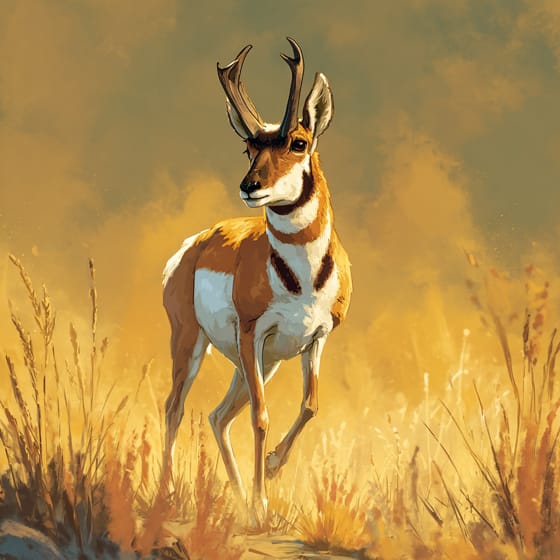
Antilocapra americana
A key food source, especially when other plants are scarce.
Artemisiospiza nevadensis
This bird builds its nest safely within the branches.
Aromatic plants produce and emit fragrant volatile organic compounds, often for defense or to attract pollinators.
A shrub is a woody plant smaller than a tree, typically with multiple stems branching from or near the ground.
Evergreen plants retain their foliage throughout the year, never shedding all their leaves at once.
Medicinal plants possess chemical compounds that can be used for therapeutic purposes to treat illnesses or maintain health.

Drought-tolerant plants can survive and flourish in conditions with limited water availability.

Desert habitats are arid regions characterized by extremely low precipitation and often extreme temperatures, supporting specialized flora and fauna.

This human use trait indicates species from which spices are derived, used for flavoring, preserving food, or as aromatic agents.

Describes a species whose presence and role have a disproportionately large effect on its environment.

Describes organisms that transfer pollen, enabling the fertilization and reproduction of plants.
No aliases listed yet.
Danger
1/5 · Very low
Do not eat any plants unless an adult says it's safe!
The easiest way to identify Big Sagebrush is to use the Snappit nature identifier app.
50-300 cm
150-250 cm
0.2-0.5 cm
Late summer to fall
No
Mild
Perennial
Zoom in to split clusters and explore where this object has been snapped.

Colorado, US
You might spot Common Side-Blotched Lizard and Eastern Collared Lizard.
View guide →

Oregon, US
You might spot Mule Deer, Song Sparrow, and Northern Yellow Warbler.
View guide →

Nebraska, US
You might spot Lark Sparrow, Rock Wren, and Scarlet Globemallow.
View guide →

Montana, US
You might spot Bighorn Sheep and Curlleaf Mountain Mahogany.
View guide →

Arizona, US
You might spot Golden Eagle, Black Bear, and Cougar.
View guide →

Wyoming, US
You might spot Creeping Mahonia, Utah Honeysuckle, and Woodland Pinedrops.
View guide →
Take the discovery with you
Snap it with Snappit to identify it, learn what makes it special, and add the discovery to your collection.









.jpg&width=800)



_001.jpg&width=800)



