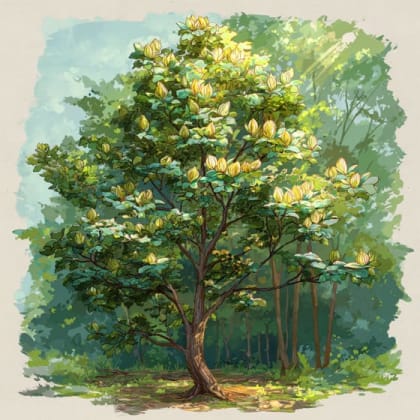
Mountain Laurel

Pickett State Rustic Park Historic District is a wild, rugged, and historic gem.
Pickett State Rustic Park Historic District is a wild, rugged, and historic gem. This cherished park, officially known as Pickett CCC Memorial State Park, is nestled in the Cumberland Plateau of Tennessee, offering a unique blend of natural beauty and a powerful legacy of the Civilian Conservation Corps (CCC). It encompasses diverse landscapes, from ancient sandstone formations and natural bridges to lush forests and tranquil Arch Lake, providing a scenic escape into the heart of the Appalachian wilderness. As one of the Southeast's first International Dark Sky Parks, it offers unparalleled stargazing opportunities that transport visitors to another realm.
The park's distinctive features include the massive Hazard Cave, home to rare bioluminescent glow worms that create a magical, star-like display after dark. Explore an intricate network of hiking trails that lead to captivating rock shelters, such as Indian Rockhouse, and stunning geological formations, including its namesake Natural Bridge. Arch Lake, a centerpiece of the park built by the CCC, invites visitors to paddle or swim amidst dramatic sandstone bluffs, while Crystal Falls on the Hidden Passage Trail adds another picturesque element to the scenic beauty.
More than just a park, Pickett is a living testament to human ingenuity and natural wonder. Its well-preserved CCC structures, including rustic cabins and the recreation lodge, blend seamlessly into the landscape, offering a tangible connection to its storied past. Whether you're seeking adventurous hikes, peaceful paddles, celestial observations, or a step back in time, Pickett State Park provides a memorable experience for all who visit, making it a true Tennessee treasure. Take the ultimate field guide with you: use the Snappit app to identify birds, plants, and animals on your trip.
buffs interested in the CCC era
Hiking on over 58 miles of trails (e.g., Hazard Cave Trail, Hidden Passage Trail, Lake Trail, Indian Rockhouse Trail), boating (canoeing, kayaking, paddleboarding) and swimming on Arch Lake, fishing (trout, bluegill, bass), stargazing and astronomy programs, exploring unique geological formations like rock shelters and sandstone bluffs, and visiting the CCC Museum. Birdwatching is also popular, with over 100 species observed.
Spring: Profusion of wildflowers.
Summer: Best for swimming, boating, and ranger-led glow worm hikes (early June). Synchronous fireflies can also be seen on warm summer nights.
Fall: Peak foliage for scenic hikes.
Winter: Quieter trails, potential for snow-covered landscapes.
The park offers accessible parking and restrooms. Some trails are designed to accommodate individuals with mobility challenges, and improvements are ongoing. The campground has a modern bathhouse. The boat dock and swimming area were undergoing accessibility improvements as of May 2025.
See the unique bioluminescent glow worms (best early June at dusk).
Paddle or swim, and cross the swinging bridge to Island Trail.
A significant sandstone formation accessible via an easy trail.
Learn about the Civilian Conservation Corps' history and their contributions to the park.
Each card links to a full Explore page with photos, traits, and fun facts.
Start with the big picture, then zoom in to explore individual wildlife observations around this place.
Plan your hikes
With over 58 miles of trails ranging from easy strolls to challenging loops, study a park map beforehand to choose trails that match your fitness level and interests (e.g., Hazard Cave for glow worms, Hidden Passage for waterfalls).
Check for seasonal events
Before your visit, check the park's calendar for ranger-led programs, especially the popular glow worm hikes in early summer and dark sky astronomy events.
Pack for stargazing
If you plan to enjoy the dark skies, bring binoculars or a telescope, a red-light flashlight to preserve night vision, and warm layers, even in summer.
Rent a boat
Experience Arch Lake from the water by renting a canoe, kayak, or paddleboard available at the visitor center during summer months.
Visit the CCC Museum
Don't miss a trip to the CCC Museum near the entrance to understand the incredible history and craftsmanship behind the park's development.
Bring appropriate footwear
Many trails feature uneven terrain, rocks, and potentially muddy sections, so sturdy hiking shoes are a must.
Jun 4, 2026
Jun 3, 2026
Jun 1, 2026
May 31, 2026
May 28, 2026

Maryland, US
You might spot White-Tailed Deer and Eastern Gray Squirrel.
View guide →
.jpg)
District of Columbia, US
You might spot Eastern Gray Squirrel, Duck, and House Sparrow.
View guide →

Illinois, US
You might spot American Robin, Canada Goose, and House Sparrow.
View guide →

Virginia, US
You might spot Spotted Lanternfly and Northern Cardinal.
View guide →
Take the discovery with you
Identify the wildlife you spot, learn as you go, and keep a collection of the adventure.