





bigleaf maple
Acer macrophyllum
The bigleaf maple is a tall tree with huge leaves that can be as big as your head! It grows in forests and is known for its beautiful yellow and orange colors in the fall.
Habitat: Forests
The bigleaf maple is a towering tree known for its enormous leaves, which can be over a foot wide and have five deeply cut lobes. In autumn, these vibrant leaves burst into brilliant shades of yellow and orange, creating a stunning display. Its bark is deeply furrowed, providing a textured appearance.
Category
PlantsRarity
Common
Danger
1/5 · Very low
Snaps
15
It boasts the world's largest maple leaves, some even bigger than your head!
Its rough bark hosts mini-gardens of mosses and ferns right on its branches!
Its sweet sap can be tapped for delicious maple syrup, just like other maples!
These giants grow taller than a 15-story building, reaching high for the sky!
Bigleaf maple has huge leaves that act like super-efficient solar panels, helping it capture lots of sunlight to grow big and strong.
This maple's rough bark and moist habitat let mosses and ferns grow on its branches, creating mini-ecosystems high in the tree.
The bigleaf maple produces sweet sap that can be harvested and boiled down to create delicious maple syrup.

Sciurus griseus
eats the nutritious seeds
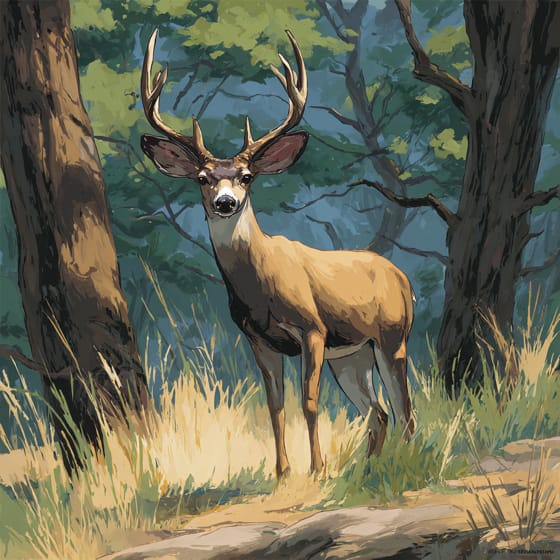
Odocoileus hemionus
browses on young leaves and twigs

Dryocopus pileatus
nests in large tree cavities
Ganoderma applanatum
grows as a decomposer on logs
Deciduous plants periodically shed all their leaves, typically during autumn or dry seasons.
Broadleaf trees are angiosperms characterized by flat, wide leaves that are typically shed annually in temperate climates.
Colorful describes organisms or objects displaying a wide range of bright and distinct colors.
Fall color refers to the seasonal change in foliage pigmentation, primarily in deciduous plants, displaying vibrant hues.

Timber refers to wood that has been prepared for use in building and carpentry.

Forest habitats are terrestrial environments dominated by dense tree cover, supporting a high diversity of plant and animal life.
Danger
1/5 · Very low
Stay on paths when exploring forests and watch for falling branches.
The easiest way to identify bigleaf maple is to use the Snappit nature identifier app.
1500-3000 cm
1000-1800 cm
0.5-1 cm
Spring
Yes
None
Perennial
Zoom in to split clusters and explore where this object has been snapped.

California, US
You might spot Redwood, Pacific Trillium, and Evergreen Huckleberry.
View guide →

Washington, US
You might spot Pacific Tree Frog and Long-Toed Salamander.
View guide →

Washington, US
You might spot Pacific Banana Slug and Oregon Forestsnail.
View guide →

Washington, US
You might spot Bigleaf Maple, Mule Deer, and Oregon Grape.
View guide →

California, US
You might spot Western Fence Lizard and Pacific Poison Oak.
View guide →

Washington, US
You might spot Rock Pigeon, Great Blue Heron, and Duck.
View guide →
Take the discovery with you
Snap it with Snappit to identify it, learn what makes it special, and add the discovery to your collection.







.jpg&width=800)


_001.jpg&width=800)




