





painted trillium
Trillium undulatum
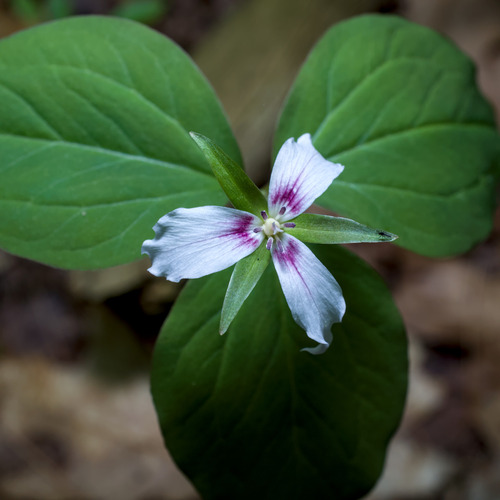
The painted trillium is a beautiful flower with white petals that have purple markings. It blooms in spring and can be found in shady forests, adding a splash of color to the ground.
Habitat: Forests
The painted trillium has three vibrant green leaves arranged in a whorl, topped by a single, striking flower. Its three pure white petals feature a distinctive, bright red 'V' or chevron pattern at their base, making it visually different from other white trilliums.
Category
PlantsRarity
Common
Danger
1/5 · Very low
Snaps
32
Despite its beauty, the painted trillium is not often eaten by deer due to its mild toxicity.
It can take a painted trillium plant over a decade to bloom its very first flower!
Picking a trillium flower can actually harm the plant for many years, even killing it.
The plant’s unique markings inspired its name, looking like it was 'painted' with a brush!
Painted trillium seeds have a fatty attachment that ants love, helping them disperse seeds far from the parent plant.
This plant has a perennial lifecycle, allowing it to return and bloom year after year from its underground rhizome.
The bright red 'V' on its white petals acts like a target, guiding insects directly to its reproductive parts for pollination.
Bombus impatiens
visits flowers for nectar
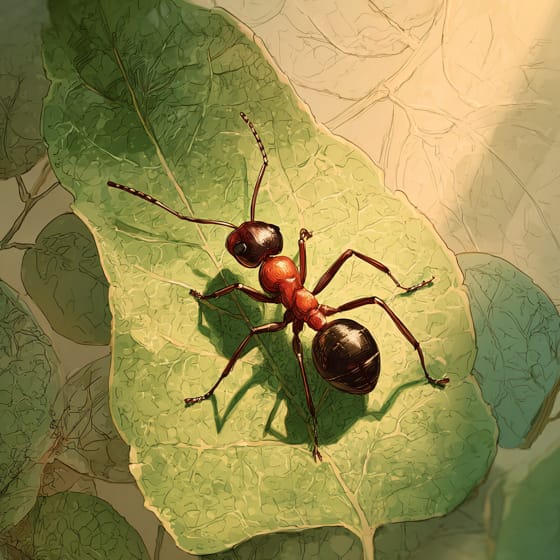
Aphaenogaster picea
disperses seeds for elaiosome

Odocoileus virginianus
occasionally browses leaves
Deciduous plants periodically shed all their leaves, typically during autumn or dry seasons.
Flowering plants are any plants that produce flowers as part of their reproductive cycle.
Cluster flowers are inflorescences where individual flowers are arranged closely together on a common stem.
Shade tolerant plants are adapted to grow and thrive in areas with low light levels, requiring less direct sunlight.

Spring blooming plants produce their flowers during the spring season, often signifying the end of winter and the start of new growth.

Colorful describes organisms or objects displaying a wide range of bright and distinct colors.

Describes plants that are particularly attractive and beneficial to a wide range of pollinating organisms.

Forest habitats are terrestrial environments dominated by dense tree cover, supporting a high diversity of plant and animal life.

Endangered status indicates a species is at a very high risk of extinction in the wild in the near future.
Danger
1/5 · Very low
Do not pick the flowers; they are best enjoyed in nature!
The easiest way to identify painted trillium is to use the Snappit nature identifier app.
20-50 cm
15-30 cm
2-4 cm
Late spring to early summer
No
Mild
Perennial
Zoom in to split clusters and explore where this object has been snapped.
May 17, 2026
Mohawk TrailPhoto attribution
(c) Eli Talhouk, some rights reserved (CC BY)
License: CC BY 4.0 ↗
Image may be shown cropped inside the card frame.

Pennsylvania, US
You might spot Pinesap, Great Rhododendron, and Mountain Laurel.
View guide →

Pennsylvania, US
You might spot Painted Trillium, Eastern Newt, and Christmas Fern.
View guide →

Massachusetts, US
You might spot Eastern Newt, Ghost Pipe, and Partridgeberry.
View guide →

New Hampshire, US
You might spot Eastern Newt, Common Loon, and Hickory Tussock Moth.
View guide →

New York, US
You might spot American Toad and Purple Pitcher Plant.
View guide →

West Virginia, US
You might spot Eastern Red-Backed Salamander and Wehrle's Salamander.
View guide →
Take the discovery with you
Snap it with Snappit to identify it, learn what makes it special, and add the discovery to your collection.





.jpg&width=800)



_001.jpg&width=800)



