.jpeg&width=800)





bloodroot
Sanguinaria canadensis
Bloodroot is a beautiful flower that blooms in early spring. Its white petals and bright yellow center make it stand out in the forest. The plant has a special red sap that can be used for coloring!
Habitat: Forests
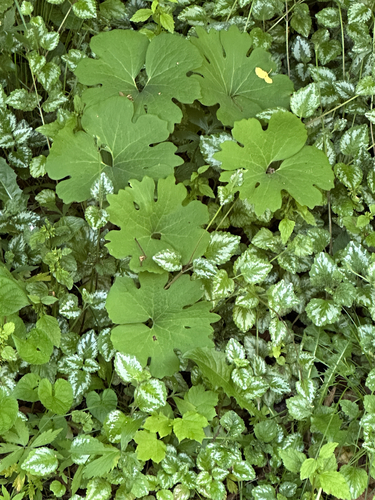
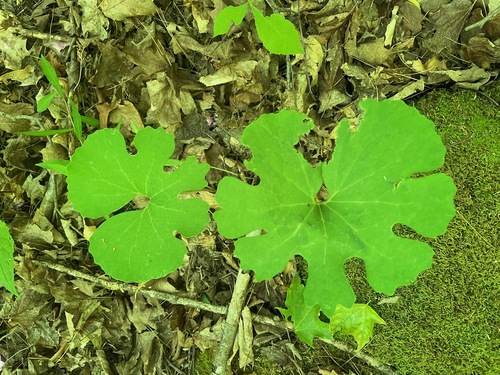
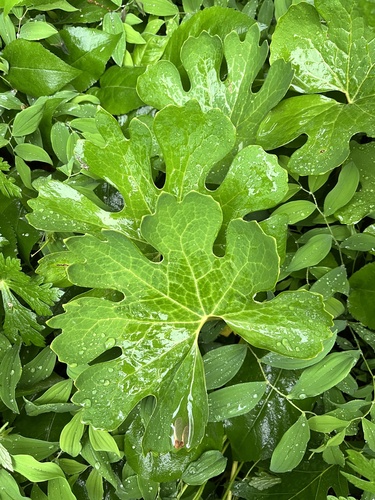
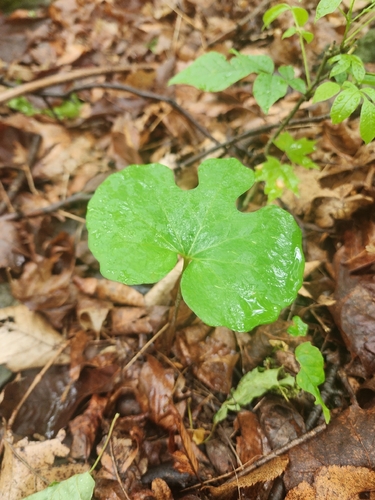
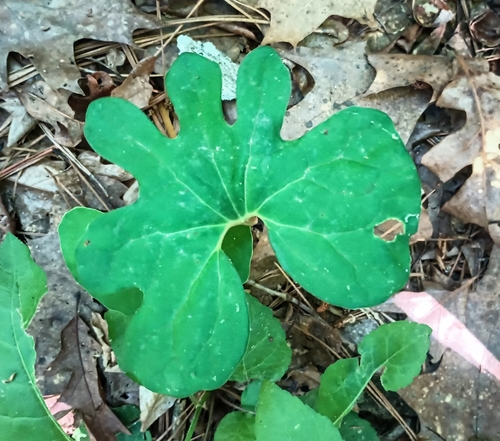
The bloodroot is a low-growing plant with a single, deeply lobed, pale green leaf that unfurls to cradle a single, delicate white flower. Its striking white petals often have a slightly ruffled appearance, emerging before other forest plants.
Category
PlantsRarity
Common
Danger
2/5 · Low
Snaps
123
Bloodroot is an "ephemeral" plant, meaning it appears and disappears quickly each year.
Did you know its rootstock looks like a finger and oozes red liquid when cut?
Indigenous peoples once used bloodroot sap as a dye for clothing and face paint!
Its beautiful white flowers only last for a few days before their petals fall off!
Bloodroot has bright orange-red sap that tastes bitter, deterring animals from eating its leaves and stems, helping it survive.
Bloodroot produces seeds with a fatty attachment that ants love, causing them to disperse seeds to new locations, helping it reproduce.
Bloodroot can grow and flower very quickly in early spring, capturing sunlight before the forest floor becomes too shady.
Andrena carlini
Visits flowers for pollen and nectar.
Apis mellifera
Collects pollen and nectar from flowers.
Formica subsericea
Carries seeds away to eat fatty elaiosomes.
Deciduous plants periodically shed all their leaves, typically during autumn or dry seasons.
Flowering plants are any plants that produce flowers as part of their reproductive cycle.
Shade tolerant plants are adapted to grow and thrive in areas with low light levels, requiring less direct sunlight.
Spring blooming plants produce their flowers during the spring season, often signifying the end of winter and the start of new growth.

This human use trait indicates species from which natural dyes can be extracted and used to color textiles, food, or other materials.

Fragrant flowers emit a pleasant aroma, often to attract pollinators or for defense.

Medicinal plants possess chemical compounds that can be used for therapeutic purposes to treat illnesses or maintain health.

Describes plants that are particularly attractive and beneficial to a wide range of pollinating organisms.

Forest habitats are terrestrial environments dominated by dense tree cover, supporting a high diversity of plant and animal life.
Danger
2/5 · Low
Do not touch or taste any plants without asking an adult first.
The easiest way to identify bloodroot is to use the Snappit nature identifier app.
15-30 cm
15-30 cm
2-5 cm
Spring
No
High
Perennial
Zoom in to split clusters and explore where this object has been snapped.
Jun 7, 2026
Boerner Botanical GardensPhoto attribution
no rights reserved
License: CC0 1.0 ↗
Image may be shown cropped inside the card frame.
Jun 3, 2026
Sand Bar State ParkPhoto attribution
(c) Tom Scavo, some rights reserved (CC BY)
License: CC BY 4.0 ↗
Image may be shown cropped inside the card frame.
May 24, 2026
Compo–Owenoke Historic DistrictPhoto attribution
no rights reserved
License: CC0 1.0 ↗
Image may be shown cropped inside the card frame.
May 20, 2026
Camp Misty Mount Historic DistrictPhoto attribution
(c) Erin Collins, some rights reserved (CC BY)
License: CC BY 4.0 ↗
Image may be shown cropped inside the card frame.
May 17, 2026
Caldwell Street Historic DistrictPhoto attribution
(c) Raven Dandridge, some rights reserved (CC BY)
License: CC BY 4.0 ↗
Image may be shown cropped inside the card frame.

Massachusetts, US
You might spot Maidenhair Spleenwort and Red Trillium.
View guide →

Missouri, US
You might spot Common Eastern Bumble Bee and Brown-Belted Bumble Bee.
View guide →
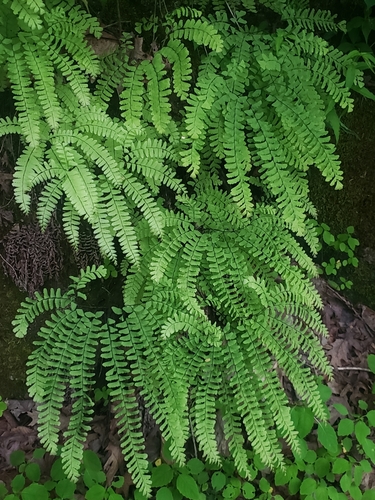
Iowa, US
You might spot Northern Maidenhair Fern and Wood Nettle.
View guide →

District of Columbia, US
You might spot Eastern Gray Squirrel, Duck, and House Sparrow.
View guide →

Wisconsin, US
You might spot Turkey, White-Tailed Deer, and Dame's Rocket.
View guide →

Vermont, US
You might spot Japanese Knotweed and Red-Bellied Woodpecker.
View guide →
Take the discovery with you
Snap it with Snappit to identify it, learn what makes it special, and add the discovery to your collection.






.jpg&width=800)


_001.jpg&width=800)



