





blue columbine
Aquilegia coerulea
The blue columbine is a beautiful flower with delicate blue petals that look like little bells. It grows in the mountains and is loved by bees and butterflies!
Habitat: Mountain regions
The blue columbine has striking, spurred flowers typically in vibrant shades of blue and white, sometimes yellow. Its delicate, fern-like leaves are a distinctive grayish-green, forming a compact clump, making it stand out.
Category
PlantsRarity
Common
Danger
1/5 · Very low
Snaps
9
Hummingbirds love its long nectar spurs, hovering like tiny helicopters to sip the sweet treat!
Indigenous peoples once used parts of this plant for traditional remedies and teas.
Its scientific name, Aquilegia, means "eagle-like" because its backward spurs resemble talons!
The blue columbine is the state flower of Colorado, chosen by schoolchildren over 120 years ago!
Blue columbine has long nectar spurs that reach deep, attracting long-tongued pollinators like hummingbirds for successful reproduction.
Blue columbine can grow in rocky, dry soils, helping it survive and thrive in harsh mountain environments.
Blue columbine has seedpods that snap open, flinging seeds a short distance to spread its offspring.
Selasphorus platycercus
They seek nectar from its deep spurs.
Phytomyza aquilegiae
Larvae tunnel and feed inside its leaves.
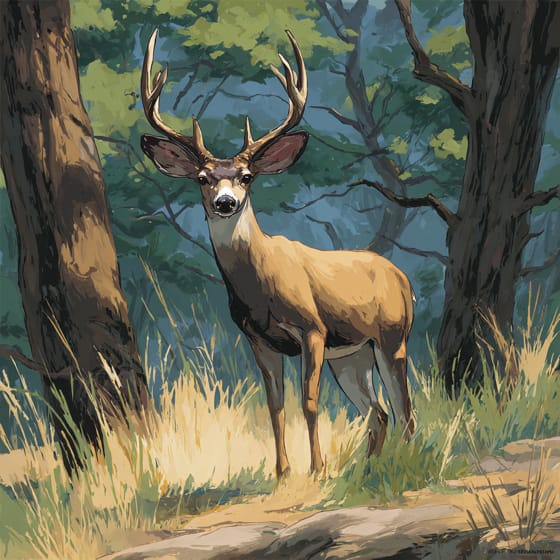
Odocoileus hemionus
Deer browse on its foliage and flowers.
Bombus occidentalis
Collects nectar and pollen, aiding reproduction.
Bell-shaped flowers possess petals fused or arranged to form a cup-like or campanulate structure resembling a bell.
Flowering plants are any plants that produce flowers as part of their reproductive cycle.
Spring blooming plants produce their flowers during the spring season, often signifying the end of winter and the start of new growth.
Fragrant flowers emit a pleasant aroma, often to attract pollinators or for defense.

Colorful describes organisms or objects displaying a wide range of bright and distinct colors.

Describes plants that are particularly attractive and beneficial to a wide range of pollinating organisms.

This habitat trait identifies species found in mountainous regions, characterized by high elevation, steep slopes, and varying climate zones.

Describes a species whose presence and role have a disproportionately large effect on its environment.
No aliases listed yet.
Danger
1/5 · Very low
Always look at flowers but don't touch them without asking an adult.
The easiest way to identify blue columbine is to use the Snappit nature identifier app.
30-90 cm
30-60 cm
3-7 cm
Late spring to early summer
No
Mild
Perennial
Zoom in to split clusters and explore where this object has been snapped.

Colorado, US
You might spot Rocky Mountain Marsh-Marigold and American Bistort.
View guide →

Colorado, US
You might spot Black-Billed Magpie and Twinberry Honeysuckle.
View guide →

Colorado, US
You might spot Black-Billed Magpie, Fireweed, and Common Cowparsnip.
View guide →

Arizona, US
You might spot Gambel Oak and Abert's Squirrel.
View guide →

Arizona, US
You might spot Gambel Oak and Greater Short-Horned Lizard.
View guide →

Colorado, US
You might spot Moose, Elk, and Whipple's Penstemon.
View guide →
Take the discovery with you
Snap it with Snappit to identify it, learn what makes it special, and add the discovery to your collection.








.jpg&width=800)


_001.jpg&width=800)




