





Blue Dicks
Dipterostemon capitatus
Blue Dicks are beautiful flowers that bloom in spring. They have lovely purple-blue petals and grow in clusters, making them look like little stars in the grass!
Habitat: Grasslands
The Blue Dicks is a slender plant with a tall, leafless stalk topped by a dense cluster of vibrant blue-purple, bell-shaped flowers. Its unique arrangement makes it look like a tiny floral firework atop a green stem.
Category
PlantsRarity
Common
Danger
1/5 · Very low
Snaps
6
Each flower cluster can boast over 20 tiny, bell-shaped blue or purple blossoms!
Its scientific name recently changed, showing how scientists learn new things!
Its underground corms were a delicious, starchy food for indigenous peoples!
This resilient plant can quickly grow back after wildfires sweep through its home!
Blue Dicks can store food and water in its underground corm, helping it survive droughts and regrow after fires.
Blue Dicks can bloom early in spring, bringing color when many other plants are just waking up.
Blue Dicks can thrive in many different habitats, from sunny meadows to dry hills, showing its adaptability.

Bombus vosnesenskii
Collects nectar and pollen from the flowers.

Thomomys bottae
Feeds on the nutritious underground corms.
Apis mellifera
Gathers nectar and pollen from its blooms.
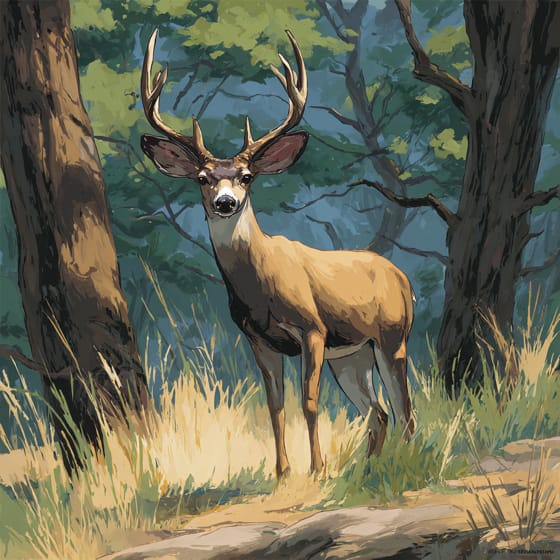
Odocoileus hemionus
Browses on the leaves and flowers.
Bell-shaped flowers possess petals fused or arranged to form a cup-like or campanulate structure resembling a bell.
Flowering plants are any plants that produce flowers as part of their reproductive cycle.
Cluster flowers are inflorescences where individual flowers are arranged closely together on a common stem.
Spring blooming plants produce their flowers during the spring season, often signifying the end of winter and the start of new growth.

Fragrant flowers emit a pleasant aroma, often to attract pollinators or for defense.

Colorful describes organisms or objects displaying a wide range of bright and distinct colors.

Grassland habitats are terrestrial biomes dominated by grasses and herbaceous plants, supporting a variety of grazing animals.

Describes plants that are particularly attractive and beneficial to a wide range of pollinating organisms.
Danger
1/5 · Very low
Always look but don't pick flowers, so everyone can enjoy them!
The easiest way to identify Blue Dicks is to use the Snappit nature identifier app.
15-70 cm
1-2 cm
Late winter to late spring
Yes
None
Perennial
Insect
Zoom in to split clusters and explore where this object has been snapped.

California, US
You might spot Frémont's Phacelia and Devil's Spineflower.
View guide →

California, US
You might spot Canyon Sunflower, Cardinal Catchfly, and White Globe Lily.
View guide →

Arizona, US
You might spot Chuparosa, Verdin, and American Threefold.
View guide →

Arizona, US
You might spot Rainbow Hedgehog Cactus and Red-Tailed Hawk.
View guide →

California, US
You might spot Vulture, Acorn Woodpecker, and Stanislaus Monkeyflower.
View guide →
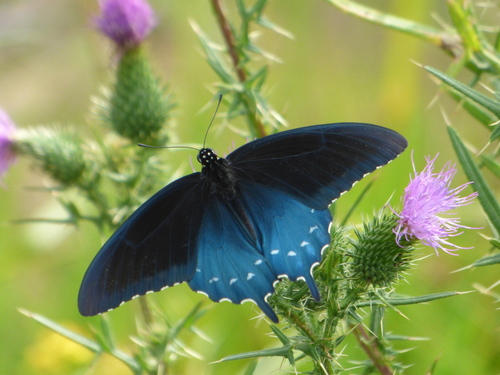
California, US
You might spot Pipevine Swallowtail, White Globe Lily, and Toyon.
View guide →
Take the discovery with you
Snap it with Snappit to identify it, learn what makes it special, and add the discovery to your collection.







.jpg&width=800)


_001.jpg&width=800)




