





California bay
Umbellularia californica
The California bay tree is a tall, evergreen tree with shiny leaves that smell wonderful! It grows in California and is known for its tasty leaves that can be used in cooking.
Habitat: Forests
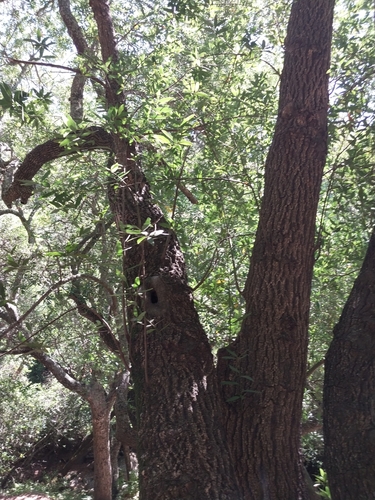
The California bay is an evergreen tree with dense, shiny, leathery dark green leaves that are long and pointed. Its small, greenish-yellow flowers grow in clusters, often appearing at the end of winter. The tree has smooth, grayish-brown bark.
Category
PlantsRarity
Common
Danger
1/5 · Very low
Snaps
4
Native Americans roasted and ate its spicy nuts, tasting a bit like coffee!
Rubbing its leaves releases a strong, spicy scent that can clear a stuffy nose!
The California bay can live for hundreds of years, becoming a forest giant!
This tree's wood is so hard, it's called "Oregon Myrtle" and used for fancy bowls.
California bay has strongly aromatic leaves filled with pungent oils that help it deter hungry browsers.
California bay can survive dry spells with its deep root system and tough, leathery leaves that conserve water.
California bay can resprout vigorously from its base after fires, helping it recover quickly in its habitat.
Apis mellifera
Visits small flowers for nectar and pollen.

Sciurus griseus
Feeds on the tree's fleshy fruits and nuts.
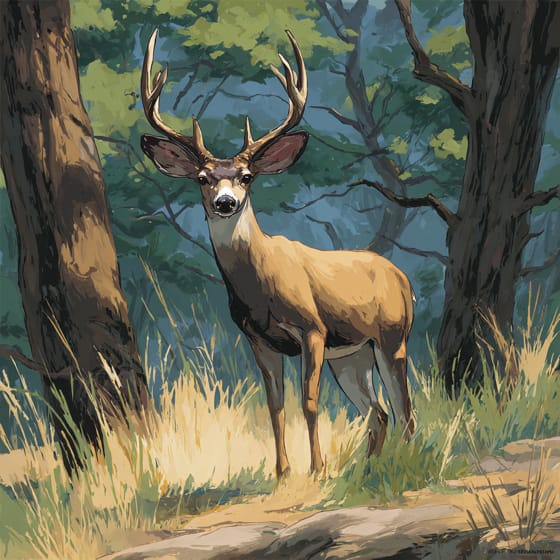
Odocoileus hemionus
Browses on the leaves, especially new growth.
.jpg&width=800)
Pipilo maculatus
Nests and forages within the dense foliage.
Aromatic plants produce and emit fragrant volatile organic compounds, often for defense or to attract pollinators.
Broadleaf trees are angiosperms characterized by flat, wide leaves that are typically shed annually in temperate climates.
Evergreen plants retain their foliage throughout the year, never shedding all their leaves at once.
Fragrant flowers emit a pleasant aroma, often to attract pollinators or for defense.

Edible plants are those parts of a plant that are considered safe for human consumption.

This human use trait indicates species from which spices are derived, used for flavoring, preserving food, or as aromatic agents.

Forest habitats are terrestrial environments dominated by dense tree cover, supporting a high diversity of plant and animal life.
No aliases listed yet.
Danger
1/5 · Very low
Don't eat any leaves without asking an adult first, even if they smell good!
The easiest way to identify California bay is to use the Snappit nature identifier app.
300-4000 cm
200-1500 cm
1-2 cm
Late winter to early spring
Yes
Mild
Perennial
Zoom in to split clusters and explore where this object has been snapped.
Jul 29, 2025
Chumash Painted Cave State Historic ParkPhoto attribution
(c) Chris Brown, some rights reserved (CC BY)
License: CC BY 4.0 ↗
Image may be shown cropped inside the card frame.
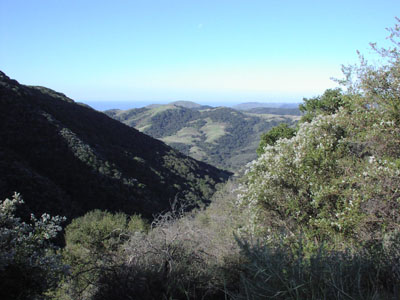
California, US
You might spot Western Fence Lizard and Canyon Sunflower.
View guide →

California, US
You might spot Western Azalea, Pacific Trillium, and Western Columbine.
View guide →

California, US
You might spot Canyon Sunflower, Cardinal Catchfly, and White Globe Lily.
View guide →
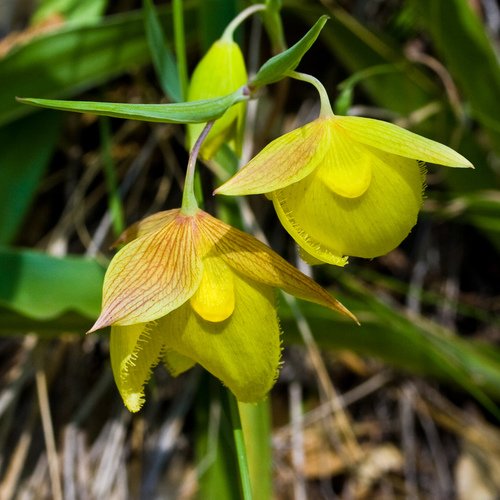
California, US
You might spot Mount Diablo Fairy-Lantern and Western Fence Lizard.
View guide →

California, US
You might spot Western Fence Lizard, Vulture, and Mule Deer.
View guide →

California, US
You might spot Red-Cage Fungus and Black-Bellied Slender Salamander.
View guide →
Take the discovery with you
Snap it with Snappit to identify it, learn what makes it special, and add the discovery to your collection.








.jpg&width=800)

_001.jpg&width=800)


