





Canids
Canidae
Canids are a family of animals that includes dogs, wolves, and foxes. They are known for their sharp senses and playful nature, making them fascinating to watch in the wild.
Habitat: Forests, Grasslands, Urban areas
The Canids has diverse forms, typically displaying slender bodies, long bushy tails, and pointed snouts. Their coats vary greatly in color from sandy desert hues to mottled grays and vibrant reds, often with keen upright ears that enhance hearing.
Category
MammalsRarity
Common
Danger
3/5 · Moderate
Snaps
Be the first to snap!
Arctic Foxes can change their fur color with the seasons, from brown to camouflaging white!
Coyotes can howl in a way that makes it sound like there are many more of them!
Did you know domestic dogs, your furry friends, are all part of the wild Canid family? Wow!
Some tiny desert foxes have huge ears that help them cool down in the hot sun!
Canids can track prey and find friends with their amazing sense of smell, picking up tiny scent clues from far away.
Canids has large, mobile ears that help them pinpoint faint sounds from far away, like rustling prey in the grass.
Canids can run for long distances, sometimes at high speeds, which helps them chase down their meals or escape danger.
Some canids live in groups, called packs, that help them hunt bigger animals and protect their territory together.
Canids are versatile eaters, feasting on meat, fruits, and insects depending on what's available.
Age differences: Young canids rely on milk before learning to hunt and forage with their parents.

Oryctolagus cuniculus
A common prey animal for many canid species like foxes.
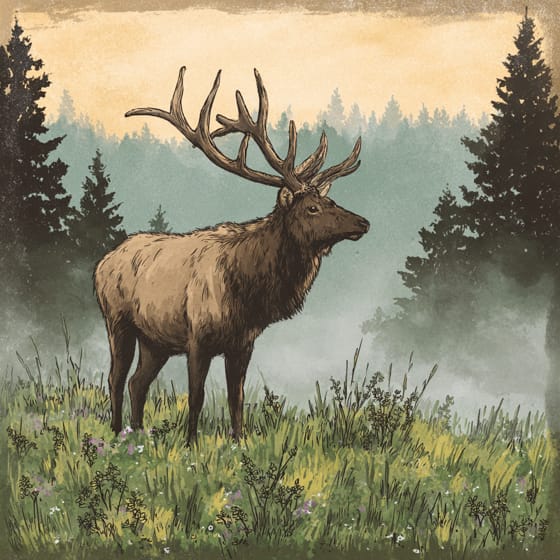
Cervus canadensis
Larger canids like wolves often hunt elk, especially the young or weak.

Ursus arctos
Grizzly bears may prey on canid pups or smaller canids.
Vaccinium corymbosum
Many canids, like foxes and coyotes, enjoy eating berries as part of their diet.
Furry describes animals possessing a dense covering of soft hair or fur.
Social animals live in organized groups, cooperating for survival benefits such as foraging, defense, and raising offspring.
Scavengers consume dead organic matter, helping to decompose carcasses and other waste in the ecosystem.
Grassland habitats are terrestrial biomes dominated by grasses and herbaceous plants, supporting a variety of grazing animals.

Forest habitats are terrestrial environments dominated by dense tree cover, supporting a high diversity of plant and animal life.

This trait identifies organisms whose diet consists entirely or primarily of animal tissue.

Diurnal animals are primarily active during daylight hours, typically resting or sleeping at night.

Describes a species whose presence and role have a disproportionately large effect on its environment.

This habitat trait indicates species that can coexist with humans in urban and suburban environments, utilizing man-made structures and green spaces.
Danger
3/5 · Moderate
Always keep a safe distance from wild canids and never try to pet them.
The easiest way to identify Canids is to use the Snappit nature identifier app.
30-160 cm
1-80 kg
6-14 years
65 km/h
Canids are versatile eaters, feasting on meat, fruits, and insects depending on what's available.
Forests, Grasslands, Urban areas
Pursuit
Zoom in to split clusters and explore where this object has been snapped.
Recent snaps will appear here as new observations are added.
Take the discovery with you
Snap it with Snappit to identify it, learn what makes it special, and add the discovery to your collection.




.JPG)
.jpg&width=800)

.JPG&width=800)


.jpg&width=800)
