





Carolina Wren
Thryothorus ludovicianus
The Carolina Wren is a small, cheerful bird known for its loud, happy song. With its brown feathers and a cute, round body, it loves to hop around in gardens and forests, making it a delightful sight to see!
Habitat: Forests
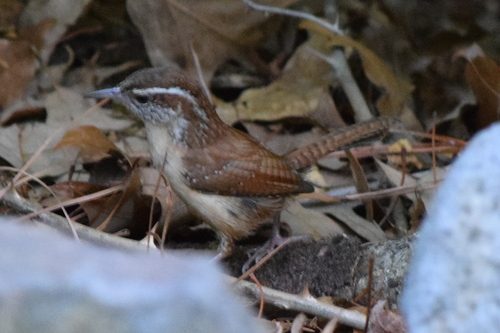
The Carolina Wren is a small, energetic bird with rufous-brown feathers above and buffy orange below. It has a striking white stripe above its eye and an upturned tail, making it look quite distinctive.
Category
BirdsRarity
Common
Danger
1/5 · Very low
Snaps
53
One tiny Carolina Wren can sing over 40 different songs!
Their loud song, 'teakettle-teakettle,' can be heard almost a kilometer away!
They sometimes nap inside old socks or hanging flower pots!
This bird often mates for life, staying with its partner year after year.
Carolina Wren can build sturdy nests in diverse, unusual spots like mailboxes, helping them adapt to many environments.
Carolina Wren has a sharp, slender beak that helps them probe crevices and dense foliage to find hidden insects.
Carolina Wrens love to gobble up insects and spiders they find hiding in plants.
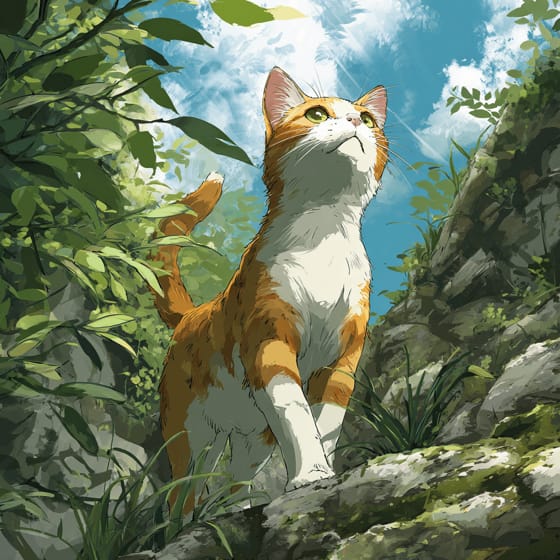
Felis catus
Cats are a significant predator of ground-nesting and foraging wrens.
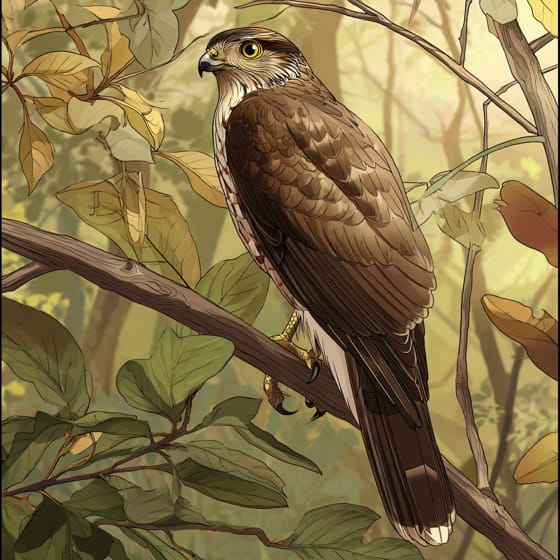
Accipiter cooperii
Larger birds of prey occasionally hunt small songbirds like wrens.

Quercus alba
Wrens find insects and shelter among the dense branches and leaf litter.
Feathered describes animals, primarily birds, possessing a covering of feathers.
Social animals live in organized groups, cooperating for survival benefits such as foraging, defense, and raising offspring.
Singing animals produce complex vocalizations, often for purposes of attracting mates, defending territory, or communicating within their species.
This trait identifies organisms whose diet primarily consists of insects and other small invertebrates.

Forest habitats are terrestrial environments dominated by dense tree cover, supporting a high diversity of plant and animal life.

Diurnal animals are primarily active during daylight hours, typically resting or sleeping at night.
No aliases listed yet.
Danger
1/5 · Very low
Enjoy watching birds from a distance and don't try to touch or catch them.
The easiest way to identify Carolina Wren is to use the Snappit nature identifier app.
12.5-14 cm
25-30 cm
0.018-0.022 kg
6-7 years
35 km/h
Carolina Wrens love to gobble up insects and spiders they find hiding in plants.
Forests
Zoom in to split clusters and explore where this object has been snapped.
May 29, 2026
Fort MilesPhoto attribution
(c) Elizabeth Green, some rights reserved (CC BY)
License: CC BY 4.0 ↗
Image may be shown cropped inside the card frame.
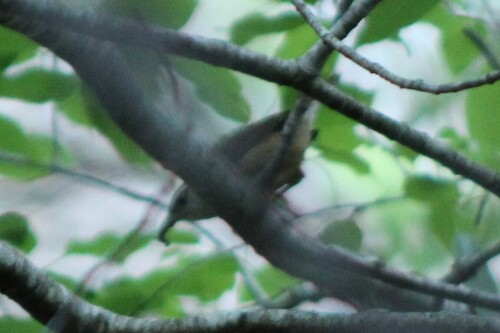
May 28, 2026
Lost Maples State Natural AreaPhoto attribution
(c) Matt D'Agrosa, some rights reserved (CC BY)
License: CC BY 4.0 ↗
Image may be shown cropped inside the card frame.

South Carolina, US
You might spot Anole, Green Treefrog, and Eastern Gray Squirrel.
View guide →

Tennessee, US
You might spot Black Bear, Yellow Wakerobin, and Pipevine Swallowtail.
View guide →

South Carolina, US
You might spot American Alligator, Anole, and Great Blue Heron.
View guide →

Rhode Island, US
You might spot Common Eastern Bumble Bee and Osprey.
View guide →

Louisiana, US
You might spot Brown Anole, White Ibis, and Duck.
View guide →

Georgia, US
You might spot Brown Anole, Anole, and Gulf Fritillary.
View guide →
Take the discovery with you
Snap it with Snappit to identify it, learn what makes it special, and add the discovery to your collection.




.jpg&width=800)








