.jpg&width=800)





Hooded Merganser
Lophodytes cucullatus
The Hooded Merganser is a small duck with a striking crest on its head. It loves to swim in lakes and rivers, diving underwater to catch fish and insects.
Habitat: Wetlands
The Hooded Merganser is a striking duck known for its distinctive fan-shaped crest. Males boast a dramatic black-and-white crest with bright white flanks, while females have a shaggy, reddish-brown crest and grayish-brown body. Their slender, pointed bill sets them apart from most other ducks.
Category
BirdsRarity
Common
Danger
1/5 · Very low
Snaps
23
A Hooded Merganser chick can jump from its tree cavity nest the day it hatches!
Male Hooded Mergansers puff up their amazing fan-shaped crest to attract a mate.
These speedy ducks can fly thousands of kilometers during their yearly migrations.
They nest inside tall tree cavities, sometimes sharing with other ducks!
Hooded Merganser has special eyes that can focus clearly both above and below water, helping them hunt fish.
Hooded Merganser has a hooked bill with saw-like edges, which helps them grip slippery fish underwater.
Hooded Merganser can dive quickly underwater, using their strong feet to chase and catch fast-moving prey.
This diving duck mainly eats small fish, aquatic insects, and crustaceans.

Procyon lotor
Raccoons often prey on Hooded Merganser eggs and ducklings.
Mustela vison
Mink are agile predators that can hunt adult mergansers and ducklings.
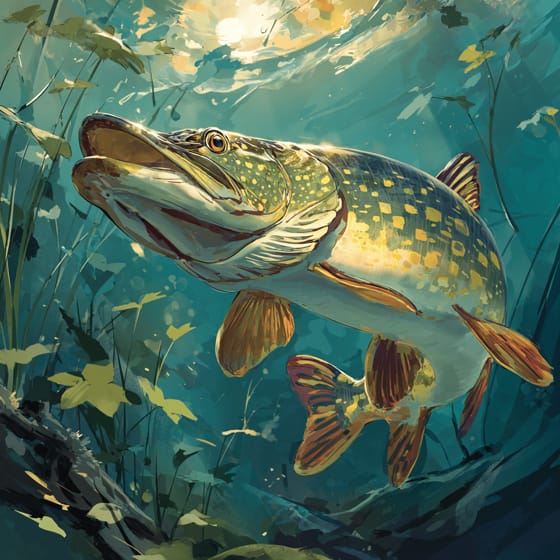
Esox lucius
Hooded Mergansers hunt small pike as part of their fish diet.

Gulo gulo
Wolverines may prey on mergansers if available near their territories.
Characterized by having toes connected by a membrane, typically aiding in swimming.
Crested describes animals possessing a prominent tuft of feathers, hair, or skin on their head.
Social animals live in organized groups, cooperating for survival benefits such as foraging, defense, and raising offspring.
Colorful describes organisms or objects displaying a wide range of bright and distinct colors.

Piscivorous organisms are animals that primarily subsist on a diet of fish.

This habitat trait identifies species found in wetlands, which are areas of land saturated with water, either permanently or seasonally, including marshes, swamps, and bogs.

Diurnal animals are primarily active during daylight hours, typically resting or sleeping at night.

Freshwater habitats include non-saline aquatic environments such as rivers, lakes, ponds, and wetlands, vital for numerous species.

Migratory animals undertake seasonal movements from one region to another, typically in response to changes in climate or food availability.
No aliases listed yet.
Danger
1/5 · Very low
Always watch ducks from a distance and don't feed them bread.
The easiest way to identify Hooded Merganser is to use the Snappit nature identifier app.
40-50 cm
60-70 cm
0.45-0.86 kg
6-10 years
72 km/h
This diving duck mainly eats small fish, aquatic insects, and crustaceans.
Wetlands
Zoom in to split clusters and explore where this object has been snapped.
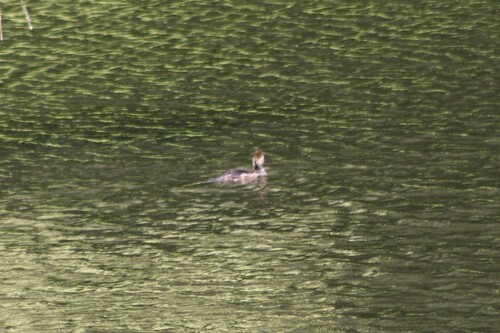
Jun 19, 2026
Bloedel ReservePhoto attribution
no rights reserved
License: CC0 1.0 ↗
Image may be shown cropped inside the card frame.
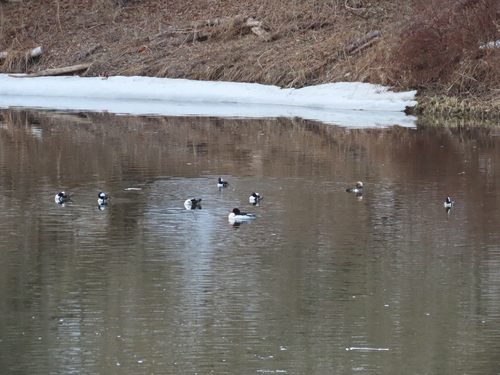
Mar 7, 2026
Salem Historic DistrictPhoto attribution
(c) Chelsea Carroll, some rights reserved (CC BY)
License: CC BY 4.0 ↗
Image may be shown cropped inside the card frame.
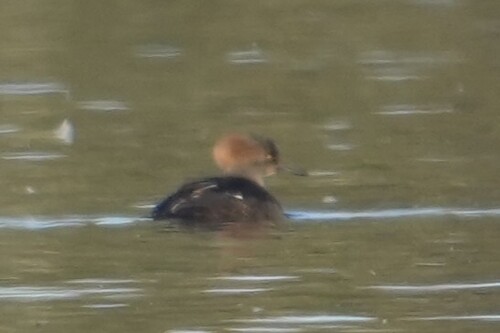
Dec 9, 2025
Crowley Historic DistrictPhoto attribution
(c) Brandon Johnson, some rights reserved (CC BY)
License: CC BY 4.0 ↗
Image may be shown cropped inside the card frame.

Washington, US
You might spot Pacific Tree Frog and Long-Toed Salamander.
View guide →

New Jersey, US
You might spot Brant, Laughing Gull, and Great Black-Backed Gull.
View guide →

Oregon, US
You might spot Oregon Oak, Pacific Poison Oak, and American Bullfrog.
View guide →

Alabama, US
You might spot Painted Bunting, House Finch, and Red-Shouldered Hawk.
View guide →

New Jersey, US
You might spot Duck, Canada Goose, and Red-Winged Blackbird.
View guide →

Ohio, US
You might spot Brown-Belted Bumble Bee and Eastern Carpenter Bee.
View guide →
Take the discovery with you
Snap it with Snappit to identify it, learn what makes it special, and add the discovery to your collection.




.jpg&width=800)








