




Carp
Cyprinus carpio
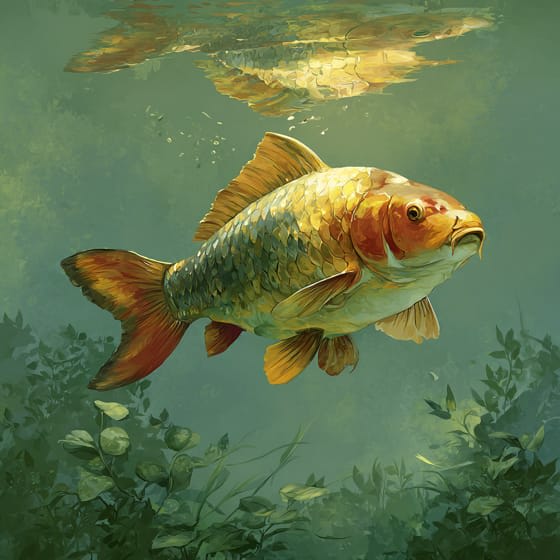
Carp are colorful fish that live in rivers, lakes, and ponds. They have shiny scales and can grow very big. Carp are known for their ability to adapt to different environments.
Habitat: Freshwater
The Carp has a large, robust body covered in shiny, often golden-brown to olive-green scales. It typically has two pairs of distinct barbels, or fleshy feelers, near its mouth, setting it apart visually.
Category
FishRarity
Common
Danger
2/5 · Low
Snaps
Be the first to snap!
A single female carp can lay over a million tiny eggs in one breeding season!
Carp have been around for more than 100 million years, swimming with the dinosaurs!
Koi fish are actually colorful types of carp, specifically bred for their beauty!
Some carp have shiny scales that look like mirrors, called 'Mirror Carp'!
Carp has four barbels that help it sense and find tasty food in murky water, even in the dark.
Carp can crush hard food using special pharyngeal teeth located in its throat, not its mouth.
Carp can live in water with less oxygen, helping it survive in various, sometimes challenging habitats.
Carp can jump out of the water, a behavior that helps them escape danger or pass over obstacles.
Bottom-feeding omnivores that eat plants, insects, and small critters found in the mud.
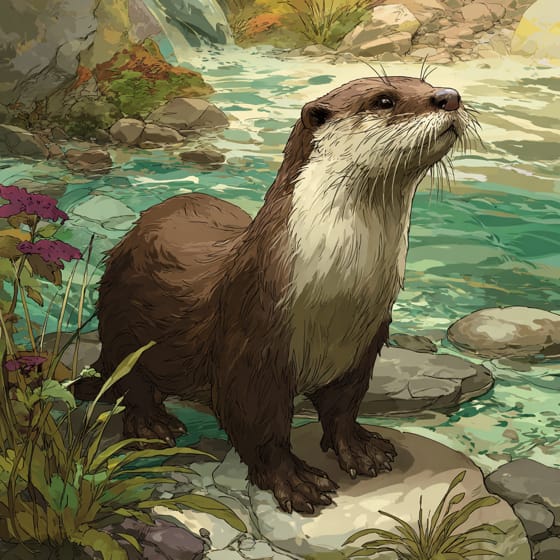
Lutra lutra
Otters often hunt carp as a vital food source.
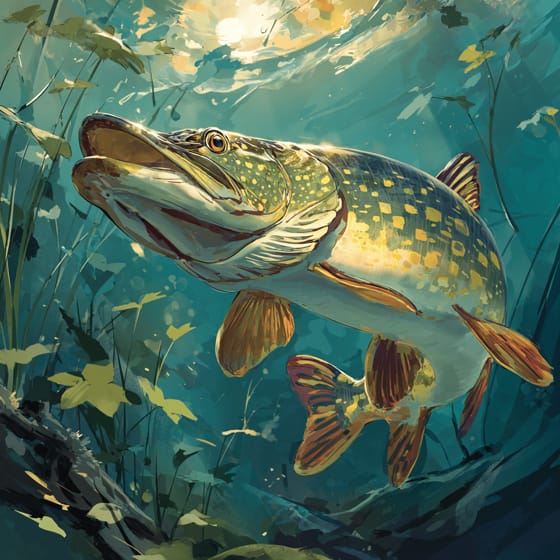
Esox lucius
Pike are ambush predators of young carp.

Haliaeetus albicilla
Large eagles snatch carp from the surface.
Daphnia pulex
Young carp eat these tiny crustaceans.
Wildlife encompasses all undomesticated animal and plant life existing in their natural habitats.
This trait identifies organisms whose diet includes both plant and animal matter.
Colorful describes organisms or objects displaying a wide range of bright and distinct colors.
Filter feeders obtain nutrients by straining suspended food particles and small organisms from water.

This trait characterizes organisms with an exceptionally long lifespan compared to others of their kind.

Freshwater habitats include non-saline aquatic environments such as rivers, lakes, ponds, and wetlands, vital for numerous species.

Aquatic habitats encompass environments where organisms live predominantly in water, including oceans, rivers, lakes, and wetlands.

Nocturnal animals are primarily active during the nighttime hours, typically resting or sleeping during the day.
Danger
2/5 · Low
When near water where carp live, always stay at a safe distance and never try to catch them without adult supervision.
The easiest way to identify Carp is to use the Snappit nature identifier app.
40-120 cm
2-40 kg
10-30 years
Bottom-feeding omnivores that eat plants, insects, and small critters found in the mud.
5 km/h
Freshwater
Foraging
Zoom in to split clusters and explore where this object has been snapped.
Recent snaps will appear here as new observations are added.
Take the discovery with you
Snap it with Snappit to identify it, learn what makes it special, and add the discovery to your collection.