





Chipping Sparrow
Spizella passerina
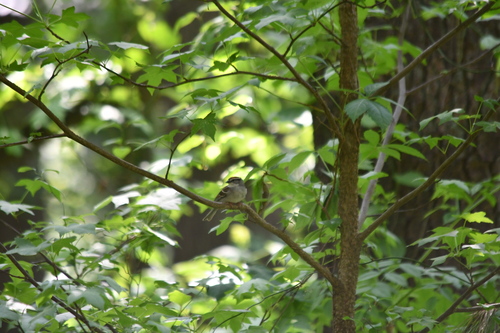
The Chipping Sparrow is a small, cheerful bird with a lovely song. It has a rusty cap on its head and a grayish belly. You can often see it hopping around in gardens and parks, looking for seeds to eat.
Habitat: Urban areas
The Chipping Sparrow has a distinctive rusty-red cap and a prominent white stripe above its eye, contrasted by a dark line running through the eye. Its back is streaked brown, while its underparts are a plain, unmarked gray, making it look quite neat and slender.
Category
BirdsRarity
Common
Danger
1/5 · Very low
Snaps
96
Baby Chipping Sparrows eat mostly insects, like caterpillars, to grow big and strong quickly.
Chipping Sparrows build nests so small, they're often mistaken for just a clump of leaves.
Some Chipping Sparrows fly thousands of kilometers, migrating from Canada all the way to Mexico!
Their song sounds like a tiny sewing machine, a rapid trill of 'chip-chip-chip'!
Chipping Sparrows can find tiny seeds because of their sharp eyesight that helps them spot food on the ground.
Chipping Sparrows have streaked brown feathers that help them blend perfectly into dry grasses and twigs.
Chipping Sparrows can dart away quickly because of their lightweight bodies and strong wings that help them escape danger.
These little birds enjoy a meal of tiny seeds and crunchy insects found in gardens and fields.
Age differences: Young sparrows eat mostly protein-rich insects, switching to a more seed-heavy diet as adults.
.jpg&width=800)
Molothrus ater
Lays eggs in sparrow nests, often to the detriment of sparrow chicks.
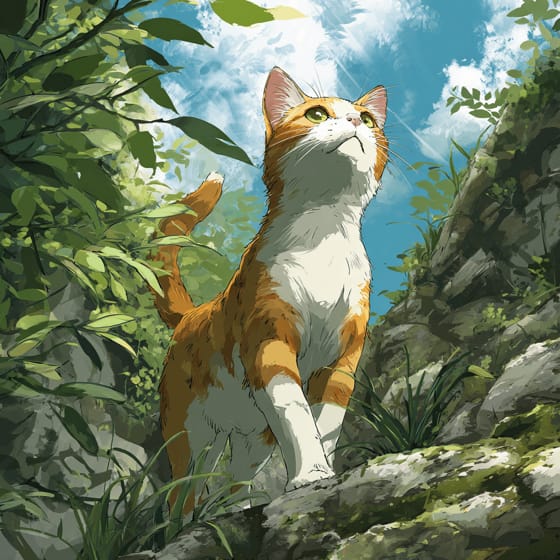
Felis catus
Common predator in suburban habitats.
Digitaria sanguinalis
Relies heavily on seeds from common lawn weeds.
Pieris rapae
Eats caterpillars during breeding season to feed young.
Feathered describes animals, primarily birds, possessing a covering of feathers.
Social animals live in organized groups, cooperating for survival benefits such as foraging, defense, and raising offspring.
Singing animals produce complex vocalizations, often for purposes of attracting mates, defending territory, or communicating within their species.
This trait characterizes organisms whose diet consists entirely or primarily of plant material.

Diurnal animals are primarily active during daylight hours, typically resting or sleeping at night.

This habitat trait indicates species that can coexist with humans in urban and suburban environments, utilizing man-made structures and green spaces.
No aliases listed yet.
Danger
1/5 · Very low
Enjoy watching birds from a distance and don't try to touch them.
The easiest way to identify Chipping Sparrow is to use the Snappit nature identifier app.
12-15 cm
20-24 cm
0.011-0.015 kg
2-9 years
40 km/h
These little birds enjoy a meal of tiny seeds and crunchy insects found in gardens and fields.
Urban areas
Zoom in to split clusters and explore where this object has been snapped.
Jun 19, 2026
City ParkPhoto attribution
(c) Jared Lincenberg, some rights reserved (CC BY)
License: CC BY 4.0 ↗
Image may be shown cropped inside the card frame.
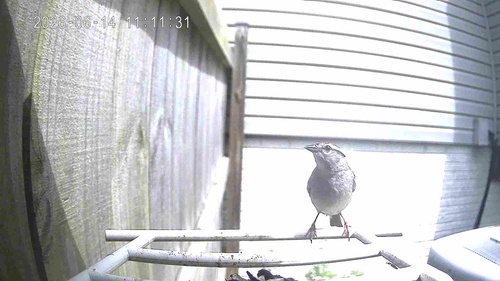
Jun 14, 2026
Chandon ParkPhoto attribution
no rights reserved
License: CC0 1.0 ↗
Image may be shown cropped inside the card frame.
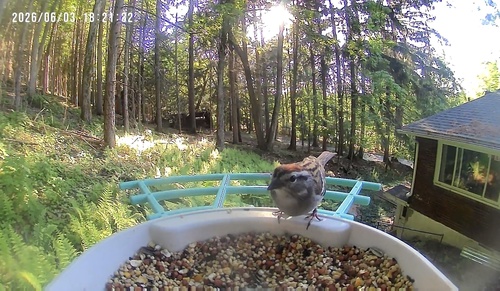
Jun 3, 2026
Binghamton Zoo at Ross ParkPhoto attribution
(c) David Weisenbeck, some rights reserved (CC BY)
License: CC BY 4.0 ↗
Image may be shown cropped inside the card frame.
May 29, 2026
Lost Maples State Natural AreaPhoto attribution
(c) Matt D'Agrosa, some rights reserved (CC BY)
License: CC BY 4.0 ↗
Image may be shown cropped inside the card frame.
May 17, 2026
Blackbird State ForestPhoto attribution
(c) inbetweenbays, some rights reserved (CC BY)
License: CC BY 4.0 ↗
Image may be shown cropped inside the card frame.

New York, US
You might spot Sundial Lupine, Spotted Horsemint, and New Jersey Tea.
View guide →

Massachusetts, US
You might spot Eastern Cottontail and American Robin.
View guide →
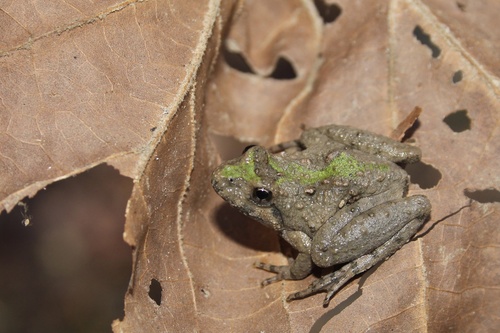
Delaware, US
You might spot Northern Cricket Frog, Fan Clubmoss, and Fowler's Toad.
View guide →
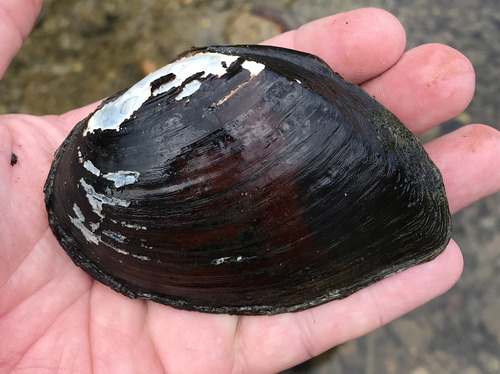
Alabama, US
You might spot Elephantear, Three-Ridge Mussel, and Rough Fatmucket.
View guide →

Vermont, US
You might spot Japanese Knotweed and Red-Bellied Woodpecker.
View guide →
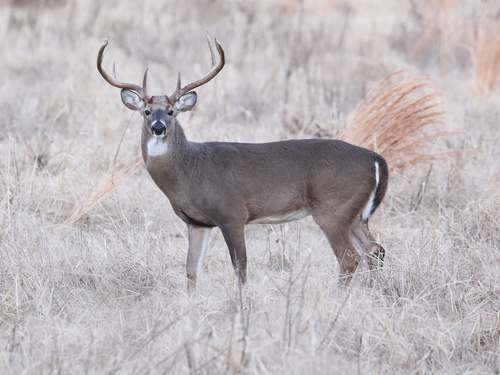
Virginia, US
You might spot White-Tailed Deer and House Sparrow.
View guide →
Take the discovery with you
Snap it with Snappit to identify it, learn what makes it special, and add the discovery to your collection.




.jpg&width=800)








