.jpg&width=800)





Common Eider
Somateria mollissima
The Common Eider is a beautiful duck known for its soft feathers and unique colors. They love to swim in the ocean and dive for tasty clams and mussels.
Habitat: Coastal areas
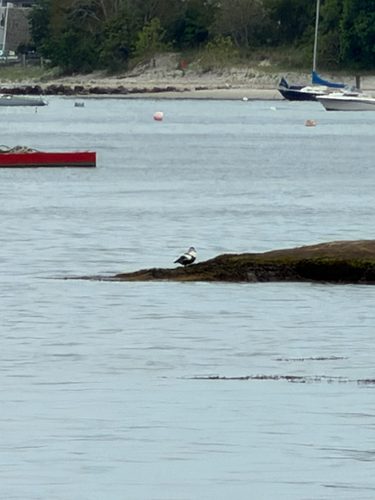
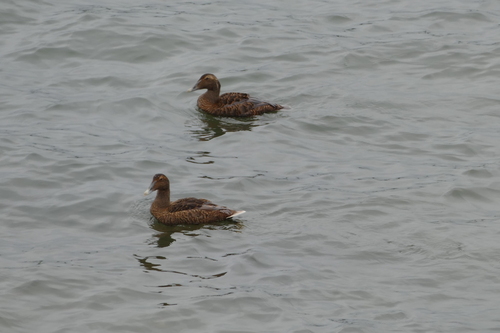
The Common Eider is a large, heavy-bodied sea duck. Males have striking black and white plumage with a green nape and an orange-yellow bill. Females are mottled brown, providing excellent camouflage against coastal rocks.
Category
BirdsRarity
Common
Danger
1/5 · Very low
Snaps
23
Common Eiders eat shellfish whole, crushing them with their powerful gizzards!
Eider down is so warm, it's used in fancy parkas and sleeping bags!
Male eiders make a soft, cooing "ah-ooo" sound that sounds like a love song!
They can dive for over a minute, holding their breath longer than many humans!
Common Eider can dive over 20 meters because of its heavy body and strong legs, helping it grab food from the seafloor.
Common Eider has super dense down feathers that create an amazing insulation layer, allowing it to thrive in icy waters.
Common Eider has specialized glands that help remove excess salt, so they can drink seawater without getting sick.
These marine ducks mainly feast on yummy shellfish found on the ocean floor.
Feathered describes animals, primarily birds, possessing a covering of feathers.
Characterized by having toes connected by a membrane, typically aiding in swimming.
Social animals live in organized groups, cooperating for survival benefits such as foraging, defense, and raising offspring.
Filter feeders obtain nutrients by straining suspended food particles and small organisms from water.

Thermoregulating organisms maintain a stable internal body temperature despite fluctuations in the external environment.

Coastal habitats are dynamic environments located along the interface between land and sea, influenced by tides, waves, and saltwater.

This trait identifies organisms whose diet consists entirely or primarily of animal tissue.

Marine habitats encompass all saltwater environments of the Earth's oceans, supporting an immense diversity of aquatic life.

Migratory animals undertake seasonal movements from one region to another, typically in response to changes in climate or food availability.
No aliases listed yet.
Danger
1/5 · Very low
Always watch birds from a distance and do not try to touch them.
The easiest way to identify Common Eider is to use the Snappit nature identifier app.
50-71 cm
80-110 cm
1.8-2.9 kg
15-20 years
65 km/h
These marine ducks mainly feast on yummy shellfish found on the ocean floor.
Coastal areas
Zoom in to split clusters and explore where this object has been snapped.
May 31, 2026
Connecticut College ArboretumPhoto attribution
(c) Sawyer Baran, some rights reserved (CC BY)
License: CC BY 4.0 ↗
Image may be shown cropped inside the card frame.
Aug 13, 2016
Spring Street Historic DistrictPhoto attribution
(c) InAweofGod'sCreation, some rights reserved (CC BY)
License: CC BY 4.0 ↗
Image may be shown cropped inside the card frame.

Rhode Island, US
You might spot Rugosa Rose and American Herring Gull.
View guide →

Massachusetts, US
You might spot Common Eastern Bumble Bee and Asian Lady Beetle.
View guide →

Connecticut, US
You might spot Common Mugwort and Canada Goose.
View guide →

US
You might spot Common Eider, American Herring Gull, and Common Periwinkle.
View guide →

Connecticut, US
You might spot Brant, American Herring Gull, and Double-Crested Cormorant.
View guide →

Maine, US
You might spot Ghost Pipe, Pink Lady's Slipper, and Bluebead Lily.
View guide →
Take the discovery with you
Snap it with Snappit to identify it, learn what makes it special, and add the discovery to your collection.





.jpg&width=800)








