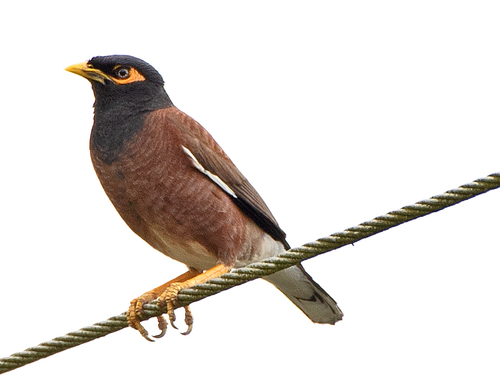


Common Myna
acridotheres tristis
The Common Myna (Acridotheres tristis) is a highly intelligent, boldly charismatic, and remarkably adaptable passerine bird belonging to the starling family. Originally native to the open woodlands and agricultural areas of Asia, spanning from Iran to Southeast Asia, this resourceful species has aggressively expanded its footprint globally. Often seen fearlessly navigating busy city streets or vocally defending its territory, the Common Myna has thrived alongside human civilization. While their lively antics and impressive vocal repertoire make them fascinating subjects for observation, their overwhelming success comes at a steep ecological cost. Due to their aggressive territorial nature and prolific breeding, they routinely outcompete native species for food resources and crucial nesting hollows. Consequently, they are widely regarded as one of the world's most formidable invasive species in regions like Australia, South Africa, and various island ecosystems.
Habitat: Found in open woodlands and agricultural fields, often foraging on the ground near human settlements.
The Common Myna is a medium-sized, stocky bird easily identified by its rich, chocolate-brown body plumage that contrasts sharply with a glossy black hood covering its head, neck, and upper breast. One of its most distinctive features is a bright, bare patch of yellow skin located immediately behind each eye, which perfectly matches its stout yellow bill and sturdy yellow legs. In flight, they are unmistakable, flashing large, prominent white circular patches on their primary wing feathers, accompanied by bright white tips on the edges of their tail feathers.
Category
BirdsRarity
Common
Danger
1/5 · Very low
Snaps
10
Common Mynas often mate for life, and established pairs can frequently be seen mutually preening each other to reinforce their lifelong bond.
The IUCN declared the Common Myna as one of only three bird species to be included in the top 100 of the world's worst invasive alien species.
They are highly social and often gather in massive, incredibly noisy communal roosts at night, which can contain thousands of individuals.
Unlike many perching birds that navigate the ground by hopping, the Common Myna walks with a confident, distinctive strutting gait.
They possess an exceptionally versatile syrinx, allowing them to accurately mimic human speech, other bird calls, and environmental noises.
Mynas frequently and aggressively evict other native birds and small mammals from crucial tree hollows to claim them as their own nesting sites.
Their highly adaptable digestive system and bold behavioral nature allow them to exploit a vast array of urban food sources, including human refuse.
The Common Myna is a true generalist, opportunistic omnivore that will eat almost anything it can find, from live prey to human food scraps.
Age differences: Chicks are fed a diet predominantly consisting of protein-rich insects and invertebrates to support rapid growth.
_in_tree-2c.jpg&width=800)
Platycercus eximius
Competes for critical tree-hollow nesting sites, often violently evicting native parrots.
Corvus splendens
A common urban predator that frequently raids Common Myna nests for eggs and vulnerable chicks.
Ficus benghalensis
Feeds heavily on the figs of this tree in its native range, acting as an effective seed disperser.
No trait badges are assigned for this object yet.
No aliases listed yet.
Collections for this object will appear here as more themes are added.
Danger
1/5 · Very low
No special safety notes yet.
The easiest way to identify Common Myna is to use the Snappit nature identifier app.
23-26 cm
35-42 cm
0.1-0.143 kg
4-12 years
The Common Myna is a true generalist, opportunistic omnivore that will eat almost anything it can find, from live prey to human food scraps.
Found in open woodlands and agricultural fields, often foraging on the ground near human settlements.
Foraging
Zoom in to split clusters and explore where this object has been snapped.
Jun 14, 2026
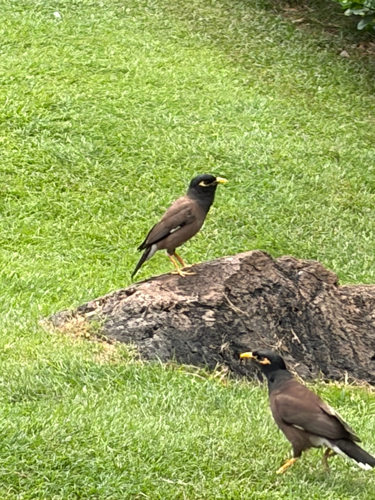
Lahaina Historic DistrictPhoto attribution
(c) speedy-birds, some rights reserved (CC BY)
License: CC BY 4.0 ↗
Image may be shown cropped inside the card frame.

Hawaii, US
You might spot Brown Anole, Gold Dust Day Gecko, and Red-Crested Cardinal.
View guide →

Hawaii, US
You might spot Gold Dust Day Gecko, Yellow Tang, and Black Triggerfish.
View guide →

Florida, US
You might spot Peters's Rock Agama, Brown Anole, and American Alligator.
View guide →

Hawaii, US
You might spot Hawaiian Garden Spider, Beach Naupaka, and Black Noddy.
View guide →

US
You might spot Brown Anole, Zebra Dove, and Red-Crested Cardinal.
View guide →
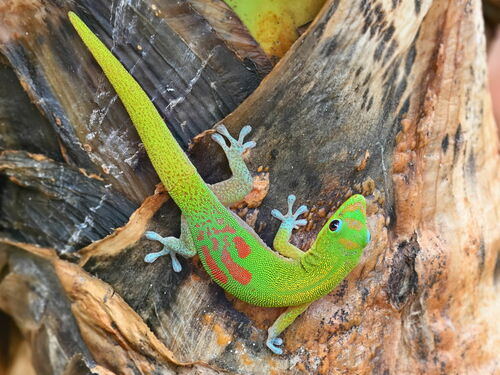
Hawaii, US
You might spot Gold Dust Day Gecko, Sea Turtle, and Brown Anole.
View guide →
Take the discovery with you
Snap it with Snappit to identify it, learn what makes it special, and add the discovery to your collection.








.jpg&width=800)









