





Common Ringlet
Coenonympha california
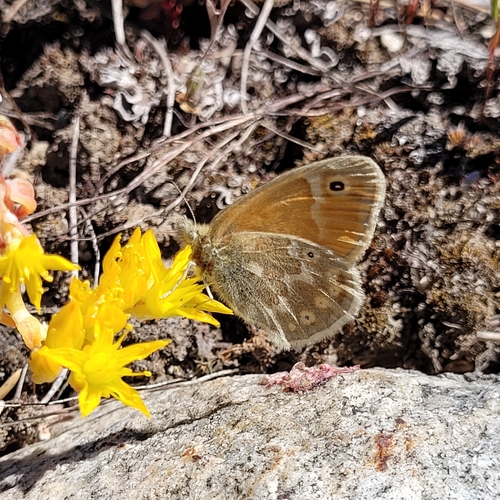
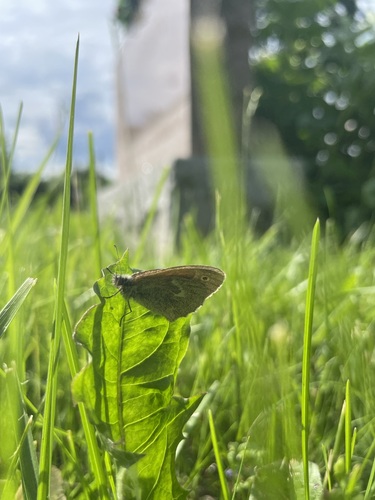
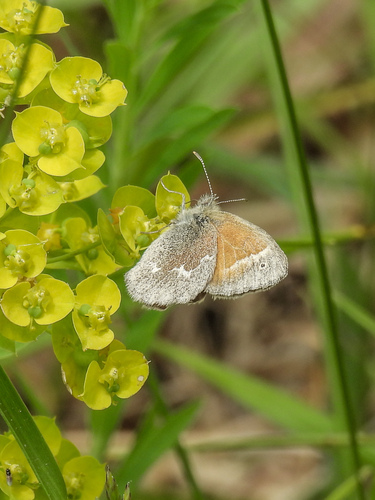
The Common Ringlet is a small butterfly with beautiful brown wings. It loves to flutter around grassy areas and is often seen on sunny days, making it a delightful sight for nature lovers.
Habitat: Grasslands
The Common Ringlet has plain brown to orange-brown wings, often with small, dark eyespots circled in yellow near the wing edges. It is less colourful than many butterflies, typically appearing subtle and muted compared to brighter species.
Category
InsectsRarity
Common
Danger
1/5 · Very low
Snaps
42
A tiny caterpillar munching on grass transforms into this beautiful butterfly inside a chrysalis!
Instead of a mouth, adult Ringlets have a long, straw-like 'proboscis' to sip sweet flower nectar.
Male butterflies often chase females in mid-air with their wiggly flight to impress them!
They don't have ears, but they can feel vibrations in the air to sense danger!
Common Ringlet has tiny eyespots on its wings that trick predators into attacking less vital body parts, helping them escape.
Common Ringlet can fly with a low, erratic, 'dancing' flight pattern to make it harder for birds and other predators to catch them.
Common Ringlet can bask in the sun to warm up their bodies, allowing them to fly and be active even on cooler days.
Larvae munch on grasses, while adult butterflies sip sweet nectar from flowers.
Age differences: Larvae eat various grasses, while adults feed exclusively on liquid nectar and sometimes sap.
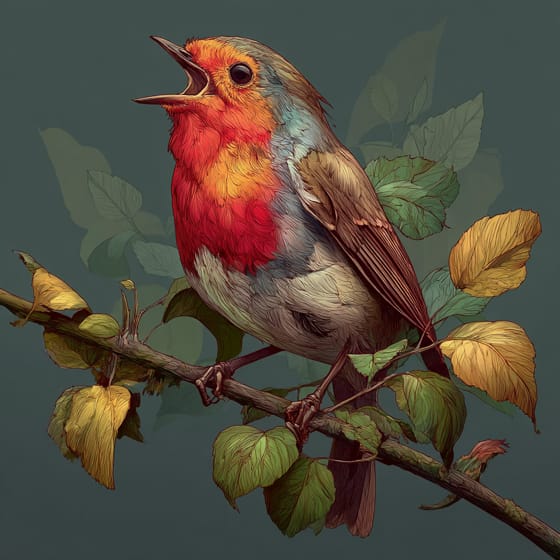
Turdus migratorius
A common bird that preys on butterflies.
Achillea millefolium
Visits its flowers, transferring pollen.
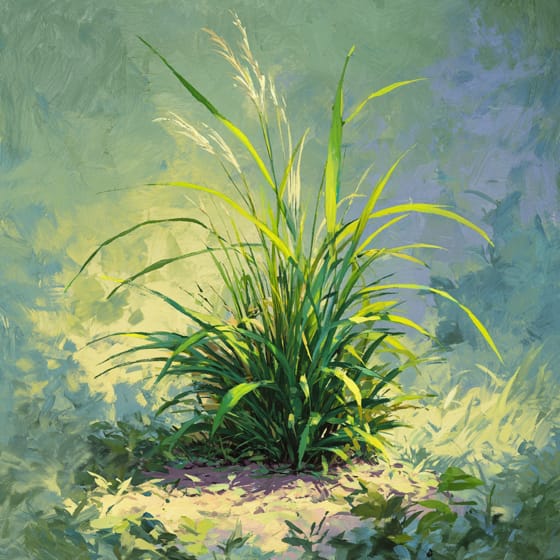
Poa pratensis
Its larvae feed on this grass species.
Marked with spots or patches of a different color.
Solitary animals live alone for most of their lives, only interacting with others for mating or parental care.
Colorful describes organisms or objects displaying a wide range of bright and distinct colors.
Grassland habitats are terrestrial biomes dominated by grasses and herbaceous plants, supporting a variety of grazing animals.

This trait characterizes organisms whose diet consists entirely or primarily of plant material.

Describes plants that are particularly attractive and beneficial to a wide range of pollinating organisms.

Diurnal animals are primarily active during daylight hours, typically resting or sleeping at night.

Describes organisms that transfer pollen, enabling the fertilization and reproduction of plants.
No aliases listed yet.
Danger
1/5 · Very low
Butterflies are gentle, but it's best to watch them from a distance and not touch them.
The easiest way to identify Common Ringlet is to use the Snappit nature identifier app.
30-45 mm
15-22 mm
10-25 days
5-15 km/h
Larvae munch on grasses, while adult butterflies sip sweet nectar from flowers.
Grasslands
Foraging
Zoom in to split clusters and explore where this object has been snapped.
Jun 17, 2026
Murie Ranch Historic DistrictPhoto attribution
(c) Konshau Duman, some rights reserved (CC BY)
License: CC BY 4.0 ↗
Image may be shown cropped inside the card frame.
Jun 13, 2026
Parc Jean-DrapeauPhoto attribution
no rights reserved
License: CC0 1.0 ↗
Image may be shown cropped inside the card frame.
May 29, 2026
Jackson Terrace Historic DistrictPhoto attribution
no rights reserved
License: CC0 1.0 ↗
Image may be shown cropped inside the card frame.

Vermont, US
You might spot Asian Bittersweet, Alder Buckthorn, and Eastern Newt.
View guide →
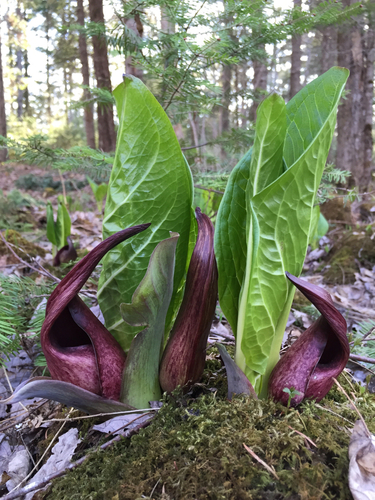
Connecticut, US
You might spot Eastern Skunk Cabbage and Eastern White Pine.
View guide →

New York, US
You might spot American White Waterlily, Buttonbush, and Common Milkweed.
View guide →

Massachusetts, US
You might spot Striped Wintergreen, Painted Turtle, and Canada Goose.
View guide →

Massachusetts, US
You might spot Turkey, Garter Snake, and Multiflora Rose.
View guide →

California, US
You might spot Western Fence Lizard and Pacific Poison Oak.
View guide →
Take the discovery with you
Snap it with Snappit to identify it, learn what makes it special, and add the discovery to your collection.






.jpg&width=800)



