Common Wormsnake
Carphophis amoenus
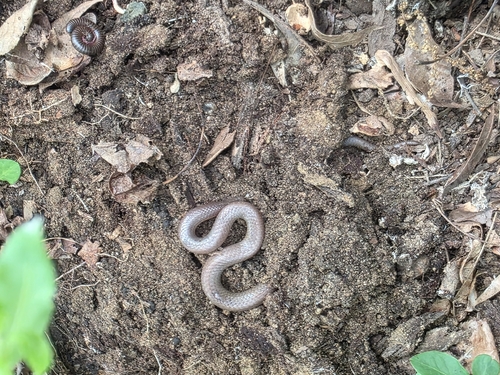
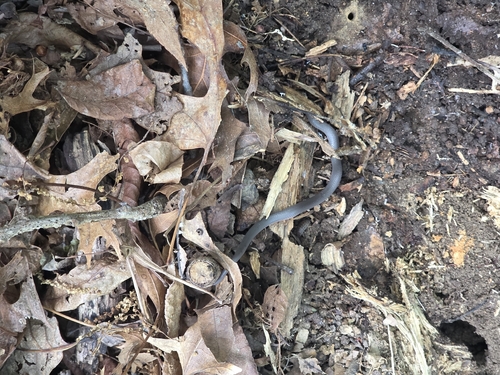
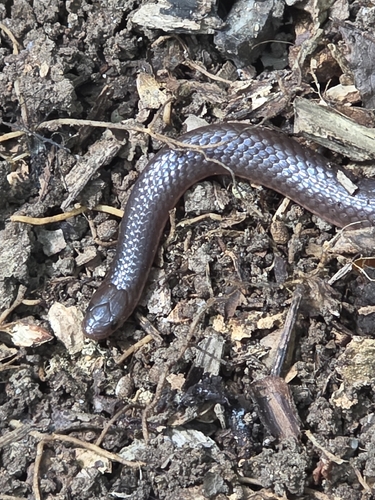
The Common Wormsnake is a small, harmless snake that loves to hide under leaves and rocks. It has a smooth, shiny body and is usually brown or gray, making it easy to blend in with the ground.
Habitat: Forests
The Common Wormsnake is a small, slender serpent with smooth, glossy scales. It has a distinctive pinkish-brown to dark brown back that contrasts sharply with its bright pink or reddish belly. Its head is small and pointed, not much wider than its body.
Category
ReptilesRarity
Common
Danger
1/5 · Very low
Snaps
12
Despite its name, it's not a worm; it's a real, harmless snake!
It spends almost its entire life underground, a true soil dweller!
This tiny snake has scales so smooth, they feel like polished glass!
When scared, it sometimes pretends to be an earthworm to trick predators!
Common Wormsnake can burrow through loose soil because of its pointed head and smooth scales that help them tunnel quickly.
Common Wormsnake has a stiff, pointed tail that helps them poke or push against predators, startling them into releasing the snake.
Common Wormsnake can find hidden earthworms underground because of its keen sense of smell, helping them locate their favorite food.
This snake loves to slurp up earthworms and other soft-bodied invertebrates found underground.
Lumbricus terrestris
Their primary food source, found by burrowing through soil.
Didelphis virginiana
A common predator that digs up and eats these snakes.
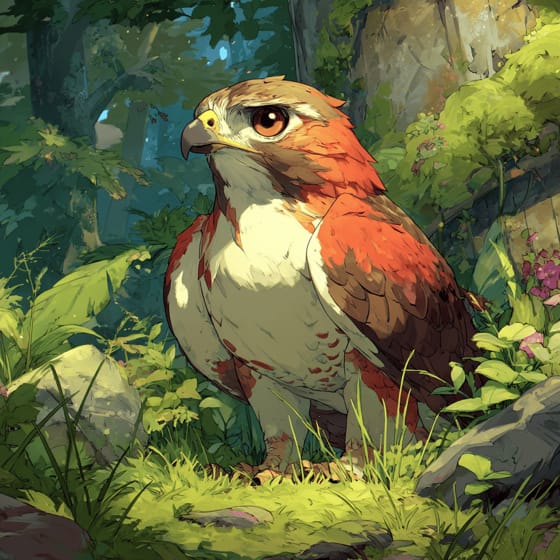
Buteo jamaicensis
An aerial predator that preys on exposed snakes.
Solitary animals live alone for most of their lives, only interacting with others for mating or parental care.
Burrowing animals dig tunnels and chambers in the ground, using these subterranean structures for shelter, hunting, or breeding.
Camouflaged describes organisms that possess coloring or patterns that allow them to blend into their environment.
This trait identifies organisms whose diet primarily consists of insects and other small invertebrates.

Describes organisms that break down dead organic material, recycling nutrients back into the ecosystem.

Forest habitats are terrestrial environments dominated by dense tree cover, supporting a high diversity of plant and animal life.
No aliases listed yet.
Danger
1/5 · Very low
Wormsnakes are not dangerous, but it's always best to watch snakes from a distance.
The easiest way to identify Common Wormsnake is to use the Snappit nature identifier app.
18-34 cm
0.005-0.015 kg
5-10 years
0.5 km/h
This snake loves to slurp up earthworms and other soft-bodied invertebrates found underground.
Forests
Foraging
Zoom in to split clusters and explore where this object has been snapped.
May 17, 2026
Blackbird State ForestPhoto attribution
(c) inbetweenbays, some rights reserved (CC BY)
License: CC BY 4.0 ↗
Image may be shown cropped inside the card frame.
May 17, 2026
Blackbird State ForestPhoto attribution
(c) inbetweenbays, some rights reserved (CC BY)
License: CC BY 4.0 ↗
Image may be shown cropped inside the card frame.
May 17, 2026
Blackbird State ForestPhoto attribution
(c) inbetweenbays, some rights reserved (CC BY)
License: CC BY 4.0 ↗
Image may be shown cropped inside the card frame.
Delaware, US
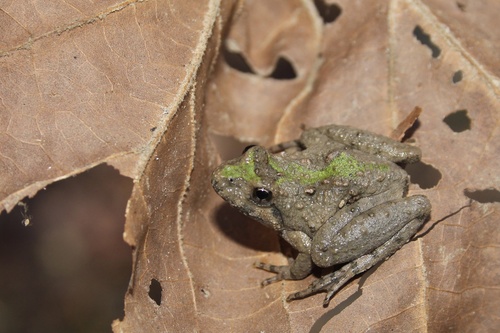
You might spot Northern Cricket Frog, Fan Clubmoss, and Fowler's Toad.
View guide →

Maryland, US
You might spot Common Pawpaw, Zebra Swallowtail, and Bald Eagle.
View guide →

Tennessee, US
You might spot Pond Slider, White-Tailed Deer, and Great Blue Heron.
View guide →

North Carolina, US
You might spot American Tuliptree and Eastern Tiger Swallowtail.
View guide →
Virginia, US
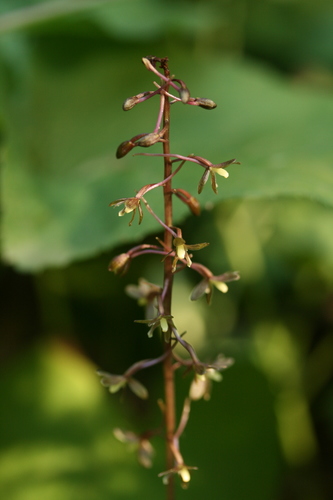
You might spot Crane-Fly Orchid, Wild Geranium, and Cutleaf Coneflower.
View guide →

Connecticut, US
You might spot Eastern Gray Squirrel, Bee, and Red Fox.
View guide →
Take the discovery with you
Snap it with Snappit to identify it, learn what makes it special, and add the discovery to your collection.