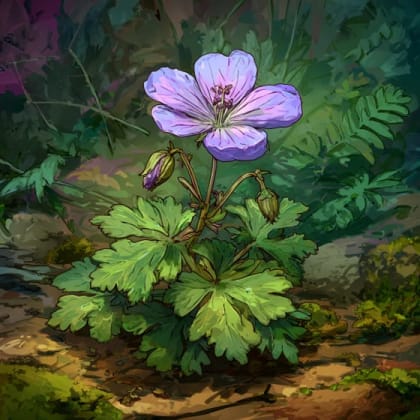





Cranesbill
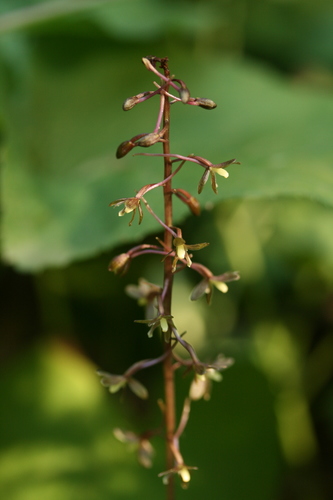
Conway-Robinson Memorial State Forest is a sprawling natural haven in a surprisingly urban setting.
Conway-Robinson Memorial State Forest is a sprawling natural haven in a surprisingly urban setting. This 440-acre woodland oasis offers a tranquil escape for outdoor enthusiasts in Prince William County, Virginia. Managed by the Virginia Department of Forestry, it serves as a valuable demonstration site for scientific forest management, wildlife habitat preservation, and public recreation, boasting mature hardwoods over 250 years old and diverse plant and animal life.
The forest features approximately 5.1 miles of multi-use trails, perfect for hiking, mountain biking, and horseback riding. These trails wind through a fascinating blend of pine plantations, mixed pine-deciduous forests, and old-growth hardwoods, including towering oak trees that predate European settlement. Visitors can explore the Outer Blue Trail, a 3.2-mile loop, or venture onto shorter Yellow and Blue loops, encountering intermittent streams and swampy lowlands that contribute to the forest's rich biodiversity.
Conway-Robinson Memorial State Forest is a cherished local gem offering a convenient and accessible nature experience. Its dedication to preserving native flora and fauna, coupled with its historical significance and proximity to the Manassas National Battlefield Park, makes it a unique destination for both recreation and education. Whether you're seeking a peaceful stroll, an invigorating bike ride, or an opportunity to connect with nature, this forest provides a memorable outdoor adventure for all ages. Turn your visit into a safari! Use the Snappit app to scan and log wildlife sightings here.
Conway-Robinson Memorial State Forest was established in February 1938, a direct result of efforts by the Conway Robinson Memorial Park Association. This non-profit organization, comprised of relatives and friends, sought to honor Conway Robinson (1805–1884), a distinguished 19th-century Virginian jurist, legal scholar, and founder of the Virginia Historical Society. Miss Agnes Conway Robinson, on behalf of the association, deeded approximately 400 acres of land in Prince William County to the Virginia Commission on Conservation and Development. The deed stipulated that the land be preserved as a state forest, wildflower, and wildlife sanctuary, with existing woodlands maintained in their natural state and other areas reforested by the Civilian Conservation Corps between 1938 and 1939.
Hiking, mountain biking, horseback riding (permit required for biking/riding), nature walks, birdwatching, and photography. Visitors can observe various bird species and potentially catch a glimpse of eastern screech-owls or barred owls at dawn or dusk. The forest's proximity to Manassas National Battlefield Park allows for a combined historical and natural outing.
Spring: Abundant wildflowers, including pink lady's slippers, and heightened bird activity as migratory species return.
Summer: Lush green canopy provides shade; be mindful of insects.
Fall: Beautiful fall foliage.
Winter: Trails may be muddy or icy; bare trees offer different perspectives and potential for spotting resident birds.
Hunting Seasons: Regulated lottery hunts for deer occur during specific seasons. Visitors are recommended to wear blaze orange or pink during these times.
Trails are generally easy, relatively flat, and smooth, suitable for a range of skill levels. However, some sections may have roots, rocks, and muddy areas, making them potentially unsuitable for strollers or individuals with significant mobility issues. There are no restrooms or trash facilities, so visitors should practice "leave-no-trace" ethics.
The network of multi-use trails, including the 3.2-mile Outer Blue Trail and other shorter loops. The diverse forest ecosystem with old-growth oaks, pine plantations, and swampy lowlands. Informational signs along the Blue Trail provide insights into forest management.
Each card links to a full Explore page with photos, traits, and fun facts.
Start with the big picture, then zoom in to explore individual wildlife observations around this place.
Check for permits
** If you plan to mountain bike or horseback ride, obtain a State Forest Use Permit beforehand.
Dress appropriately
Wear sturdy footwear, especially in wetter conditions, and layers suitable for the weather. During hunting seasons, wear blaze orange or pink.
Practice "Leave No Trace"
There are no trash facilities, so carry out all your waste.
Bring water and snacks
Especially for longer hikes, ensure you stay hydrated.
Leash your dog
Dogs are welcome on trails but must be kept on a leash.
Use a trail map
While trails are generally marked, having a map (physical or on a phone, keeping in mind limited cell service) can be helpful, especially given the interconnected loops.
Apr 27, 2026
Apr 27, 2026
Apr 27, 2026
Apr 27, 2026
Apr 7, 2026

Maryland, US
You might spot White-Tailed Deer and Eastern Gray Squirrel.
View guide →
.jpg)
District of Columbia, US
You might spot Eastern Gray Squirrel, Duck, and House Sparrow.
View guide →

Illinois, US
You might spot American Robin, Canada Goose, and House Sparrow.
View guide →

Virginia, US
You might spot Spotted Lanternfly and Northern Cardinal.
View guide →
Take the discovery with you
Identify the wildlife you spot, learn as you go, and keep a collection of the adventure.










.jpg&width=800)






