





Cope's Gray Treefrog
Hyla chrysoscelis
Cope's Gray Treefrog is a small, green frog that loves to climb trees! They make a funny sound at night, which helps them find friends. They can change colors to blend in with their surroundings.
Habitat: Forests
The Cope's Gray Treefrog has bumpy, gray-green skin that can change color to match its surroundings. It features a distinct white spot under each eye and bright yellow or orange patches on its inner thighs, visible during jumps. Its large, prominent eyes are golden with a black pupil.
Category
AmphibiansRarity
Common
Danger
1/5 · Very low
Snaps
21
Their super sticky tongue can snap out to catch a bug in a blink!
They gulp their eyeballs a little to help push food down their throat!
When they jump, bright yellow patches on their inner thighs flash, surprising predators!
You can identify them by their very fast, buzzy trilling call, unique among frogs!
Cope's Gray Treefrog can change its skin color from gray to green because of specialized cells that help them blend into trees and leaves.
Cope's Gray Treefrog has special sticky toe pads that help them cling to smooth surfaces and climb high into trees and shrubs.
Cope's Gray Treefrog can survive their body temperature dropping below freezing because their cells make a natural 'antifreeze' to protect them!
Cope's Gray Treefrog makes a loud, buzzy trill sound that helps male frogs attract mates during the breeding season.
Cope's Gray Treefrogs love to snack on small insects and spiders they find in trees.
Thamnophis sirtalis
A common predator that ambushes frogs near water.
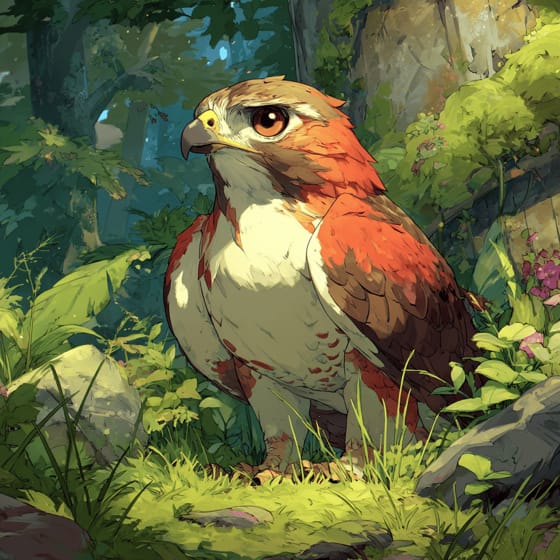
Buteo jamaicensis
Hunts from above, often catching frogs in open areas.
Musca domestica
Feeds on flies and other small flying insects.

Gryllus pennsylvanicus
Preys on crickets hiding in vegetation or on the ground.
Characterized by having toes connected by a membrane, typically aiding in swimming.
Social animals live in organized groups, cooperating for survival benefits such as foraging, defense, and raising offspring.
Singing animals produce complex vocalizations, often for purposes of attracting mates, defending territory, or communicating within their species.
Arboreal animals live primarily in trees, utilizing them for shelter, food, and protection from predators.

Camouflaged describes organisms that possess coloring or patterns that allow them to blend into their environment.

This trait identifies organisms whose diet primarily consists of insects and other small invertebrates.

Forest habitats are terrestrial environments dominated by dense tree cover, supporting a high diversity of plant and animal life.

Nocturnal animals are primarily active during the nighttime hours, typically resting or sleeping during the day.
No aliases listed yet.
Danger
1/5 · Very low
Always wash your hands after touching frogs, and don't try to catch them.
The easiest way to identify Cope's Gray Treefrog is to use the Snappit nature identifier app.
3.2-6 cm
0.005-0.015 kg
5-7 years
0.5 km/h
Cope's Gray Treefrogs love to snack on small insects and spiders they find in trees.
Forests
Ambush
Zoom in to split clusters and explore where this object has been snapped.

Alabama, US
You might spot Elf Orpine, Canada Goose, and Leatherleaf Mahonia.
View guide →

Virginia, US
You might spot Cope's Gray Tree Frog and Basilica Orbweaver.
View guide →

North Carolina, US
You might spot Northern Cardinal, Carolina Wren, and Tufted Titmouse.
View guide →

Alabama, US
You might spot Anole, Eastern Box Turtle, and Resurrection Fern.
View guide →

Alabama, US
You might spot Elf Orpine, Canada Goose, and Great Blue Heron.
View guide →

Tennessee, US
You might spot Pond Slider, White-Tailed Deer, and Great Blue Heron.
View guide →
Take the discovery with you
Snap it with Snappit to identify it, learn what makes it special, and add the discovery to your collection.







.JPG&width=800)


.jpg&width=800)

