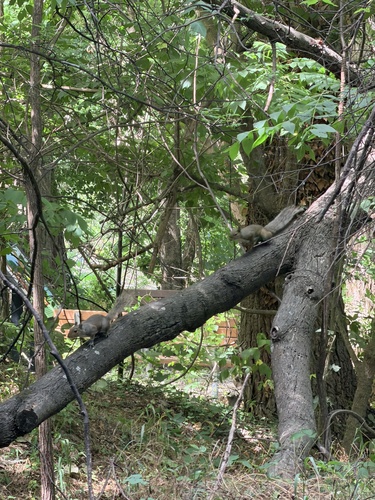
Eastern Gray Squirrel

St. Augustine's University is a revered historically black college (HBCU) nestled in the heart of Raleigh, North Carolina. Its historic 105-acre campus serves as a living testament to resilience, education, and architectural heritage, making it a unique destination for history enthusiasts and curious visitors alike. The university, founded in 1867, has played a pivotal role in the education and advancement of African Americans, boasting a rich legacy etched into its venerable buildings and serene landscapes.
The campus is a treasure trove of architectural styles, featuring over a dozen historically significant buildings, some of which are Raleigh Historic Landmarks and part of a National Register Historic District. Key highlights include the Norman Gothic-style Saint Augustine's Historic Chapel, meticulously constructed by students in 1895, and the Romanesque Revival Benson Library. Visitors can also admire the classical revival elegance of the Hunter, Delany, and Cheshire buildings, which showcase the evolving architectural landscape of the institution.
Visiting St. Augustine's University offers a profound journey through time, allowing guests to connect with a significant piece of American educational history. The university's commitment to its mission of empowering students is palpable throughout the grounds, inviting reflection and appreciation for its enduring impact. It's a place where every pathway whispers stories of achievement, struggle, and the unwavering pursuit of knowledge. Enhance your adventure: download the Snappit app to identify the local species you encounter.
St. Augustine's University was chartered on July 19, 1867, as the "Normal School and Collegiate Institute" by Episcopal Church clergy, with the explicit mission to educate formerly enslaved Black people. Initially, classes were held in a former army barrack donated by the Freedmen's Bureau before moving to its present site in 1869. Over its long history, the institution evolved from a normal school, to a junior college, and eventually to a four-year liberal arts institution, earning its university designation in 2012. A testament to its community-building mission, the university established St. Agnes Hospital and Training School for Nurses in 1896, which was North Carolina's first nursing school for African-American students and the primary hospital serving the Black community until 1960. Students played an active role in constructing the campus, notably quarrying stones for the iconic Saint Augustine's Historic Chapel, which laid its cornerstone in 1895. This rich history underscores the university's profound legacy as a beacon of education and healthcare for African Americans in the South.
Take a guided campus tour to learn about the university's history and architectural significance.
* Wander through the campus core, particularly around the landscaped oval where many historic buildings are clustered.
* Admire the Norman Gothic architecture of the Saint Augustine's Historic Chapel and its interior, which houses the bishop's chair.
* Observe the different architectural styles, from Romanesque Revival to Classical Revival, present in the campus buildings.
* Look for historical markers that provide context about significant campus sites.
Raleigh experiences mild winters and hot, humid summers. Spring and fall offer pleasant weather for walking the campus grounds. Campus activity will be highest during the academic year. Tours are not conducted during inclement weather, school closings, holidays, or student exams.
The campus features paved pathways, making many areas accessible. It is advisable to contact the university's visitor services or admissions office beforehand for specific accessibility needs or to confirm tour routes.
The Saint Augustine's Historic Chapel, Benson Library (now part of Taylor Hall), and the architectural ensemble of the Hunter, Delany, and Cheshire buildings. Don't miss the St. Agnes Hospital ruins, a significant historical landmark.
Each card links to a full Explore page with photos, traits, and fun facts.
Start with the big picture, then zoom in to explore individual wildlife observations around this place.
Check Tour Schedule
Always confirm campus tour availability and times online before your visit, especially during holidays or summer breaks.
Wear Comfortable Shoes
The campus is expansive, and you'll do a fair amount of walking to appreciate all the historic buildings and grounds.
Bring a Camera
The varied architecture and historic ambiance provide excellent photographic opportunities, especially the Saint Augustine's Historic Chapel.
Explore the Historic Core
Focus your exploration on the older sections of the campus, particularly around the central landscaped oval, to see the most significant architectural landmarks.
Respect Campus Life
Remember that St. Augustine's University is an active educational institution. Be mindful of students and faculty during your visit.
Look for Markers
Keep an eye out for historical markers and plaques that provide additional context and stories about the buildings and the university's past.
Jun 6, 2026
Photo attribution
no rights reserved
License: CC0 1.0 ↗
Image may be shown cropped inside the card frame.
Jun 6, 2026
Photo attribution
no rights reserved
License: CC0 1.0 ↗
Image may be shown cropped inside the card frame.
Jun 6, 2026
Photo attribution
no rights reserved
License: CC0 1.0 ↗
Image may be shown cropped inside the card frame.
Jun 7, 2026
Jun 6, 2026

Maryland, US
You might spot White-Tailed Deer and Eastern Gray Squirrel.
View guide →
.jpg)
District of Columbia, US
You might spot Eastern Gray Squirrel, Duck, and House Sparrow.
View guide →

Illinois, US
You might spot American Robin, Canada Goose, and House Sparrow.
View guide →

Virginia, US
You might spot Spotted Lanternfly and Northern Cardinal.
View guide →
Take the discovery with you
Identify the wildlife you spot, learn as you go, and keep a collection of the adventure.