



Snappit logo
Snappit
Get App

Cow

Bos taurus

Cows are domestic cattle (Bos taurus), tamed from the wild aurochs about 10,500 years ago and now kept worldwide for milk, meat, leather and work. There are about 1.58 billion cattle and more than 1,000 breeds. Strictly, a cow is an adult female that has had a calf; the species as a whole is called cattle.

Also known as Cattle, Domestic cattle, Taurine cattle

Loading the 3D cow…
Cow
furry trait badgesocial trait badgegrassland trait badgeherbivorous trait badge
Cow

Rarity: Common

Holstein

Cow abilities

  • 330° field of view

  • ≈7 h of cud-chewing a day

  • 50–500 bn bacteria in one teaspoon

  • 35 kHz highest pitch heard

  • Tapetum mirror layer in each eye

  • 68% of moos matched to the right cow (chance: 7.7%)

  • ≈97% AI match accuracy

  • ≤155 L water a day (high-milk cow)

  • 8,510 cattle checked in satellite photosStill debated

Real cows around the world

Photos of common breeds from Wikimedia Commons. Pick a breed to repaint the 3D model.

  • Black-and-white Holstein Friesian cow standing in a grassy field
    HolsteinBlack-and-white patches (sometimes red-and-white). The classic dairy cow.Dairy · the most common dairy breedHolstein Friesian in Dundee, Quebec. Photo: Hayden Soloviev, CC BY 4.0
  • Fawn-brown Jersey cow with small horns on a pasture by the sea
    JerseySmall and fawn-brown, with big dark eyes and a pale ring around the muzzle.Dairy · rich, creamy milkJersey cow on the island of Jersey. Photo: Man vyi, Public domain
  • Solid black hornless Angus bull walking across a green field
    AngusSolid black (or red) and naturally hornless.BeefAngus bull on a Delaware farm. Photo: Alice Welch, U.S. Department of Agriculture, Public domain
  • Dark red Hereford cow with a white face standing on grass
    HerefordRed body with a bright white face, chest and belly.BeefHereford cow in Souris, Prince Edward Island. Photo: Hayden Soloviev, CC BY 4.0
  • Shaggy ginger Highland cow with long horns on open moorland
    HighlandLong shaggy coat, a fringe over the eyes and wide horns on both sexes.Beef · built for Scottish wintersHighland cow on Pupers Hill, Dartmoor. Photo: Nilfanion, CC BY-SA 3.0
  • Grey Brahman bull with a shoulder hump and droopy ears at a livestock show
    BrahmanShoulder hump, a big neck flap and long droopy ears.Beef · heat-tough zebuBrahman bull at a show in Avaré, Brazil. Photo: José Reynaldo da Fonseca, CC BY 2.5
  • Tan Texas Longhorn cow with very long curved horns
    Texas LonghornEnormous horns that can span more than 2.4 m tip to tip.Beef · living historyTexas Longhorn cow near Houston. Photo: Ed Schipul, CC BY-SA 2.0
  • Brown-and-white Fleckvieh cow lying in an alpine meadow
    Resting is part of the job: cows lie down 8–12 hours a day. Fleckvieh cow near Oeschinen Lake, Switzerland.Photo: Kim Hansen, CC BY-SA 3.0
  • White calf drinking milk from its mother in a pasture
    A calf nursing. Calves drink their mother's milk until weaning at around 8–11 months.Photo: Albarubescens, CC BY-SA 4.0

Cow by the numbers

Measured averages from studies and farm data, with comparisons you can picture.

Weight
624 kg
≈ 20 ten-year-olds⁠[19]
Height
≈1.5 m
Taller than most 10-year-olds⁠[19, 48]
Hearing
35 kHz
top of the hearing range⁠[6]
Food
24 kg
Plus all the water in fresh grass⁠[19]
Water
70–155 L
Up to about a bathtub⁠[15]
Milk
≈30 kg
≈ 115 glasses⁠[20]
Pregnancy
≈280 days
Almost exactly as long as a human pregnancy⁠[21]
Body heat
38–39.3 °C
normal for a dairy cow⁠[24]
On Earth
1.58 billion
About 1 for every 5 people⁠[22]
Breeds
1,000+
184 breeds have already gone extinct⁠[40, 23]

Cow myths and facts

Tap Myth or Fact for each claim, then check the answer.

0 of 8 answered

  1. “Cows have four stomachs.”

  2. “Bulls charge because they hate the colour red.”

  3. “No two cows have the same nose print.”

  4. “Cows lie down when rain is coming.”

  5. “Every cow has her own voice.”

  6. “Cows sleep standing up.”

  7. “Only bulls have horns.”

  8. “A cow can see almost all the way around itself.”

Cow world records

Record holders confirmed by Guinness World Records.

  • Oldest cow ever

    48 yrs 9 mo

    Big Bertha

    County Kerry, Ireland · died 1993⁠[29]

  • Tallest cow ever

    1.90 m

    Blosom (Holstein)

    Illinois, USA · 2014⁠[32]

  • Tallest steer ever

    2.05 m

    Fiorino (Chianina)

    Italy · 2007⁠[34]

  • Widest horns

    3.24 m

    Poncho Via (Texas Longhorn)

    tip to tip · Alabama, USA · 2019⁠[35]

  • Most milk in a lifetime

    216,891 kg

    Smurf (Holstein)

    Ontario, Canada⁠[36]

  • Shortest cow ever

    69.07 cm

    Blaze (miniature zebu)

    2013⁠[37]

  • Most tricks in a minute

    10 tricks

    Ghost

    2023⁠[38]

  • Longest hair (breed)

    ≈35 cm

    Highland cattle

    average hair length⁠[39]

History of cattle

From the wild aurochs to 1.58 billion cattle today.

  1. Ice Age – 1600s

    The mighty aurochs

    Cattle's wild ancestor: bulls stood up to 1.8 m at the shoulder, with horns up to 80 cm long.⁠[26]

  2. ≈10,500 years ago

    Tamed in the Near East

    Early farmers domesticated aurochs. DNA suggests modern taurine cattle trace back to as few as about 80 wild females.⁠[25]

  3. 8,000–10,000 years ago

    The humped zebu

    Zebu cattle were domesticated separately, most likely in the Indus Valley.⁠[27]

  4. ≈4,200 years ago

    Drought spreads zebu genes

    During a centuries-long drought, zebu bulls' heat-tough genes spread across the Near East.⁠[28]

  5. 1493

    Across the Atlantic

    Columbus's second voyage brought the first cattle to the Americas, landing on Hispaniola.⁠[30]

  6. 1627

    The last aurochs

    The last known aurochs, a cow, died in Jaktorów Forest, Poland.⁠[26]

  7. 2009

    Genome decoded

    Scientists published the cow genome: at least 22,000 genes.⁠[31]

  8. 2024

    1.58 billion cattle

    About one for every five people on Earth.⁠[22]

Calf, heifer, bull or steer?

Horns won't tell you who's who: both sexes can have them. Look for these clues instead.

  • Calf

    A youngster, until it's weaned at around 8–11 months.

  • Heifer

    A young female that hasn't had a calf yet.

  • Cow

    A female that has had a calf. Look for the udder.

  • Bull

    An adult male used for breeding. Usually big, with a thick neck.

  • Steer

    A castrated male, usually raised for beef.

  • Ox

    Cattle trained to pull carts or ploughs, usually steers.

Cows and climate

Numbers vary with farm, diet and method. Researchers are working on better feeds, breeding and manure handling.

  • ≈100 kg

    of methane a year per cow

    Most of it is burped out. It's made by archaea, one kind of microbe living in the rumen.⁠[57, 14]

  • ≈12%

    of human-made greenhouse gas comes from livestock

    Cattle are about 62% of that, according to the UN's FAO (2015 data).⁠[58]

  • 45–68%

    less methane in a seaweed trial

    In a 2021 study, a pinch of red seaweed (Asparagopsis) in the feed cut steers' methane. Scientists are still checking long-term safety and how to feed it to cows on pasture.⁠[59]

Cow quiz

12 questions. Every answer is somewhere on this page.

Question 1 of 12Score 0

How many stomachs does a cow have?

Cow field notes

Diet, food web, safety and badges from the Snappit field guide.

Diet & Feeding

Cows are herbivores that love to eat grass, hay, and other plants.

Primary Foods

  • Grass
  • Hay
  • Silage
  • Alfalfa
  • Foraging Method: Grazing

Age differences: Calves drink milk from their mother before transitioning to solid foods.

Ecological connections

  • WolfEaten by

    Wolves occasionally hunt calves or weak adult cattle.

  • Kentucky bluegrassEats

    Cows graze on this common pasture grass for nutrients.
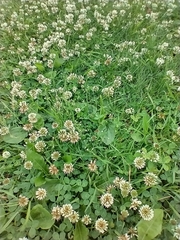
  • White cloverEats

    Cows eat this protein-rich plant found in pastures.

  • Horn flyParasite

    Horn flies feed on cow's blood, causing irritation and stress.

Safety

Danger 3/5 · Moderate

Stay calm and quiet around cows. Never walk up directly behind a cow, and never get between a cow and her calf. If you see the white of her eye, give her space.

Traits

Collections

Classification

Kingdom
Animalia
Phylum
Chordata
Class
Mammalia
Order
Artiodactyla
Family
Bovidae
Genus
Bos

Also known as

Cattle · Domestic cattle · Taurine cattle · Bovine · Dairy cow · Beef cattle · Kine (old plural)

Sources for these cow facts

64 studies and references · checked
  1. Mississippi State Extension: Understanding the ruminant digestive system
  2. University of Minnesota Extension: The ruminant digestive system
  3. Adamczyk et al. 2015, Perception of environment in farm animals (Annals of Animal Science)
  4. Temple Grandin: Flight zone and handling principles
  5. Jacobs, Deegan & Neitz 1998, Photopigment basis for dichromatic colour vision in cows, goats and sheep
  6. LSU: Hearing ranges of animals (Heffner data)
  7. Heffner & Heffner 1992, Hearing in large mammals: sound localization in cattle
  8. Ollivier et al. 2004, Comparative morphology of the tapetum lucidum
  9. Green et al. 2019, Vocal individuality of Holstein-Friesian cattle (Scientific Reports)
  10. Muzzle-print identification of cattle with deep learning (Journal of Dairy Research, 2025)
  11. Boissy et al. 1998, Cattle detect stress odours in urine (Physiology & Behavior)
  12. Beauchemin 2018, Eating and rumination activity in dairy cows (Journal of Dairy Science)
  13. Gregorini et al. 2015, Jaw movements of grazing dairy cows (Journal of Dairy Science)
  14. Matthews et al. 2019, The rumen microbiome (Gut Microbes)
  15. NDSU Extension: Livestock water requirements
  16. Begall et al. 2008, Magnetic alignment in grazing cattle (PNAS)
  17. Hert et al. 2011, No alignment of cattle along magnetic field lines (J Comp Physiol A)
  18. Slaby et al. 2013, Herd density and magnetic alignment (J Comp Physiol A)
  19. de Souza et al. 2019, Body weight and intake of 2,791 US Holstein cows (Journal of Dairy Science)
  20. USDA ERS: Dairy data (milk per cow)
  21. Norman et al. 2009, Gestation length by breed (Journal of Dairy Science)
  22. FAO via Our World in Data: Cattle livestock count
  23. FAO 2015, The second report on the state of the world's animal genetic resources
  24. Merck Veterinary Manual: Normal rectal temperature ranges
  25. Bollongino et al. 2012, Modern taurine cattle descended from a small number of Near-Eastern founders (MBE)
  26. Britannica: Aurochs
  27. Chen et al. 2010, Zebu cattle are an exclusive legacy of the South Asia Neolithic (MBE)
  28. Verdugo et al. 2019, Ancient cattle genomics (Science)
  29. Guinness World Records: Oldest cow ever
  30. Origins of Caribbean criollo cattle (Scientific Reports, 2023)
  31. Bovine Genome Sequencing and Analysis Consortium 2009 (Science)
  32. Guinness World Records: Tallest cow ever
  33. Allen et al. 2015, Lying behaviour and core body temperature (Journal of Dairy Science)
  34. Guinness World Records: Tallest steer ever
  35. Guinness World Records: Largest horn spread on a steer
  36. Guinness World Records: Smurf the cow, most milk in a lifetime
  37. Guinness World Records: Shortest cow ever
  38. Guinness World Records: Most tricks performed by a cow in one minute
  39. Guinness World Records: Longest hair for a domestic cattle breed
  40. Wikipedia: Cattle
  41. van der Tol et al. 2003, Hoof pressure distribution in dairy cattle (Journal of Dairy Science)
  42. Proudfoot & Ternman 2024, Lying and sleep in dairy cattle (JDS Communications)
  43. Wikipedia: Polled livestock
  44. Wikipedia: Aberdeen Angus
  45. Coulon et al. 2011, Cattle discriminate familiar from unfamiliar faces (Animal Cognition)
  46. Cows recognise familiar human faces and voices (PLOS ONE, 2025)
  47. Watts & Stookey 2000, Vocal behaviour in cattle (Applied Animal Behaviour Science)
  48. Guinness World Records: Largest breed of dairy cattle (Holstein)
  49. Ternman et al. 2018, Sleep in dairy cows measured with EEG (PLOS ONE)
  50. Wikipedia: Zebu / Brahman cattle
  51. McConnachie et al. 2018, Cows value brushing as much as fresh food (Biology Letters)
  52. Cattle vocalisations and context (Applied Animal Behaviour Science, 2015)
  53. Wikipedia: Jersey cattle
  54. Wikipedia: Hereford cattle
  55. Wikipedia: Highland cattle
  56. Wikipedia: Texas Longhorn
  57. UC Davis: Making cattle more sustainable
  58. FAO 2023, Pathways towards lower emissions
  59. Roque et al. 2021, Red seaweed reduces methane from beef steers (PLOS ONE)
  60. Merck Veterinary Manual: Resting heart rates
  61. Wikipedia: Dentition (cattle dental formula, citing USDA-FSIS)
  62. Eicher et al. 2001, Tail docking and fly numbers in dairy cows (Journal of Dairy Science)
  63. de Oliveira & Keeling 2018, Ear and tail postures as signs of emotion in cattle (PLOS ONE)
  64. Battini et al. 2019, Ear postures, eye white and the welfare of dairy cows (Animals)

Frequently Asked Questions

How to identify Cow?

Compare ears, muzzle, tail, feet and coat markings. Size is hard to judge without something nearby for scale, and young mammals may not have adult coloring yet. Mammal Identifier: upload a photo and compare the visible details.

How long is Cow?

200-260 cm

How much does Cow weigh?

400-1000 kg

How long does Cow live?

15-20 years

What does Cow eat?

Cows are herbivores that love to eat grass, hay, and other plants.

Where is Cow usually found?

Farms and grassy fields.

How many babies does Cow usually have?

1

Do cows have four stomachs?

No. A cow has one stomach with four compartments: the rumen, reticulum, omasum and abomasum. The rumen and reticulum make up about 84% of it, and the rumen alone can hold up to about 150 litres.

How far around can a cow see?

About 330°, because its eyes sit on the sides of its head. Only 25–50° straight ahead is seen with both eyes, and there is a blind spot directly behind the cow.

Why do cows chew all day?

Cows are ruminants. They swallow grass quickly, then bring it back up as cud and chew it again. Dairy cows spend about 7 hours a day chewing cud, and grazing alone takes about 40,000 jaw movements a day.

Do bulls really hate the colour red?

No. Cattle are red–green colour-blind. A bull reacts to the movement of the cape, not its colour.

How much water does a cow drink a day?

A milking cow drinks about 70–155 litres of water a day, depending on how much milk she makes. A dry cow drinks about 34–49 litres.

Can cows recognise each other's voices?

Yes. Each cow has her own voice: in a 2019 study scientists matched calls to the right heifer far more often than chance, and mothers and calves recognise each other's calls.

When were cows domesticated?

About 10,500 years ago in the Near East, from the wild aurochs. Humped zebu cattle were domesticated separately in South Asia.

Where to spot

Take the discovery with you

Found Cow?

Snap it with Snappit to identify it, learn what makes it special, and add the discovery to your collection.

  1. 1Spot it
  2. 2Snap it
  3. 3Keep the discovery

More Mammals