





coyote brush
Baccharis pilularis
Coyote brush is a bushy plant that grows in sunny places. It has small, fluffy flowers that look like little cotton balls and helps provide homes for many tiny creatures.
Habitat: Coastal areas
The coyote brush is a dense, evergreen shrub with small, often toothed, green leaves. Its tiny, yellowish-white flowers appear in fluffy clusters, which look like small pom-poms, especially when mature and releasing seeds.
Category
PlantsRarity
Common
Danger
1/5 · Very low
Snaps
6
It's named 'coyote brush' because coyotes often rest or hide among its dense branches for shelter!
It's one of the first plants to grow back after wildfires, helping nature heal quickly!
Its tiny, fluffy seeds can float far on the wind, exploring new places to grow!
Some coyote brush plants are boys and some are girls, each making different fluffy seed types!
Coyote brush has tough, leathery leaves that help it hold onto precious water, allowing it to survive long dry spells.
Coyote brush has strong, widespread roots that help hold soil together, preventing erosion on slopes and disturbed ground.
Coyote brush can quickly regrow from its roots after wildfires, helping burned landscapes recover and provide habitat.
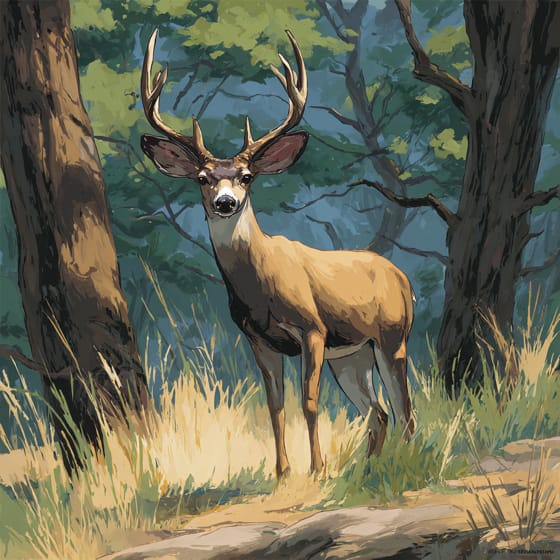
Odocoileus hemionus
Mule deer browse on its leaves and twigs.
_(40059471280).jpg&width=800)
Callipepla californica
Dense branches provide cover from predators.
Apis mellifera
Honeybees gather nectar and pollen from its flowers.
Flowering plants are any plants that produce flowers as part of their reproductive cycle.
A shrub is a woody plant smaller than a tree, typically with multiple stems branching from or near the ground.
Summer blooming plants produce their flowers during the summer season, often providing vibrant color when many other plants have finished.
Evergreen plants retain their foliage throughout the year, never shedding all their leaves at once.

Fragrant flowers emit a pleasant aroma, often to attract pollinators or for defense.

Drought-tolerant plants can survive and flourish in conditions with limited water availability.

Describes plants that are particularly attractive and beneficial to a wide range of pollinating organisms.

Coastal habitats are dynamic environments located along the interface between land and sea, influenced by tides, waves, and saltwater.

Describes a species whose presence and role have a disproportionately large effect on its environment.
No aliases listed yet.
Danger
1/5 · Very low
Always look but don't touch the plants without asking an adult.
The easiest way to identify coyote brush is to use the Snappit nature identifier app.
50-300 cm
50-250 cm
0.2-0.5 cm
Fall
No
None
Perennial
Zoom in to split clusters and explore where this object has been snapped.

California, US
You might spot Western Fence Lizard, Duck, and California Brittlebush.
View guide →

California, US
You might spot Eastern Fox Squirrel, Bee, and House Sparrow.
View guide →

California, US
You might spot Giraffes, African Lion, and Tiger.
View guide →

California, US
You might spot Hollyleaf Cherry, Toyon, and Lemonade Berry.
View guide →

California, US
You might spot Onion-Leafed Asphodel, Bermuda Buttercup, and Coyote Brush.
View guide →

California, US
You might spot Plume Albizia, White-Crowned Sparrow, and Red-Tailed Hawk.
View guide →
Take the discovery with you
Snap it with Snappit to identify it, learn what makes it special, and add the discovery to your collection.








.jpg&width=800)


_001.jpg&width=800)



