_(40059471280).jpg&width=800)





California Quail
Callipepla californica
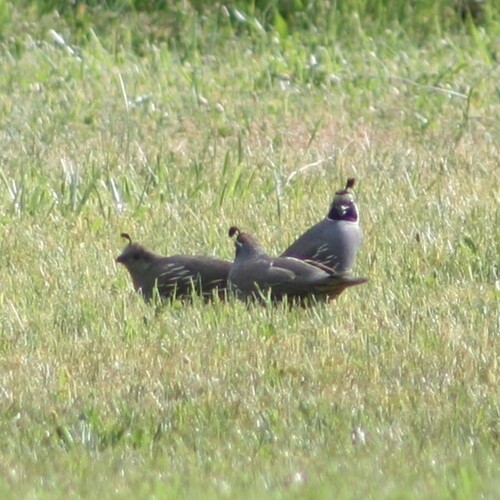
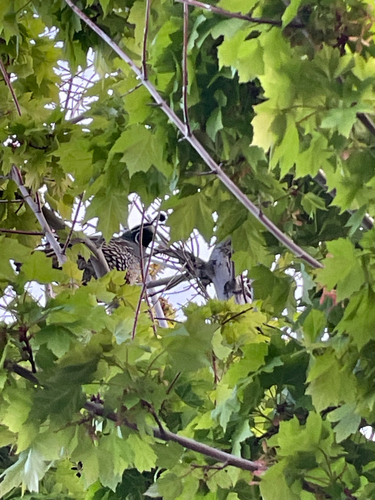
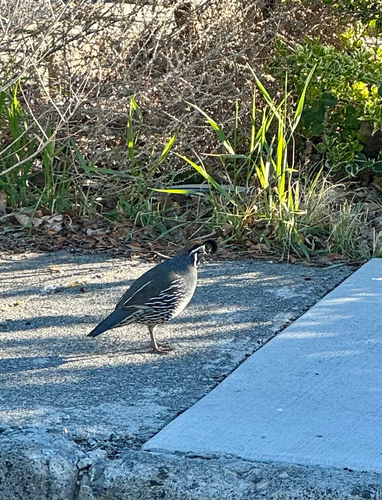
California Quails are small, plump birds with a cute, round shape. They have a lovely, patterned body and a little topknot on their heads. These birds love to live in groups and are often seen scurrying around in the grass.
Habitat: Grasslands
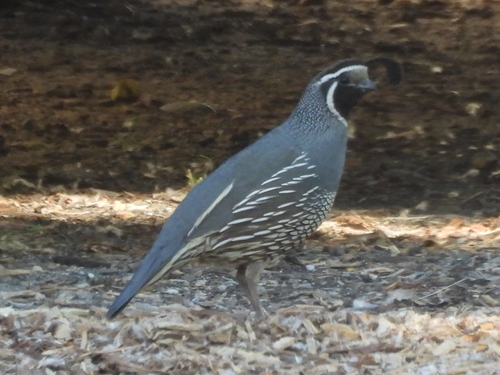
The California Quail has a distinctive, forward-curving black plume atop its head. Males feature a black face framed by white stripes, a chestnut cap, and a scaled belly, making them visually different from the plainer, duller-plumaged females.
Category
BirdsRarity
Common
Danger
1/5 · Very low
Snaps
43
A group of quail is called a "covey"—they stick together!
Quail chicks can run and forage for food hours after hatching!
The male's fancy head plume bobs as it runs rapidly!
They sleep in a tight circle, tails in, heads out, for safety!
California Quail can burst vertically into flight because of strong leg muscles, helping them escape predators in a flash.
California Quail has a complex alarm system, using specific calls to warn their covey about different types of dangers.
California Quail has mottled brown and grey feathers that perfectly blend into their shrubby environment, making them hard to spot.
These ground birds mostly munch on seeds, leaves, and berries they find in their habitat.
Age differences: Chicks eat more protein-rich insects, while adults consume mostly plant matter.
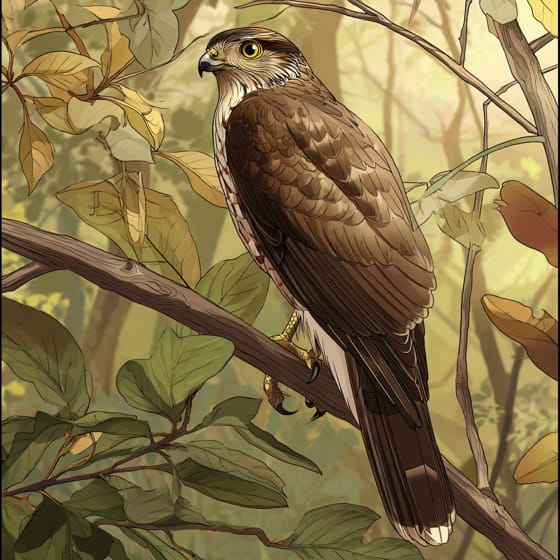
Accipiter cooperii
A swift aerial hunter of adult quail.
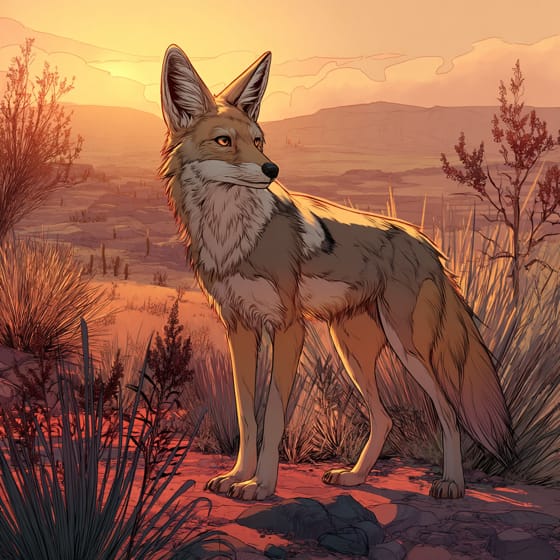
Canis latrans
Opportunistically hunts quail, especially at dusk.

Quercus agrifolia
Quail consume fallen acorns, providing winter sustenance.
Avena fatua
Feeds on seeds from this widespread invasive grass.
Feathered describes animals, primarily birds, possessing a covering of feathers.
Crested describes animals possessing a prominent tuft of feathers, hair, or skin on their head.
Social animals live in organized groups, cooperating for survival benefits such as foraging, defense, and raising offspring.
This trait identifies organisms whose diet includes both plant and animal matter.

Colorful describes organisms or objects displaying a wide range of bright and distinct colors.

Grassland habitats are terrestrial biomes dominated by grasses and herbaceous plants, supporting a variety of grazing animals.

Diurnal animals are primarily active during daylight hours, typically resting or sleeping at night.

This trait identifies organisms that exhibit exceptional swiftness in movement for hunting, escape, or travel.
Danger
1/5 · Very low
Always watch birds from a distance and do not try to catch them.
The easiest way to identify California Quail is to use the Snappit nature identifier app.
24-28 cm
32-38 cm
0.15-0.2 kg
3-6 years
65 km/h
These ground birds mostly munch on seeds, leaves, and berries they find in their habitat.
Grasslands
Zoom in to split clusters and explore where this object has been snapped.
Jun 1, 2026
Julia Davis ParkPhoto attribution
(c) Sam Kieschnick, some rights reserved (CC BY)
License: CC BY 4.0 ↗
Image may be shown cropped inside the card frame.
May 21, 2026
James Cant RanchPhoto attribution
(c) John Clonce, some rights reserved (CC BY)
License: CC BY 4.0 ↗
Image may be shown cropped inside the card frame.
Apr 20, 2026
Grand CouleePhoto attribution
(c) solidstate, some rights reserved (CC BY)
License: CC BY 4.0 ↗
Image may be shown cropped inside the card frame.
Apr 4, 2026
Grand CouleePhoto attribution
(c) Caleb Catto, some rights reserved (CC BY)
License: CC BY 4.0 ↗
Image may be shown cropped inside the card frame.

California, US
You might spot Acorn Woodpecker and Western Fence Lizard.
View guide →

California, US
You might spot Western Fence Lizard and California Brittlebush.
View guide →

California, US
You might spot White Globe Lily, Rose Campion, and Pipevine Swallowtail.
View guide →

California, US
You might spot Sunburst Anemone, Ochre Sea Star, and Striped Shore Crab.
View guide →

Oregon, US
You might spot Mule Deer, Song Sparrow, and Northern Yellow Warbler.
View guide →

California, US
You might spot Sunburst Anemone, Western Gull, and Giant Coreopsis.
View guide →
Take the discovery with you
Snap it with Snappit to identify it, learn what makes it special, and add the discovery to your collection.




.jpg&width=800)








