Dark Fishing Spider
dolomedes tenebrosus
The Dark Fishing Spider is a fascinating creature that loves to hang out near water! It can even walk on the surface of the water to catch its food!
Habitat: Wetlands, ponds, and streams
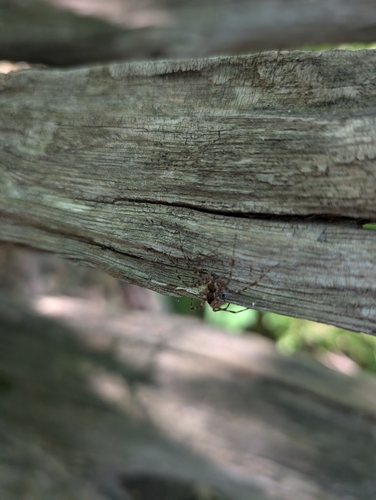
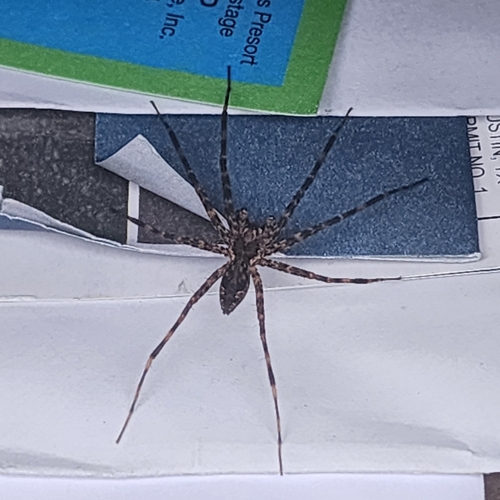
The Dark Fishing Spider is a large, hairy spider with a mottled brown and grey body. It has pale stripes along the sides of its cephalothorax and distinct dark bands on its long legs, making it blend well with its natural surroundings near water.
Category
InvertebrateRarity
Common
Danger
1/5 · Very low
Snaps
64
After hatching, spiderlings are guarded in a special 'nursery web' spun by their mother for a few weeks!
Female Dark Fishing Spiders carry their precious egg sac in their jaws until the spiderlings are ready to hatch!
Instead of webs, these spiders hunt their prey by ambushing them near or on the water's surface!
These fascinating spiders have eight eyes, but some of them glow brightly when a flashlight shines on them at night!
Dark Fishing Spiders can walk and run on water because of special hairs on their legs that repel water, helping them hunt.
Dark Fishing Spiders can dive and stay underwater for long periods, bringing an air bubble with them for breathing.
Dark Fishing Spiders have super sensitive leg hairs that detect tiny vibrations on the water's surface, helping them find prey.
These awesome spiders eat a variety of insects and small aquatic animals found in or near water.
Gambusia affinis
Small fish caught from water surface.
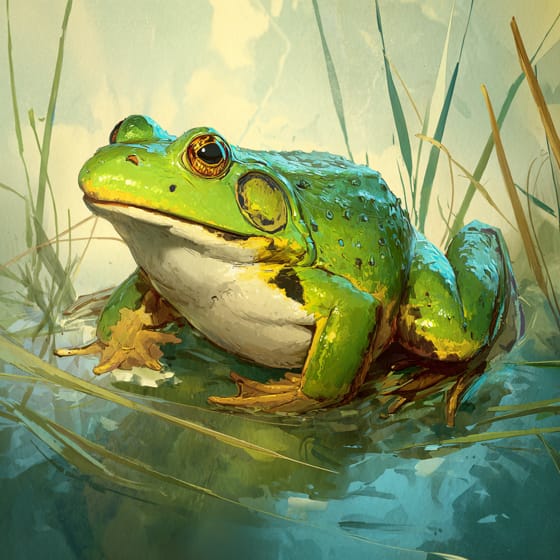
Lithobates clamitans
Preys on tadpoles and small froglets.
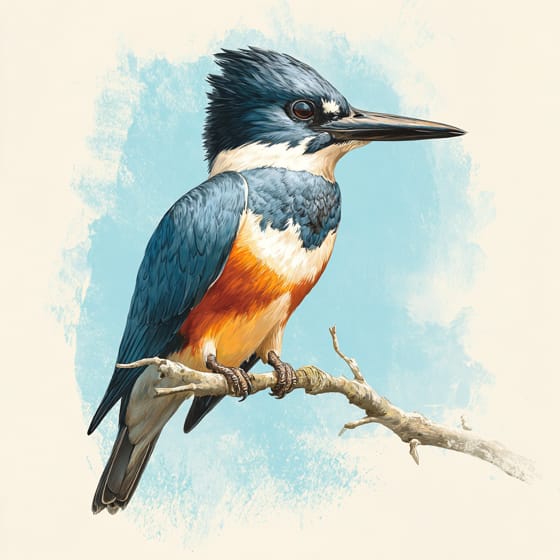
Megaceryle alcyon
Birds can spot and eat spiders near water.

Procyon lotor
Generalist predators consuming spiders.
Solitary animals live alone for most of their lives, only interacting with others for mating or parental care.
Camouflaged describes organisms that possess coloring or patterns that allow them to blend into their environment.
This trait identifies organisms whose diet consists entirely or primarily of animal tissue.
Aquatic habitats encompass environments where organisms live predominantly in water, including oceans, rivers, lakes, and wetlands.

Nocturnal animals are primarily active during the nighttime hours, typically resting or sleeping during the day.
Danger
1/5 · Very low
Always observe spiders from a distance.
The easiest way to identify Dark Fishing Spider is to use the Snappit nature identifier app.
2 cm
8 cm
0.5 g
2 years
These awesome spiders eat a variety of insects and small aquatic animals found in or near water.
Wetlands, ponds, and streams
Ambush
Zoom in to split clusters and explore where this object has been snapped.
May 30, 2026
Gardenview Horticultural ParkPhoto attribution
(c) Gustav JK Golden, some rights reserved (CC BY)
License: CC BY 4.0 ↗
Image may be shown cropped inside the card frame.
May 27, 2026
Haym Salomon Memorial ParkPhoto attribution
(c) i_da_naturalist, some rights reserved (CC BY)
License: CC BY 4.0 ↗
Image may be shown cropped inside the card frame.

Michigan, US
You might spot Eastern Gray Squirrel, Tree-Of-Heaven, and House Sparrow.
View guide →

Vermont, US
You might spot Asian Bittersweet, Alder Buckthorn, and Eastern Newt.
View guide →

Rhode Island, US
You might spot Spotted Lanternfly, Duck, and American Robin.
View guide →

Maryland, US
You might spot Osprey, Duck, and Spotted Lanternfly.
View guide →

Rhode Island, US
You might spot Spotted Lanternfly, American Robin, and Duck.
View guide →

New York, US
You might spot Bald Eagle, Common Eastern Bumble Bee, and Red-Tailed Hawk.
View guide →
Take the discovery with you
Snap it with Snappit to identify it, learn what makes it special, and add the discovery to your collection.