





Deertongue
dichanthelium clandestinum
Deertongue is a soft, grassy plant that can be found in many forests and meadows! Its leaves are shaped like tongues, and they dance in the breeze, making it fun to watch!
Habitat: Deertongue grows in forests, meadows, and grasslands, often in shaded areas.
The Deertongue has broad, flat, tongue-shaped leaves, often quite hairy and rough to the touch. Its sturdy, upright stems can reach up to three feet tall. The flowers are tiny, green spikelets, often hidden among the leaves or along the stem.
Category
PlantsRarity
Common
Danger
0/5 · No known danger
Snaps
6
Deertongue can prevent soil erosion on hillsides by forming a dense mat with its roots!
Find it often near wetlands or shady woods, where it loves the moist, rich soil!
Its scientific name 'clandestinum' means 'hidden,' referring to its tiny, often unseen flowers!
This grass is a super snack for deer and other grazers, helping them stay full and healthy.
Deertongue can grow well in low light, helping it thrive in the shadowy understory of forests where other plants struggle.
Deertongue has rhizomes, underground stems that help it spread efficiently and form dense, stable colonies.
Deertongue's hairy leaves can help collect dew and moisture from the air, assisting its survival in drier spells.
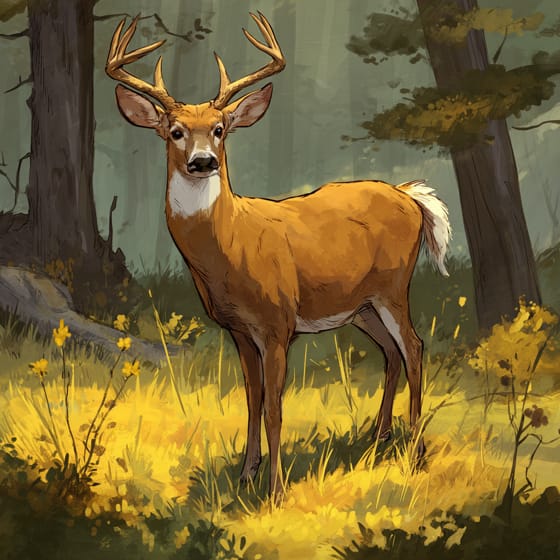
Odocoileus virginianus
A common browser of its leaves and stems

Peromyscus leucopus
Feeds on its small seeds and plant parts

Melanoplus differentialis
Chews on its leaves and tender shoots
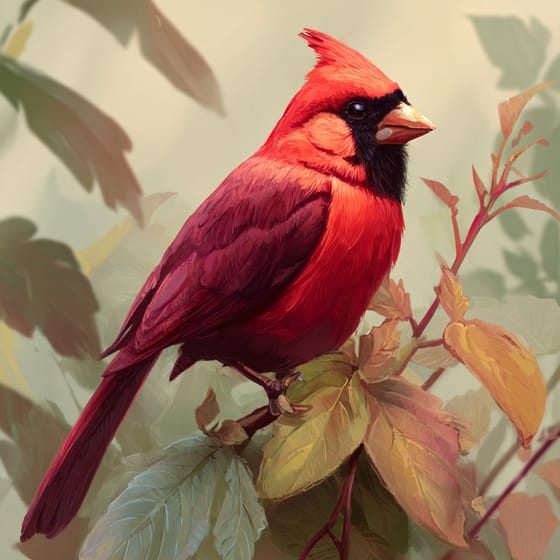
Cardinalis cardinalis
Uses dense clumps for cover and nesting
Colorful describes organisms or objects displaying a wide range of bright and distinct colors.
Grassland habitats are terrestrial biomes dominated by grasses and herbaceous plants, supporting a variety of grazing animals.
This trait characterizes organisms whose diet consists entirely or primarily of plant material.
Forest habitats are terrestrial environments dominated by dense tree cover, supporting a high diversity of plant and animal life.

Diurnal animals are primarily active during daylight hours, typically resting or sleeping at night.
Danger
0/5 · No known danger
No special safety notes yet.
The easiest way to identify Deertongue is to use the Snappit nature identifier app.
30-90 cm
30-60 cm
0.3-0.4 cm
Late spring to summer
No
None
Perennial
Zoom in to split clusters and explore where this object has been snapped.

Pennsylvania, US
You might spot Steeplebush, Elk, and Eastern Newt.
View guide →
.JPG)
Massachusetts, US
You might spot Eastern Gray Squirrel and Eastern Skunk Cabbage.
View guide →

New York, US
You might spot Eastern Skunk Cabbage and Yellow Trout Lily.
View guide →

New York, US
You might spot Pitch Pine, Great Egret, and Monarch.
View guide →
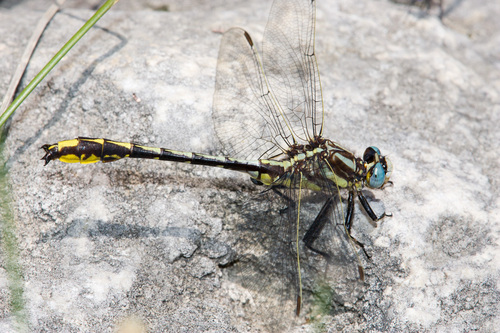
Ohio, US
You might spot Pronghorn Clubtail, Lark Sparrow, and Royal River Cruiser.
View guide →

New York, US
You might spot Eastern Skunk Cabbage and Winged Euonymus.
View guide →
Take the discovery with you
Snap it with Snappit to identify it, learn what makes it special, and add the discovery to your collection.








.jpg&width=800)



_001.jpg&width=800)




