





Desert Broom
Baccharis sarothroides
Desert Broom is a bushy plant that grows in dry places like deserts. It has long, thin branches and tiny yellow flowers that look like little stars in the sand.
Habitat: Desert
The Desert Broom is a tall, upright evergreen shrub with many slender, green, rush-like branches that give it a "broom-like" appearance. It has tiny, scale-like leaves and produces clusters of small, fuzzy white flowers in the fall, making the plant look like it's covered in cotton.
Category
PlantsRarity
Common
Danger
1/5 · Very low
Snaps
2
Even in winter, its bright green stems stand out in the muted desert.
Its stiff branches were traditionally tied together to make brooms!
Some parts of the plant were once used by Native Americans for medicine.
The fluffy white seeds look like tiny parachutes, floating far on the wind!
Desert Broom can grow deep taproots to reach precious water far underground, helping it survive long droughts.
Desert Broom has green stems that do most of the photosynthesis, letting it shed tiny leaves to save water.
Desert Broom can quickly sprout new branches from its base, even after fires, helping it recover fast.
Desert Broom can quickly colonize disturbed areas like roadsides and washes, helping new plant life begin.
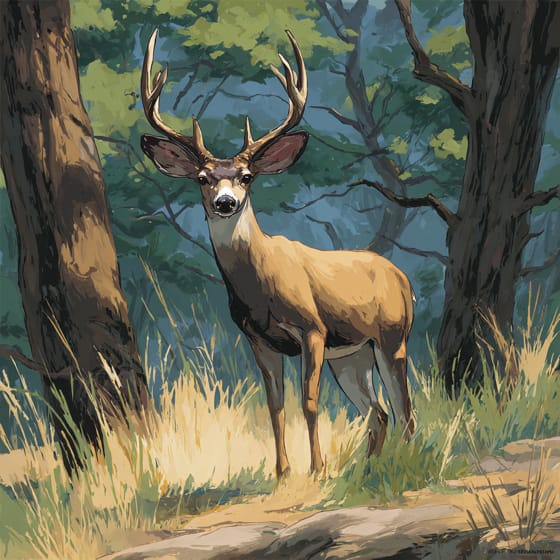
Odocoileus hemionus
Deer browse on its stems and leaves, especially in winter.

Ovis canadensis
Bighorn sheep forage on this shrub in arid mountain ranges.
%2C_M%C3%A4nnchen.jpg&width=800)
Callipepla gambelii
Quails hide from predators and rest within its dense branches.
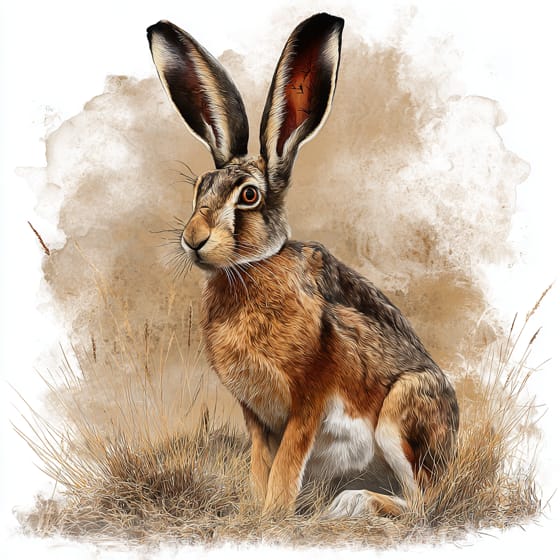
Lepus californicus
Jackrabbits feed on the shoots and young branches.
Flowering plants are any plants that produce flowers as part of their reproductive cycle.
A shrub is a woody plant smaller than a tree, typically with multiple stems branching from or near the ground.
Evergreen plants retain their foliage throughout the year, never shedding all their leaves at once.
Drought-tolerant plants can survive and flourish in conditions with limited water availability.

Describes plants that are particularly attractive and beneficial to a wide range of pollinating organisms.

Rapid growing plants exhibit accelerated growth rates, quickly increasing in size and biomass within a short period.

Desert habitats are arid regions characterized by extremely low precipitation and often extreme temperatures, supporting specialized flora and fauna.

Describes a species whose presence and role have a disproportionately large effect on its environment.
No aliases listed yet.
Danger
1/5 · Very low
Always look but don't touch plants without asking an adult, as some can be prickly.
The easiest way to identify Desert Broom is to use the Snappit nature identifier app.
180-360 cm
150-300 cm
Fall
No
Mild
Perennial
Wind
Zoom in to split clusters and explore where this object has been snapped.
Take the discovery with you
Snap it with Snappit to identify it, learn what makes it special, and add the discovery to your collection.









.jpg&width=800)



_001.jpg&width=800)



