_BHL23630333.jpg&width=800)





Dogtongue Buckwheat
Eriogonum tomentosum
Dogtongue Buckwheat is a special plant with soft, fuzzy leaves and bright yellow flowers. It grows in rocky places and is loved by butterflies and bees!
Habitat: Mountain regions
The Dogtongue Buckwheat is a low-growing plant featuring fuzzy, grayish-green leaves that resemble a dog's tongue. It produces many clusters of tiny, creamy yellow to white flowers, creating a soft, mounding appearance.
Category
PlantsRarity
Common
Danger
1/5 · Very low
Snaps
Be the first to snap!
Even though it's small, its root system can be surprisingly strong, anchoring it firmly against winds and erosion.
Its name 'Dogtongue' comes from the shape and fuzzy texture of its leaves – can you feel the resemblance?
Many tiny bees and butterflies visit its small flowers, making it a busy pit stop for pollinators in the desert!
Some Native American tribes historically used parts of certain buckwheat relatives for food or medicine!
Dogtongue Buckwheat has fuzzy leaves that act like a fluffy coat, protecting it from intense sun and helping it save precious water.
Dogtongue Buckwheat can grow long taproots deep into the soil, allowing it to find water far below the surface in dry times.
Dogtongue Buckwheat has adaptations that let it thrive in poor, rocky soils where most other plants struggle to grow.

Bombus vosnesenskii
Collects nectar and pollen from its flowers.
Schinia buckaria
Larvae feed specifically on Dogtongue Buckwheat flowers.
Pogonomyrmex rugosus
Gathers its nutritious seeds for the ant colony.
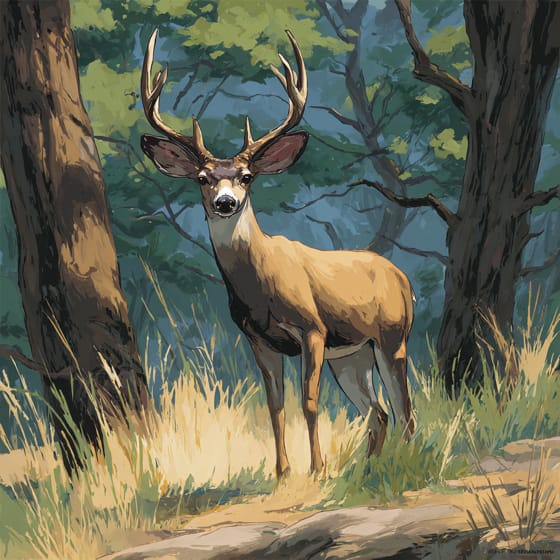
Odocoileus hemionus
Browses on its leaves, especially in dry seasons.
Furry describes animals possessing a dense covering of soft hair or fur.
Flowering plants are any plants that produce flowers as part of their reproductive cycle.
Summer blooming plants produce their flowers during the summer season, often providing vibrant color when many other plants have finished.
Drought-tolerant plants can survive and flourish in conditions with limited water availability.

Describes plants that are particularly attractive and beneficial to a wide range of pollinating organisms.

This habitat trait identifies species found in mountainous regions, characterized by high elevation, steep slopes, and varying climate zones.

Describes a species whose presence and role have a disproportionately large effect on its environment.
No aliases listed yet.
Danger
1/5 · Very low
Always look but don't touch plants unless you know they're safe.
The easiest way to identify Dogtongue Buckwheat is to use the Snappit nature identifier app.
10-30 cm
15-45 cm
0.2-0.5 cm
Summer to early Fall
No
None
Perennial
Zoom in to split clusters and explore where this object has been snapped.
Recent snaps will appear here as new observations are added.
Take the discovery with you
Snap it with Snappit to identify it, learn what makes it special, and add the discovery to your collection.








.jpg&width=800)



_001.jpg&width=800)




