





Dotted Paropsine Leaf Beetle
Paropsis atomaria
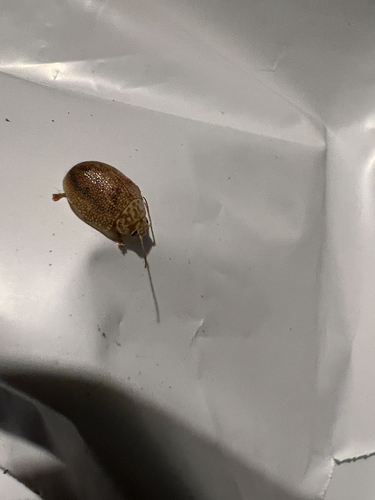
The Dotted Paropsine Leaf Beetle is a small, colorful bug that loves to munch on leaves. With its pretty dots, it can be found in gardens and parks, making it a delightful sight for little explorers!
Habitat: Urban areas
The Dotted Paropsine Leaf Beetle has a shiny, rounded, dome-shaped body, typically metallic green, blue, or reddish-brown. It is distinctly covered with numerous small, dark dots across its wing covers, making it easily identifiable among similar leaf beetles.
Category
InsectsRarity
Common
Danger
1/5 · Very low
Snaps
19
Adult beetles can overwinter, hunkering down until warmer weather returns!
Its larvae look like tiny, bumpy green worms munching on leaves!
They lay tiny yellow eggs in clusters, often called 'beetle caviar'!
This beetle pupates underground, hiding from danger before becoming an adult!
Dotted Paropsine Leaf Beetle can secrete a milky, foul-tasting fluid when threatened, protecting them from hungry predators.
Dotted Paropsine Leaf Beetle has a specialized digestive system that allows it to safely eat toxic eucalyptus leaves.
Dotted Paropsine Leaf Beetle can often hide perfectly on eucalyptus leaves because its rounded body and spots blend in.
Dotted Paropsine Leaf Beetle can quickly drop off a plant and play dead when danger approaches, fooling predators.
This beetle loves to munch on the tough leaves of eucalyptus trees!
Eucalyptus globulus
This beetle's larvae and adults feed on its leaves.
Cracticus tibicen
Magpies are known to prey on various insects, including beetles.

Dacelo novaeguineae
Kookaburras are insectivores, preying on larger insects and larvae.
Eadya paropsidis
This tiny wasp lays its eggs on the beetle larvae, which then consume them.
Marked with spots or patches of a different color.
Solitary animals live alone for most of their lives, only interacting with others for mating or parental care.
Colorful describes organisms or objects displaying a wide range of bright and distinct colors.
This trait characterizes organisms whose diet consists entirely or primarily of plant material.

Diurnal animals are primarily active during daylight hours, typically resting or sleeping at night.

This habitat trait indicates species that can coexist with humans in urban and suburban environments, utilizing man-made structures and green spaces.

Describes organisms that transfer pollen, enabling the fertilization and reproduction of plants.
No aliases listed yet.
Danger
1/5 · Very low
Always look but don't touch insects unless you know they are safe.
The easiest way to identify Dotted Paropsine Leaf Beetle is to use the Snappit nature identifier app.
10-16 mm
5-8 mm
60-180 days
This beetle loves to munch on the tough leaves of eucalyptus trees!
Urban areas
Foraging
6
Zoom in to split clusters and explore where this object has been snapped.
Jun 5, 2026
Selig ZooPhoto attribution
(c) Francis Breidenbach, some rights reserved (CC BY)
License: CC BY 4.0 ↗
Image may be shown cropped inside the card frame.

California, US
You might spot Western Fence Lizard and Eastern Fox Squirrel.
View guide →

California, US
You might spot Eastern Fox Squirrel, Bee, and House Sparrow.
View guide →

California, US
You might spot Western Fence Lizard, Duck, and Black Phoebe.
View guide →
California, US
You might spot Giraffes, African Lion, and Tiger.
View guide →

US
You might spot Sea Otter, Magellanic Penguin, and Zebra Shark.
View guide →

California, US
You might spot Western Fence Lizard, Eastern Fox Squirrel, and Duck.
View guide →
Take the discovery with you
Snap it with Snappit to identify it, learn what makes it special, and add the discovery to your collection.







.jpg&width=800)



