





Eastern Wolf
Canis lycaon
The Eastern Wolf is a clever and social animal that lives in packs. They have beautiful, thick fur and are known for their howling, which helps them communicate with each other.
Habitat: Forests
The Eastern Wolf is a medium-sized canine, typically displaying reddish-brown to cinnamon fur, often mixed with grey and black guard hairs. It has a leaner build and is generally smaller than the Grey Wolf, with a sleek, agile appearance.
Category
MammalsRarity
Common
Danger
3/5 · Moderate
Snaps
Be the first to snap!
Eastern wolf pups are born blind and deaf, relying completely on their mother.
Their powerful howls can travel up to 10 kilometers through the dense forest!
They share a unique ancestry with both coyotes and gray wolves!
Wolves mark their territory by leaving scent from special glands in their paws!
Eastern Wolves can smell prey from miles away because their powerful noses have millions more scent receptors than humans.
Eastern Wolves hunt in well-coordinated packs that allows them to take down large prey much bigger than themselves.
The Eastern Wolf has soft, padded paws that help them move quietly through forests, making them excellent, silent hunters.
Their unique reddish-brown and grey fur helps them blend perfectly into the forest environment, making them hard to spot.
These skilled hunters mostly eat large hoofed animals, keeping forest ecosystems healthy.
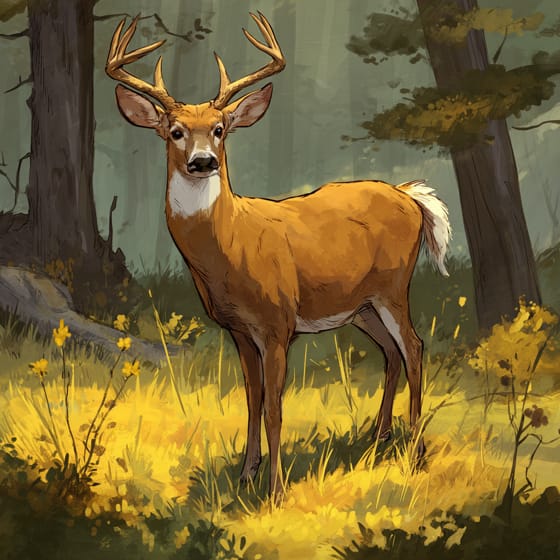
Odocoileus virginianus
Primary prey source, essential for wolf survival.
Castor canadensis
Important food source, especially near water habitats.

Alces alces
Larger prey, targeted by experienced, larger wolf packs.

Lepus americanus
Provides a smaller, supplementary food source, especially for pups.
Furry describes animals possessing a dense covering of soft hair or fur.
Social animals live in organized groups, cooperating for survival benefits such as foraging, defense, and raising offspring.
Forest habitats are terrestrial environments dominated by dense tree cover, supporting a high diversity of plant and animal life.
This trait identifies organisms whose diet consists entirely or primarily of animal tissue.

Describes a species whose presence and role have a disproportionately large effect on its environment.

This trait identifies organisms that exhibit exceptional swiftness in movement for hunting, escape, or travel.

Endangered status indicates a species is at a very high risk of extinction in the wild in the near future.
Danger
3/5 · Moderate
If you see a wolf in the wild, it's best to stay at a safe distance and not approach it.
The easiest way to identify Eastern Wolf is to use the Snappit nature identifier app.
90-160 cm
25-40 kg
6-8 years
55 km/h
These skilled hunters mostly eat large hoofed animals, keeping forest ecosystems healthy.
Forests
Pursuit
Zoom in to split clusters and explore where this object has been snapped.
Recent snaps will appear here as new observations are added.
Take the discovery with you
Snap it with Snappit to identify it, learn what makes it special, and add the discovery to your collection.




.jpg&width=800)


.JPG&width=800)



.jpg&width=800)
